2 citations
,
May 2024 in “International Journal of Molecular Sciences” This study found that in a mouse model of psoriasis, depleting CD169+ macrophages led to milder symptoms and decreased inflammation, suggesting these macrophages play a crucial role in psoriasis development.
March 2026 in “Animal Models and Experimental Medicine” In a dermal Gorab knockout mouse model, this study found that Gorab mutations increase P53 protein accumulation and disrupt extracellular matrix expression, contributing to accelerated skin aging and suggesting a pathway involving epigenetic regulation.
14 citations
,
June 2021 in “British Journal of Dermatology” This article discusses the BIOMAP consortium's efforts in standardizing data for atopic dermatitis and psoriasis research to facilitate personalized medicine, but it presents no new research findings.
 3 citations
,
November 2017 in “International Journal of Pharmacy and Pharmaceutical Sciences”
3 citations
,
November 2017 in “International Journal of Pharmacy and Pharmaceutical Sciences” This study identified new oxidative derivatives of finasteride, including a newly discovered metabolite, by using the fungus Macrophomina phaseolina.
 January 2019 in “Springer eBooks”
 Micrografts are useful for healing wounds, regenerating bone and periodontal tissues, and improving hair transplantation outcomes.
45 citations
,
March 1998 in “Journal of the American Academy of Dermatology” This report describes two cases of Majocchi's granuloma in immunocompromised patients, highlighting the importance of considering this condition in such populations.
6 citations
,
January 2015 in “Journal of clinical & experimental dermatology research” This study suggests that combining monoammonium glycyrrhizinate/glycine/DL-methionine tablets with 5% carpronium chloride may reduce alopecia areata area more effectively than carpronium chloride alone, particularly in patients with allergic factors.
 October 2025 in “Pharmaceutics”
 This study highlights the clinical potential of microneedles as an innovative transdermal drug delivery system for treating various skin diseases with minimal pain and high patient compliance.
3 citations
,
July 2023 in “Cells” This study found that topical application of recombinant human MG53 protein mitigated nitrogen mustard-induced skin injuries in mice by preserving epidermal integrity and hair follicle structure.

This study identified ten key magistral dermatological formulations, such as personalized trichological preparations and Kligman’s formula, which fill critical gaps unmet by standardized products, particularly in cases like pediatric scabies or autoimmune mucosal diseases, illustrating the role of compounding in precision medicine.
March 2026 in “International Journal of Biological Macromolecules” Recombinant Filaggrin-2 microneedles effectively promote hair growth and repair in hair loss.
5 citations
,
August 2023 in “G3 Genes Genomes Genetics” This study developed an improved reference genome for the African spiny mouse using long Nanopore sequencing reads, potentially aiding future research into the species' remarkable tissue regeneration capabilities.
September 2026 in “Advanced Materials Technologies” In a mouse model study, researchers developed a methacrylated hyaluronic acid-based hydrogel microneedle patch co-loaded with finasteride and a carbon monoxide-releasing molecule for androgenetic alopecia, which showed better hair regrowth and safety compared to traditional treatments, offering an innovative approach with minimized systemic side effects.
 February 2026 in “BMC Genomics”
 This study found that MEG3-miRNAs are key regulators of the age-dependent crimped wool trait in Tan sheep, likely influencing primary follicle development and degeneration through immune-inflammatory pathways.
 April 2016 in “The journal of investigative dermatology/Journal of investigative dermatology”
 This study suggests that infiltrating M2 macrophages promote wound-induced hair neogenesis in mice by producing growth factors that activate the wnt signaling pathway during the late phase of wound healing.
6 citations
,
December 2023 in “Journal of Molecular Cell Biology” In this study, Gsdma1/2/3 knockout mice showed reduced epidermal hyperplasia and inflammation when induced by PMA, which was attributed to decreased EGFR-Stat3/Akt signaling due to a decrease in related ligands.
 7 citations
,
January 2023 in “Biofabrication”
7 citations
,
January 2023 in “Biofabrication” This study developed microfluidic-assisted GelMA-MSC/HAD-EPC microspheres that efficiently generated hair follicles in nude mice, suggesting a promising strategy for advancing hair-regenerative medicine.
 September 2022 in “bioRxiv (Cold Spring Harbor Laboratory)”
 This study indicates that a helminth-derived protein, TGF-β mimic, may accelerate wound healing and promote regenerative processes in skin tissue by interacting with TGF-β receptors.
15 citations
,
December 2013 in “Clinical Cosmetic and Investigational Dermatology” This study found that levels of the protein MAGP-1, important for skin elasticity, decrease with aging and photoexposure, potentially contributing to skin fragility, sagging, and enlarged pores.
 April 2019 in “Journal of Investigative Dermatology”
 This study suggests that dietary grape powder may reduce the severity of atopic dermatitis in a mouse model, highlighting its potential in both prevention and intervention settings.
4 citations
,
August 2023 in “Journal of Cosmetic Dermatology” Gynostemma pentaphyllum extract may help grow hair and prevent graying.
July 2024 in “Journal of Investigative Dermatology” In this study of mouse models, researchers found that glutaminolysis is crucial for macrophages to switch from a pro-inflammatory to a pro-resolving state, aiding tissue repair by preventing prolonged inflammation and influencing gene expression.
 February 2026 in “Archives of Dermatological Research”
 In this study, microneedle-assisted delivery of polyglutamate significantly improved hair parameters, scalp symptoms, and quality of life in androgenetic alopecia patients, with no serious adverse reactions reported.
January 2026 in “Journal of Dermatological Science” This study suggests that DcR3 can reprogram macrophages towards a reparative state, enhancing wound healing and hair follicle regeneration, making it a potential target for treating chronic wounds and alopecia.
 10 citations
,
September 1997 in “Molecular carcinogenesis”
10 citations
,
September 1997 in “Molecular carcinogenesis” This study found that mirex and TPA promote papilloma formation in CD-1 mouse skin through distinct populations of mutant Ha-ras cells, resulting in additive tumor yields.
49 citations
,
March 1996 in “Experimental Brain Research” 13 citations
,
April 2025 in “International Journal of Nanomedicine” In this study, a hydrogel with anti-inflammatory, antibacterial, antioxidant, and wound tissue adhesion properties was developed, showing significant potential for wound healing and suggesting it could offer a new and effective treatment option in clinical settings.
4 citations
,
October 2023 in “Case Reports in Dermatology” In this case report, the researchers highlighted the diagnostic challenge of Majocchi’s granuloma, a deep fungal infection that mimics other skin conditions and resists initial treatment, emphasizing the importance of considering it as a diagnosis even after failed topical antifungal therapies.
 130 citations
,
September 2018 in “Cell Reports”
130 citations
,
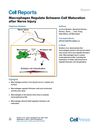
September 2018 in “Cell Reports” This study found that macrophages play a crucial role in nerve regeneration by regulating Schwann cell dynamics and remyelination, with Gas6 identified as a key factor in this process.
 21 citations
,
March 2019 in “Experimental Dermatology”
21 citations
,
March 2019 in “Experimental Dermatology” This review discusses the role of perifollicular macrophages in hair growth and suggests targeting them could be relevant for managing hair growth disorders, but reports no new results.