63 citations
,
May 2015 in “PloS one” This study found that GALT5 and GALT2 are redundant enzymes essential for O-glycosylation of AGPs, with mutations leading to significant growth and development defects in plants.
69 citations
,
December 2015 in “BMC plant biology” This study provides evidence that five Hyp-O-GALT genes are crucial for AGP galactosylation and that AGP glycans are vital for various aspects of plant growth and development.
2 citations
,
October 2016 in “OPAL (Open@LaTrobe) (La Trobe University)” This study reports that the Swedish newborn screening program for phenylketonuria, galactosaemia, and biotinidase deficiency is effective, with high sensitivity and specificity, and lower false positive rates compared to other countries, while genetic variants impact detection and incidence patterns in Sweden.
 30 citations
,
July 2018 in “Scientific Reports”
30 citations
,
July 2018 in “Scientific Reports” In this study, a high-fat, high-cholesterol diet in atherosclerotic mice led to skin inflammation and hair problems, which could be reversed by inhibiting glycosphingolipid synthesis.
 51 citations
,
October 1980 in “The New England Journal of Medicine”
51 citations
,
October 1980 in “The New England Journal of Medicine” Minoxidil lowers blood pressure effectively but may cause unwanted hair growth and other side effects.
 28 citations
,
May 2020 in “BMC plant biology”
28 citations
,
May 2020 in “BMC plant biology” This study concluded that GLCAT14A-C genes are crucial for the function of glucuronic acid transfer to AGPs in Arabidopsis, affecting various growth and reproductive traits such as seed germination and root hair growth.
 374 citations
,
May 2016 in “The Lancet. Diabetes & endocrinology”
374 citations
,
May 2016 in “The Lancet. Diabetes & endocrinology” This article reviews the clinical complications and increased mortality risks associated with Cushing's syndrome but does not present new clinical data; it emphasizes the need for prompt treatment to mitigate these risks.
 306 citations
,
April 2019 in “International Journal of Molecular Sciences”
306 citations
,
April 2019 in “International Journal of Molecular Sciences” This review discusses the protective roles of skin-resident immune cells in maintaining tissue homeostasis and facilitating wound healing, but reports no new experimental findings.
 253 citations
,
April 2014 in “Drugs”
253 citations
,
April 2014 in “Drugs” This review discusses the preclinical and clinical data on teriflunomide for multiple sclerosis, highlighting its selective action on immune cells without causing clinical immune suppression, and provides no new clinical results.
 192 citations
,
March 2017 in “Cell host & microbe”
192 citations
,
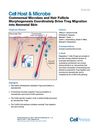
March 2017 in “Cell host & microbe” The researchers reported that hair follicle development and commensal microbe colonization promote the accumulation of regulatory T cells in neonatal skin, with the Ccl20-Ccr6 pathway playing a key role in this process.
 178 citations
,
October 2001 in “Genes & Development”
178 citations
,
October 2001 in “Genes & Development” This study found that the mammalian hairless gene encodes a corepressor protein that interacts with thyroid hormone receptors, providing insights into hair loss syndromes in humans and mice.
 108 citations
,
December 2003 in “Lasers in surgery and medicine”
108 citations
,
December 2003 in “Lasers in surgery and medicine” This study found that combining near-infrared laser phototherapy with indocyanine green application may improve acne vulgaris by reducing active lesions and inflammation without side effects.
 101 citations
,
August 2010 in “PLoS ONE”
101 citations
,
August 2010 in “PLoS ONE” In this mouse study, severe selenoprotein deficiency in epidermal cells was linked to skin abnormalities, disrupted hair follicle development, and progressive alopecia, highlighting the role of selenoproteins in skin and hair health.
 79 citations
,
January 2017 in “Dermatology practical & conceptual”
79 citations
,
January 2017 in “Dermatology practical & conceptual” This article addresses the need to screen for nutrient deficiencies in patients with hair loss but reports no new findings, noting that supplementation without deficiency may not be beneficial and could pose risks.
 79 citations
,
January 1982 in “The American Journal of Medicine”
79 citations
,
January 1982 in “The American Journal of Medicine” This study reports that VP-16-213 (etoposide) shows significant therapeutic activity in several cancers including small cell bronchogenic carcinoma and certain leukemias, with hematologic toxicity being the primary side effect.
 78 citations
,
November 2008 in “Fertility and Sterility”
78 citations
,
November 2008 in “Fertility and Sterility” Amenorrhea is relatively rare and initial testing should check FSH, TSH, and prolactin levels.
 75 citations
,
January 2014 in “Archiv Der Pharmazie”
75 citations
,
January 2014 in “Archiv Der Pharmazie” This review discusses the synthesis and biological activities of jasmonates, highlighting their potential as drugs and prodrugs, but reports no new clinical results; further research and trials are anticipated.
 74 citations
,
January 2013 in “Journal of Investigative Dermatology”
74 citations
,
January 2013 in “Journal of Investigative Dermatology” Four genetic risk spots found for hair loss, with WNT signaling involved and a link to curly hair.
 66 citations
,
January 2001 in “Vitamins and hormones”
66 citations
,
January 2001 in “Vitamins and hormones” This chapter reviews the role of androgen receptors in mediating the actions of androgens in specific tissues and provides no new experimental findings.
 61 citations
,
March 1990 in “Clinical pharmacology and therapeutics/Clinical pharmacology & therapeutics”
61 citations
,
March 1990 in “Clinical pharmacology and therapeutics/Clinical pharmacology & therapeutics” In this study, albendazole treatment in patients with hydatid disease was associated with decreased microsomal enzyme function and induced its own metabolism, but also showed potential hepatotoxicity and severe side effects, necessitating careful monitoring.
 60 citations
,
November 2009 in “General and Comparative Endocrinology”
60 citations
,
November 2009 in “General and Comparative Endocrinology” The researchers reported that during early embryogenesis and larval development in Silurana tropicalis, inhibiting steroidogenic enzymes cyp19 and srd5beta affects genes related to thyroid and reproductive systems.
 45 citations
,
June 2016 in “Anais brasileiros de dermatologia/Anais Brasileiros de Dermatologia”
45 citations
,
June 2016 in “Anais brasileiros de dermatologia/Anais Brasileiros de Dermatologia” This review evaluates the scientific literature on silicon supplements, noting that orthosilicic acid shows higher bioavailability, but emphasizes the need for further clinical studies on safety and efficacy.
 38 citations
,
June 2018 in “Archives of Toxicology”
38 citations
,
June 2018 in “Archives of Toxicology” This review suggests that skin may largely protect itself from CYP-generated reactive metabolites due to higher conjugating enzyme activities, while highlighting limitations in modeling human skin metabolism experimentally.
 38 citations
,
October 2006 in “Fertility and Sterility”
38 citations
,
October 2006 in “Fertility and Sterility” The document concludes that identifying the cause of amenorrhea is crucial for proper treatment.
 32 citations
,
August 2019 in “Nature Communications”
32 citations
,
August 2019 in “Nature Communications” In this study, researchers found that alkylating chemotherapy causes hair follicle stem cells to lose their regenerative ability by initially triggering proliferation followed by apoptosis, leading to permanent regeneration loss.
 30 citations
,
July 2004 in “Fertility and Sterility”
30 citations
,
July 2004 in “Fertility and Sterility” Amenorrhea is when a woman doesn't have periods, with primary amenorrhea starting by age 15 or within five years of breast development, and secondary amenorrhea when periods stop for three months. It affects 3-4% of women not pregnant, breastfeeding, or in menopause, mainly due to polycystic ovary syndrome, hypothalamic amenorrhea, hyperprolactinemia, and ovarian failure.
 24 citations
,
April 2017 in “JAMA Facial Plastic Surgery”
24 citations
,
April 2017 in “JAMA Facial Plastic Surgery” This study found that facial rejuvenation surgery led casual observers to perceive patients as younger, more attractive, and more successful and healthy, suggesting significant societal benefits beyond a youthful appearance.
 24 citations
,
August 2016 in “JAMA Facial Plastic Surgery”
24 citations
,
August 2016 in “JAMA Facial Plastic Surgery” This study found that men appearing in photos after a hair transplant were perceived by observers as younger, more attractive, more successful, and more approachable compared to their pretransplant images.
 21 citations
,
September 2004 in “Fertility and Sterility”
21 citations
,
September 2004 in “Fertility and Sterility” Amenorrhea, or the absence of periods, should be evaluated by age 15 or within five years of early breast development, and is most commonly caused by conditions like polycystic ovary syndrome and hypothalamic amenorrhea.
 19 citations
,
June 2007 in “Veterinary Dermatology”
19 citations
,
June 2007 in “Veterinary Dermatology” In this study, amitraz was found to be an effective and well-tolerated treatment for resolving sarcoptic mange in alpacas, demonstrating no relapse over a 10-month follow-up.