 January 2024 in “Jurnal Ilmu Kesehatan Hewan”
 In this veterinary case report, a mixed breed dog with Malassezia dermatitis showed significant improvement and hair regrowth after 28 days of treatment with ketoconazole and other supportive therapies.
August 2023 in “Veterinary Science and Medicine Journal” In this case study, the researchers diagnosed a young male cat with dermatitis caused by a fungal infection, specifically identifying Penicillium and Aspergillus species, and observed improvement in symptoms following a two-week treatment with grisofulvin, chlorphenamine maleate, and fish oil shampoo.
8 citations
,
January 2024 in “Microorganisms” This study found that administering dupilumab to patients with moderate-to-severe atopic dermatitis over 12 weeks altered both fungal and bacterial skin microbiomes, increasing microbial diversity and decreasing colonization by Malassezia and Staphylococcus aureus at lesion sites.
 1 citations
,
April 2024 in “Veterinary Science and Medicine Journal”
1 citations
,
April 2024 in “Veterinary Science and Medicine Journal” In this study, a mixed breed dog with Malassezia fungal dermatitis and tick infestation showed notable improvement after 14 days of treatment with itraconazole, loratadine, fish oil, sebasol shampoo, and multivitamins, with reduced skin symptoms and hair regrowth observed.
4 citations
,
May 2020 in “Animals” This case study identified Geotrichum candidum as a cause of skin lesions in a horse following extended corticosteroid or antibiotic use, noting the importance of thorough diagnosis and specific antifungal treatment to improve symptoms.
April 2011 in “Companion Animal” This article reviews the clinical presentation, diagnosis, and management of feline pododermatitis, discussing conditions like trombiculidiasis and bacterial paronychia, but reports no new clinical results.
June 2026 in “Annals of Phytomedicine An International Journal” In this study, Cassia tora L. oil-based ointment demonstrated moderate antifungal activity and a 50% recovery rate in dogs with mycotic dermatitis after 28 days of treatment, suggesting it may be a safe and cost-effective topical option.
11 citations
,
January 2017 in “Pediatrics in review” This review discusses fungal skin infections in children, including diagnosis challenges and treatment options, and does not present new clinical findings; the authors emphasize the importance of accurate pathogen identification for effective treatment.
This study found that theabrownin-selenium nanoparticles (TB-Se NPs) effectively target Malassezia-induced dermatitis through a dual antifungal and immunomodulatory mechanism, suppressing fungal overgrowth, reducing inflammation, and enhancing immune memory to prevent recurrence in a dermatitis model.
241 citations
,
August 2005 in “Journal of Investigative Dermatology Symposium Proceedings” This review discusses the roles of sebaceous gland activity, Malassezia yeast, and individual susceptibility in scalp flaking disorders, including dandruff and seborrheic dermatitis, but reports no new experiment results.
 July 2026 in “Current Trends in Biotechnology and Pharmacy”
 In this study, a new herbal hair oil formulation, consisting of plant-derived antifungal agents and natural stabilizers, was developed and demonstrated strong antifungal activity, skin compatibility, and additional hair health benefits in preclinical evaluations, offering a potential alternative for managing fungal scalp infections.
January 2018 in “Archivio istituzionale della ricerca (Alma Mater Studiorum Università di Bologna)” This study reports a case where Geotricum candidum caused skin lesions in a horse following long-term corticosteroid and antibiotic use, highlighting the importance of prompt veterinary consultation for dermatitis diagnosis.
12 citations
,
October 2023 in “Journal of the European Academy of Dermatology and Venereology” This European study found that while many people consult dermatologists for mole control and skin cancer screening, others with conditions like acne, alopecia, and fungal infections often choose not to seek medical advice, opting for self-management instead.
 September 2025 in “Dicle Medical Journal / Dicle Tip Dergisi”
 In this retrospective study, researchers found that fungal infections, xerosis, eczematous dermatitis, and seborrheic dermatitis were the most common dermatological findings among patients with Parkinson's disease, Multiple Sclerosis, and Amyotrophic Lateral Sclerosis, with significant intergroup differences observed.
 89 citations
,
May 1999 in “Allergy”
89 citations
,
May 1999 in “Allergy” This article reviews the role of Pityrosporum (Malassezia) in skin conditions such as pityriasis versicolor, seborrheic dermatitis, and atopic dermatitis, and discusses treatment approaches; it reports no new clinical results.
61 citations
,
March 2022 in “JEADV. Journal of the European Academy of Dermatology and Venereology/Journal of the European Academy of Dermatology and Venereology” This study found that 43.35% of the adult population across 27 European countries reported having a skin condition in the past year, highlighting the need for dermatological care planning.
 35 citations
,
January 1993 in “International Journal of Dermatology”
35 citations
,
January 1993 in “International Journal of Dermatology” In this study, most hair disorders among HIV-1 positive patients were associated with low helper T cell counts, with papulosquamous conditions like seborrheic dermatitis and psoriasis being the most common.
 22 citations
,
May 2012 in “Dermatologic Therapy”
22 citations
,
May 2012 in “Dermatologic Therapy” This article reviews the lack of major breakthroughs and limited therapeutic options for extensive hair loss, emphasizing the need to address its psychological impact; it reports no new clinical results.
 22 citations
,
December 2003 in “Veterinary clinical pathology”
22 citations
,
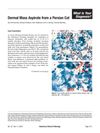
December 2003 in “Veterinary clinical pathology” This case study reported a diagnosis of dermatophytic pseudomycetoma in a Persian cat with dermal nodules, highlighting potential heritable predisposition and suggesting systemic antifungal therapy for fair prognosis.
 16 citations
,
July 2013 in “Human & Experimental Toxicology”
16 citations
,
July 2013 in “Human & Experimental Toxicology” This study reports that complementary and alternative medicine is commonly used for dermatological diseases in Eastern Turkey, with 43.7% of patients using at least one method and various unconventional practices observed.
 8 citations
,
October 2013 in “The Journal of Spinal Cord Medicine”
8 citations
,
October 2013 in “The Journal of Spinal Cord Medicine” In this study, fungal infections and seborrheic dermatitis were identified as the most common skin conditions among spinal cord injury patients referred to dermatology, impacting quality of life.
 7 citations
,
July 2020 in “Dermatologic Therapy”
7 citations
,
July 2020 in “Dermatologic Therapy” This study reported that acne was the most common reason for admission to a dermatology clinic in Turkey during the peak of the COVID-19 pandemic, with many patients seeking systemic isotretinoin prescriptions.
6 citations
,
September 2013 in “Journal of Evolution of Medical and Dental Sciences” This study observed a wide range of mucocutaneous disorders among HIV-infected individuals in India, with a significant association between low CD4 cell counts and the presence of infectious and inflammatory skin conditions.
2 citations
,
December 2023 in “JEADV Clinical Practice” In this population-based study, researchers reported that nearly half of Greek adults experienced at least one skin condition in the past year, with significant impacts on quality of life, work decisions, and perceptions of stigmatization.
 2 citations
,
September 2014 in “Journal of evolution of medical and dental sciences”
2 citations
,
September 2014 in “Journal of evolution of medical and dental sciences” In this study, 92% of HIV-infected patients had mucocutaneous manifestations, with oral candidiasis being the most common condition observed.
1 citations
,
January 2025 in “Asian journal of pediatric dermatology.” In this study conducted at a tertiary center in Yogyakarta, Indonesia, researchers evaluated pediatric hair and scalp disorders, finding that seborrheic dermatitis was the most common issue, particularly in infants, followed by bacterial and fungal infections among 545 patients under 18 years old.
 1 citations
,
January 2023 in “Mycopathologia”
1 citations
,
January 2023 in “Mycopathologia” In this case report, a 34-year-old woman with black dot tinea capitis did not respond to oral Itraconazole but was successfully treated with Terbinafine.
 1 citations
,
July 2022 in “International Journal of Environmental Research and Public Health”
1 citations
,
July 2022 in “International Journal of Environmental Research and Public Health” This study observed seasonal trends in Poland's Google searches for dermatology-related terms and noted a decrease in searches for sexually transmitted diseases despite rising infection rates, highlighting a need for better sexual education.
 1 citations
,
July 1965 in “Postgraduate medicine”
1 citations
,
July 1965 in “Postgraduate medicine” This article reviews common dermatologic diseases and their treatments, suggesting that physicians can effectively manage these conditions using general medical knowledge, but it reports no new clinical results.
 July 2026 in “Zenodo (CERN European Organization for Nuclear Research)”
 This research suggests that antifungal hair serums, incorporating essential oils and herbal extracts, may offer a promising alternative for managing microbial scalp disorders by improving drug penetration and stability compared to conventional treatments.