1 citations
,
September 2017 in “BMJ” The man has a disease causing skin patches, thickened nerves, and mild muscle weakness.
 23 citations
,
November 2018 in “Journal of the European Academy of Dermatology and Venereology”
23 citations
,
November 2018 in “Journal of the European Academy of Dermatology and Venereology” This study observed that frontal fibrosing alopecia is increasingly diagnosed in Italian Caucasian females, often showing premenopausal onset and eyebrow alopecia as an early sign.
8 citations
,
May 2003 in “Clinical and Experimental Dermatology” This case report suggests that nonsynchronized segmented heterochromia in black scalp hair in a 14-year-old girl may represent premature greying unrelated to deficiencies in iron, copper, zinc, or protein.
 17 citations
,
November 2018 in “Dermatology”
17 citations
,
November 2018 in “Dermatology” The authors concluded that Hispanic/Latino ethnicity, facial papules, and premenopausal status in patients with frontal fibrosing alopecia may indicate a susceptibility to more severe disease, potentially necessitating early treatment.
September 2018 in “CRC Press eBooks” This review explores the trichoscopic features of dark scalp, particularly the brown honeycomb pigment network, and its variations in different types of alopecia, but it presents no new clinical findings.
37 citations
,
June 2000 in “Experimental dermatology” This study investigated a spontaneous mutation in mice resulting in hair abnormalities and elevated IgE levels, which resembles human Netherton's syndrome and monilethrix.
 32 citations
,
February 2008 in “Journal of the American Academy of Dermatology”
32 citations
,
February 2008 in “Journal of the American Academy of Dermatology” This case report describes a family with autosomal dominant transmission of keratosis follicularis spinulosa decalvans, with observed treatment refractoriness in multiple topical and systemic therapies.
2 citations
,
January 2014 in “Indian dermatology online journal” This report describes a case of isolated congenital atrichia combined with nevus flammeus.
 July 2025 in “Clinical Dermatology Review”
 In this case report, researchers observed multiple trichofolliculomas in family members, noting this as a rare manifestation of typically singular hair follicle hamartomas.
 8 citations
,
January 2017 in “Stem Cells International”
8 citations
,
January 2017 in “Stem Cells International” This study found that overexpression of sFRP4 in skin cells reduces Wnt signaling activation, leading to decreased melanocyte differentiation in regenerating hair follicles.
January 2026 in “JDDG Journal der Deutschen Dermatologischen Gesellschaft” This case report describes a five-year-old boy diagnosed with nevus comedonicus syndrome, a rare skin condition, characterized by asymptomatic skin lesions and a congenital cataract of the right eye, without inflammation or typical signs of related conditions.
7 citations
,
January 2008 in “Indian Journal of Dermatology” This review discusses the clinical manifestations and genetic basis of pigmentary mosaicism, highlighting its varied phenotypic expressions, but reports no new clinical results.
 21 citations
,
January 2005 in “Pediatric Dermatology”
21 citations
,
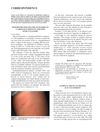
January 2005 in “Pediatric Dermatology” An 8-year-old girl with vitiligo developed extra hair growth on her knee after using tacrolimus ointment.
23 citations
,
May 2017 in “Journal of the American Academy of Dermatology” This study found that patients with frontal fibrosing alopecia had lower epidermal melanocyte counts and reduced epidermal thickness compared to lichen planopilaris patients and controls, suggesting a link with hypopigmentation.
 17 citations
,
January 2010 in “Acta Dermato Venereologica”
17 citations
,
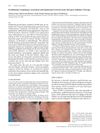
January 2010 in “Acta Dermato Venereologica” This report details a case of a 43-year-old woman developing yellowish papular eruptions alongside typical acneiform skin reactions on her cheeks and chest following a switch from cetuximab to panitumumab treatment.
July 2025 in “International Journal of Trichology” This case study reported on a 6-year-old boy with frictional alopecia in the lower limbs, likely linked to his habit of cross-legged sitting and occasional rubbing, highlighting the condition's rarity in pediatric cases and emphasizing the need for further research in this age group.
 September 2023 in “Çukurova medical journal (Online)/Çukurova medical journal”
 This study observed that EZH2 expression scores in the epidermis, dermis, and hair follicles decrease with gestational age in human fetuses, and these scores were significantly higher in adults, indicating that lower EZH2 levels may be required for full skin differentiation and maturation before birth.
 July 2026 in “Lasers in Medical Science”
 In this study, the Peninsula Timerevert Needle was found to provide effective treatment for skin photoaging and acne scars with less pain and shorter treatment duration compared to EndyMed, although it caused more bleeding.
 9 citations
,
May 2013 in “JAMA Dermatology”
9 citations
,
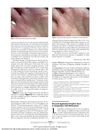
May 2013 in “JAMA Dermatology” This report documents two cases of eruptive nevi occurring in the skin folds of children with Langerhans cell histiocytosis.
2 citations
,
September 2021 in “Anais Brasileiros de Dermatologia” Increased sunscreen use may be linked to frontal fibrosing alopecia in Hispanic females.
2 citations
,
June 2010 in “Medicina de Familia SEMERGEN” The girl's "dandruff" was actually harmless hair casts, not a hygiene issue.
July 2020 in “DOAJ (DOAJ: Directory of Open Access Journals)” This review suggests that excessive facial photoprotection could play a role in frontal fibrosing alopecia through a disturbance in immunological balance via the aryl hydrocarbon receptor-kynurenine pathway.
48 citations
,
July 1993 in “Archives of Dermatological Research” Merkel cells are abundant in facial vellus hair follicles, especially during the anagen phase.
48 citations
,
May 2012 in “Journal of cosmetic and laser therapy” This study found that fractional bipolar RF energy significantly reduced acne scar severity and improved skin texture, with high subject satisfaction and limited side effects.
 1 citations
,
October 2018 in “Operative techniques in otolaryngology--head and neck surgery”
1 citations
,
October 2018 in “Operative techniques in otolaryngology--head and neck surgery” This article reviews both minimally invasive and surgical procedures used to treat periorbital aging, highlighting advancements in rejuvenation techniques for areas like the eyebrows and eyelids.
 September 2025 in “Indian Dermatology Online Journal”
 This study describes how comparing the visual characteristics of dermatological conditions to baked goods can aid in memorization and understanding, providing memorable analogies for both diagnosis and patient education.
1 citations
,
January 2019 in “Dermatology Online Journal” This case report describes a rare occurrence of nevus comedonicus on the scalp of a 19-year-old woman, highlighting its unusual location and classic appearance.
April 2021 in “Aktuelle Dermatologie” This review discusses frontal fibrosing alopecia, noting its clinical characteristics, possible environmental factors, and lack of evidence-based therapies, but reports no new research findings.
 January 2018 in “Elsevier eBooks”
 The document concludes that proper diagnosis and treatment of follicular disorders are crucial, with specific treatments for conditions like acne, drug-induced eruptions, and rosacea.
52 citations
,
November 2006 in “International Journal of Cosmetic Science” This review discusses the identification and classification of different wrinkle types based on histological features and microanatomy, emphasizing their varying responses to treatments, and reports no new clinical results.