14 citations
,
April 2007 in “Journal of aging and health” This study observed that balding was associated with lower total body BMD in men and higher hip BMD in women, possibly due to estrogen use in the latter group.
 April 2023 in “The journal of investigative dermatology/Journal of investigative dermatology”
 This study found that DNA-damaged hair follicle stem cells in mouse models do not show typical senescent markers but are dynamically expelled to maintain tissue health and prevent hair loss.
 September 2017 in “Journal of Investigative Dermatology”
 This study found that their novel 3D-imaging method, ASAXA-μCT, identified shrinkage of sweat glands as a key factor in skin aging, which leads to dermal defects, decreased elasticity, and increased wrinkling and sagging.
November 2025 in “Biocell” This article explores how the integrated stress response and senescence-associated secretory phenotype influence stem cell fate decisions, highlighting their dual roles in both protecting and disrupting stem cell integrity.
7 citations
,
December 1956 in “Science” 1 citations
,
December 1956 in “Science”  January 2016 in “SpringerBriefs in bioengineering”
 This article discusses the structure and function of the skin's epidermis, detailing its role as a protective barrier and nutrient exchange system, without presenting new research findings.
5 citations
,
October 2003 in “Archives of Dermatology” This abstract is a website information page and provides no research findings, results, or conclusions.
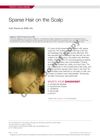
This case study describes a young girl with sparse, brittle scalp hair and multiple keratotic papules, but no systemic or familial abnormalities were found.
 April 2026 in “Preprints.org”
 The study found that enhancing quercetin bioavailability with EubioQuercetin may amplify its anti-aging effects in mice by modulating the gut microbiota and improving intestinal barrier function.
26 citations
,
March 2001 in “PubMed” This article reviews the effect of aging on male hormone levels and fertility, highlighting the need for more research on the benefits and risks of androgen supplementation in older men.
 April 2025 in “bioRxiv (Cold Spring Harbor Laboratory)”
 In this study, aged mice showed better regenerative skin outcomes than young mice, linked to a specific fibroblast subpopulation and enhanced signaling interactions that promote regeneration. EREG treatment improved young mice's skin regeneration, suggesting potential for scarless therapies.
56 citations
,
December 2010 in “The journal of investigative dermatology/Journal of investigative dermatology” This study suggests that the susceptibility of hair follicle melanocytes to oxidative stress as they age may be key in the graying of hair due to reduced catalase expression and activity.
8 citations
,
July 2020 in “The Egyptian Rheumatologist” This study found that nutritional deficiencies are common in Egyptian patients with rheumatic diseases, particularly among the elderly, and should be routinely monitored regardless of disease type or duration.
 9 citations
,
July 2013 in “Experimental Dermatology”
9 citations
,
July 2013 in “Experimental Dermatology” This study demonstrates that the ability of human hair follicle keratinocytes to form clones decreases with ageing.
1 citations
,
March 2019 in “American journal of geriatric psychiatry/The American journal of geriatric psychiatry” This case study highlights the challenges inpatient psychiatric teams face in managing end-of-life care for patients with advanced Alzheimer's, particularly in honoring DNR/DNI orders and coordinating hospice transfers.
 March 2026 in “Konuralp Tıp Dergisi”
 This study found that participants with normal hemoglobin but low ferritin experienced significantly more symptoms like restless leg syndrome, dizziness, and shortness of breath compared to those with normal ferritin.
22 citations
,
August 2022 in “Molecular Metabolism” This study identified a crucial role for epidermal Pgc-1α in regulating NAD+ signaling and influencing skin repair, with its dysfunction contributing to age-related wound healing defects.
 1 citations
,
August 2000 in “Expert Opinion on Therapeutic Patents”
1 citations
,
August 2000 in “Expert Opinion on Therapeutic Patents” This article reviews the therapeutic use of carnitine derivatives for re-establishing mitochondrial functionality in aging and reports no new clinical results.
 4 citations
,
January 2023 in “Experimental dermatology”
4 citations
,
January 2023 in “Experimental dermatology” This study suggests that both age and photoexposure may decrease maximum viable epidermis thickness and impact the dermal-epidermal junction in women with Fitzpatrick skin types II-III.
2 citations
,
July 2022 in “Indian Journal of Dermatology Venereology and Leprology” This study found that patients with premature greying of hair had significant abnormalities in cardiovascular risk markers, including elevated IL-6 levels, compared to healthy controls.
50 citations
,
July 1996 in “Cell” This review discusses genetic and epigenetic mechanisms that may contribute to aging and presents models suggesting that chromosomal changes could play a key role in the aging process; it reports no new experimental findings.
 August 2015 in “Free Radical Biology and Medicine”
 This study suggests a potential link between proteasome function and nucleotide excision repair in animal models with defects in the NER pathway, with implications for ageing.
 June 2025 in “International Journal of Science and Research (IJSR)”
 This study found that among 100 females with chronic telogen effluvium, approximately two-thirds had low levels of serum ferritin and vitamin D, while vitamin B12 deficiency was observed in only about one-third of the participants.
March 2026 in “Journal of Health Wellness and Community Research” In this study of young adults in Lahore, Pakistan, researchers reported a 55.2% prevalence of premature graying before age 30, commonly linked with factors like family history, nutritional deficiencies, hair loss, oily scalp, anxiety, and smoking.
 November 2023 in “Frontiers in cell and developmental biology”
 This source reviews mechanisms and existing treatments for hair aging, highlighting factors like oxidative stress and DNA repair defects that affect hair follicle and stem cell function, and discusses research limitations and future directions in the field.
 1 citations
,
December 2017 in “Anais Brasileiros de Dermatologia”
1 citations
,
December 2017 in “Anais Brasileiros de Dermatologia” This article discusses the DOAJ, a comprehensive index of international open access journals, and emphasizes its role in providing free quality content online without presenting new research findings.
March 2026 in “Animal Models and Experimental Medicine” In a dermal Gorab knockout mouse model, this study found that Gorab mutations increase P53 protein accumulation and disrupt extracellular matrix expression, contributing to accelerated skin aging and suggesting a pathway involving epigenetic regulation.
8 citations
,
June 2020 in “The journal of investigative dermatology/Journal of investigative dermatology” This study provides definitive evidence that a homozygous mutation in the DSC3 gene causes skin fragility and hypotrichosis in humans.
 16 citations
,
April 2012 in “Journal of mammalogy”
16 citations
,
April 2012 in “Journal of mammalogy” Among Australian fur seals at one colony, this study found that alopecia, primarily affecting juvenile females, is linked to hair shaft fractures associated with low tyrosine and zinc levels, as well as higher pollutant exposure.