 31 citations
,
April 2019 in “Journal of Cutaneous Pathology”
31 citations
,
April 2019 in “Journal of Cutaneous Pathology” This review discusses the changes in hair follicles with aging, particularly graying due to decreased melanocyte activity, and suggests potential for hair repigmentation under certain conditions, but reports no new results.

This study found that depleting fibroblasts in the skin does not affect the proliferative capacity of epidermal stem cells at various ages, suggesting robust compensatory mechanisms maintain skin functionality despite these cellular changes.
8 citations
,
July 2020 in “Clinical, cosmetic and investigational dermatology” This review hypothesizes that excessive facial photo-protection may contribute to frontal fibrosing alopecia by disrupting immunological homeostasis through the aryl hydrocarbon receptor-kynurenine pathway, but it reports no new clinical results.
July 2024 in “Journal of Investigative Dermatology” Bioengineered skin models aging well, useful for studying aging and testing treatments.
July 2020 in “RePub (Erasmus University, Rotterdam)” This thesis analyzed four skin aging features and their relationships with lifestyle, physiological factors, and genetics.
 4 citations
,
January 2014 in “Indian dermatology online journal”
4 citations
,
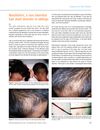
January 2014 in “Indian dermatology online journal” This article discusses the genetic hair disorder monilethrix, characterized by beaded, fragile hair due to defective keratin genes, and reports no effective treatment currently available; variability in severity was noted among affected siblings.
November 2013 in “The Journal of Urology” This editorial discusses the management of lower urinary tract symptoms in elderly males and does not provide new research findings.
 35 citations
,
January 2017 in “Journal of Dermatological Science”
35 citations
,
January 2017 in “Journal of Dermatological Science” This study suggests that stress-induced premature senescence of dermal papilla cells may contribute to hair follicle aging by impairing critical epithelial-mesenchymal interactions and promoting inflammatory cytokine production.
 33 citations
,
January 2018 in “The International Journal of Developmental Biology”
33 citations
,
January 2018 in “The International Journal of Developmental Biology” This review discusses the dual role of cellular senescence in ageing and tissue repair and suggests potential therapeutic applications, with no new experimental results reported.
 February 2025 in “Geriatrics and gerontology international/Geriatrics & gerontology international”
 This study found that cataracts, hair changes, short stature, and low bodyweight are key indicators for diagnosing Werner syndrome in patients under 30, differing from older age group symptoms.
 June 2023 in “British Journal of Dermatology”
 This case study confirmed a diagnosis of Werner syndrome in a 27-year-old woman through genetic testing, highlighting the condition's characteristics and the importance of multidisciplinary management.
March 2005 in “Journal of the American Academy of Dermatology” This study found that key amino acids lost from hair due to weathering can be successfully reintroduced through cosmetic treatments, improving hair strength and aesthetics.
13 citations
,
December 2017 in “Stem cells” This study found that in mice, low-dose irradiation causes stem cells in hair follicles to undergo chromatin alterations, which may eventually lead to long-term functional loss in tissues or organs.
 15 citations
,
November 2023 in “Immunity & ageing”
15 citations
,
November 2023 in “Immunity & ageing” This review highlights the role of the receptor TLR4 in cellular aging and age-related diseases, suggesting it as a potential therapeutic target due to its contribution to persistent inflammation and symptom regulation in these conditions.
2 citations
,
January 2016 in “Dermatology online journal” This case report describes a 46-year-old man diagnosed with frontal fibrosing alopecia, a condition primarily affecting postmenopausal women, highlighting its rare occurrence in men.
 13 citations
,
March 1986 in “Clinical Cardiology”
13 citations
,
March 1986 in “Clinical Cardiology” This case report describes a 31-year-old woman who developed transient heart failure during the acute phase of Kawasaki disease, highlighting that it can cause myocardial dysfunction in adults.
June 2010 in “Journal of Cosmetic Dermatology” This article reviews the concept of caloric restriction and its potential anti-aging effects, highlighting animal studies and a human experiment in Biosphere II, but notes significant challenges for its application in humans.
November 2024 in “Journal of Investigative Dermatology” In this study, researchers investigated changes in ribosomal RNA modifications associated with stress-induced cellular senescence in human skin cells, identifying potential biomarkers and targets for interventions to mitigate skin aging.
July 2023 in “Media Dermato Venereologica Indonesiana” This case study highlights that RDEB-mitis can be misdiagnosed in older adults, emphasizing the importance of accurate diagnosis as it does not require immunosuppressive treatment.
 77 citations
,
July 2013 in “Best Practice & Research in Clinical Obstetrics & Gynaecology”
77 citations
,
July 2013 in “Best Practice & Research in Clinical Obstetrics & Gynaecology” This review discusses the impact of menopause-related oestrogen deficiency on skin ageing and suggests that oestrogen use may improve collagen and skin elasticity, but it reports no clinical trial results.
 December 2022 in “Journal of neurodevelopmental disorders”
 This study observed that repeated hair follicle sampling is feasible and reliable for measuring FMR1 mRNA and FMRP in individuals with Fragile X syndrome, supporting its use in longitudinal studies.
 22 citations
,
February 2002 in “Clinics in Geriatric Medicine”
22 citations
,
February 2002 in “Clinics in Geriatric Medicine” This review discusses the biology of hair follicles and common hair disorders in the elderly but reports no new clinical results.
29 citations
,
February 2010 in “British Journal of Dermatology” This study explores the expression of Snail1 in the fibrotic dermis of postmenopausal women with frontal fibrosing alopecia, suggesting a possible link to epithelial-mesenchymal transition.
8 citations
,
February 2002 in “Journal of Medical Genetics” In this study, synchrotron fibre diffraction identified changes in dermal collagen microfibrillar radius with age, with lower radii observed in individuals with insulin-dependent diabetes mellitus.
June 2026 in “British Journal of Dermatology” This study found that individuals with frontal fibrosing alopecia have increased odds of thyroid disease, lupus erythematous, vitiligo, and heart disease, supporting the consideration of FFA as a systemic disorder.
 April 2017 in “Journal of Investigative Dermatology”
 This study demonstrated that mitochondrial function in keratinocytes is crucial for maintaining skin homeostasis and hair follicle development, as its impairment led to disrupted hair morphogenesis and early death in mice.
 April 2018 in “Journal of Investigative Dermatology”
 This study found that TGFbeta is a key pathway causing age-related loss of dermal fat's antimicrobial function, suggesting that targeting TGFBR might help restore skin defense against infections in older age.
 172 citations
,
May 2018 in “Nature”
172 citations
,
May 2018 in “Nature” Mammalian organs regenerate using stem cells and cell plasticity, but this ability declines with age.
July 2020 in “DOAJ (DOAJ: Directory of Open Access Journals)” This review suggests that excessive facial photoprotection could play a role in frontal fibrosing alopecia through a disturbance in immunological balance via the aryl hydrocarbon receptor-kynurenine pathway.
 December 2021 in “Research Square (Research Square)”
 This study found that repeatedly collecting hair follicles from individuals with fragile X syndrome is feasible for measuring FMR1 and FMRP levels in both home and office settings.