December 2025 in “Journal of Investigative Dermatology” Immune system issues may contribute to female pattern hair loss.
 June 2020 in “bioRxiv (Cold Spring Harbor Laboratory)”
 In this study using a mouse model, researchers found that expressing Lef1 in dermal fibroblasts may enhance skin regeneration without affecting normal development.
November 2025 in “Journal of Investigative Dermatology”  1 citations
,
September 2023 in “Acta dermato-venereologica”
1 citations
,
September 2023 in “Acta dermato-venereologica” In this study, researchers found that most patients with frontal fibrosing alopecia lacked the protective rs1800440 polymorphism in the CYP1B1 gene, suggesting its potential role in the development of this condition, while a significant number carried the rs9258883 polymorphism in HLA-B*07:02.
26 citations
,
December 1999 in “Journal of Investigative Dermatology” This study found that manipulating prolactin levels in New Zealand Wiltshire sheep induces wool follicle growth cycles, revealing gene expression changes that suggest roles for specific genes in follicle function.
 3 citations
,
April 2022 in “International Journal of Molecular Sciences”
3 citations
,
April 2022 in “International Journal of Molecular Sciences” This study showed that treating mouse fibroblasts with TTNPB can efficiently convert them into dermal-papilla-cell-like cells with strong hair-inducing capacity, suggesting potential for hair follicle regeneration therapies.
 2 citations
,
July 2015 in “Archives of Dermatological Research”
2 citations
,
July 2015 in “Archives of Dermatological Research” This study reports the first familial case of alopecia linked to a novel homozygous variant in the DSP gene, which did not coincide with heart abnormalities despite prior associations.
This study found that home use of low-level light therapy reduced inflammation and symptoms like itching and burning in women with frontal fibrosing alopecia over six months.
 7 citations
,
May 2019 in “Journal of the Formosan Medical Association”
7 citations
,
May 2019 in “Journal of the Formosan Medical Association” This study found that overweight women with polycystic ovary syndrome carrying the HSD3B1 1245C allele had an increased presence of female pattern hair loss compared to those with the wild-type genotype.
 20 citations
,
May 2013 in “International Journal of Molecular Medicine”
20 citations
,
May 2013 in “International Journal of Molecular Medicine” This study identified a novel missense MAFB variant in a family with some unaffected members, suggesting incomplete penetrance and the potential influence of modifier genes, epigenetic mechanisms, or environmental factors on MCTO phenotype.
 September 2022 in “The American Journal of Dermatopathology”
 This study found that IL-17 expression was significantly higher in perifollicular fibrosis of active Lichen planopilaris lesions, suggesting that targeting IL-17 could impact the disease's progression.
 199 citations
,
April 2010 in “Nature”
199 citations
,
April 2010 in “Nature” A gene called APCDD1, which controls hair growth, is found to be faulty in a type of hair loss called hereditary hypotrichosis simplex.
28 citations
,
June 1995 in “The Journal of Dermatology” This study reports that flaky skin mice exhibit skin and nail features that closely resemble human psoriasis vulgaris, suggesting they may serve as a natural model for this condition.
 January 2025 in “Indian Journal of Dermatology”
 This review discusses the various factors implicated in the etiology of frontal fibrosing alopecia and notes the need for effective treatments, reporting no new clinical findings.
 May 2019 in “The Journal of Sexual Medicine”
 This study found no baseline factors that predicted flibanserin efficacy for HSDD, though low testosterone or use of hormonal contraceptives were associated with reduced efficacy.
6 citations
,
July 2017 in “Clinical and Experimental Dermatology” This report presents four new cases of follicular porokeratosis, which exhibit distinct histological features where the cornoid lamella are confined to the follicular ostia.
 18 citations
,
November 2012 in “Australasian Journal of Dermatology”
18 citations
,
November 2012 in “Australasian Journal of Dermatology” This case report describes a 66-year-old man with frontal fibrosing alopecia, a rare lichen planopilaris variant, presenting with scarring alopecia at the hairline and extensive body hair loss.
 April 2018 in “Journal of Investigative Dermatology”
 This study found that Fgf20 signaling facilitates fibroblast migration and influences dermal condensate cell development during hair follicle morphogenesis by supporting cellular activities such as cell cycle exit and specific cell shape adoption.
 April 2023 in “Egyptian journal of Immunology”
 This study found that human platelet lysate supported mesenchymal stem cell growth as effectively as fetal bovine serum, while fetal bovine serum was more effective for hepatocyte proliferation.
 35 citations
,
January 2014 in “BioMed Research International”
35 citations
,
January 2014 in “BioMed Research International” This review examines the epidemiology, pathogenesis, clinical manifestations, and diagnosis of female pattern hair loss and reports no new results.
The researchers reported that human foreskin fibroblasts isolated by enzyme digestion method proliferated faster and were purified more quickly than those isolated by the inverted tissue culture method; additionally, post-psoralen photoactivation therapy moderately repaired UVB-induced damage in these fibroblasts, suggesting potential clinical applications.
37 citations
,
January 2010 in “Human Molecular Genetics” In this study using mice with specific gene knockouts, both farnesyltransferase and geranylgeranyltransferase-I were found to be essential for the proliferation and survival of skin keratinocytes.
 May 2014 in “Clinical and Experimental Dermatology”
 A 70-year-old woman with a rare skin condition improved after treatment with topical steroids and acitretin.
17 citations
,
June 2016 in “Archives de Pédiatrie” This case report describes three pediatric cases of frontal fibrosing alopecia, a condition typically seen in postmenopausal women, including a unique instance involving female twins.
February 2024 in “Pediatric Dermatology” In this case report, the researchers identified pathogenic compound heterozygous mutations in a young girl with lipoid proteinosis, noting her relatively mild symptoms and recommending genetic testing for early diagnosis and management of this rare condition.
 July 2023 in “Developmental medicine and child neurology/Developmental medicine & child neurology”
 This study found that patients with Bachmann-Bupp syndrome treated with DFMO showed improvements in hair growth, muscle tone, and development.
 April 2023 in “Journal of Investigative Dermatology”
 This study suggests that linalool, a common allergen in personal care products, may contribute to frontal fibrosing alopecia pathogenesis by triggering immune responses and depleting hair follicle stem cells, especially in sensitized individuals.
17 citations
,
July 2022 in “BMC Genomics” This study found that overexpression of the FA2H gene in cashmere goats' hair follicle cells may enhance hair proliferation and regulate genes affecting cashmere fineness.
 1 citations
,
October 2023 in “Journal of the Pakistan Medical Association”
1 citations
,
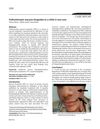
October 2023 in “Journal of the Pakistan Medical Association” This source describes a case of a 12-year-old male diagnosed with folliculotropic mycosis fungoides, presenting with an asymptomatic, erythematous plaque. Histology and immunohistochemistry confirmed FMF, which is typically rare in children and marked by follicular infiltration by CD4+ lymphocytes.
 July 2022 in “JEADV Clinical Practice”
 This review discusses the classification of lichen planopilaris and its subtypes under the proposed term "lichenoid alopecias," suggesting they exist along a clinical and histological spectrum.