24 citations
,
October 2022 in “Cell Regeneration” This study describes a new mouse model for vitiligo that mimics key clinical features such as skin depigmentation and CD8 + T cell infiltration, providing a useful tool for in-depth research and drug discovery.
2 citations
,
April 2025 in “Journal of Investigative Dermatology” T cells affect skin cell genes in inflammatory diseases, and therapy can normalize these changes.
26 citations
,
September 2023 in “Journal of Allergy and Clinical Immunology” Regulatory T cells help prevent autoimmunity and have potential for treating autoimmune diseases.
 1 citations
,
January 2014 in “The Journal of Dermatology”
1 citations
,
January 2014 in “The Journal of Dermatology” This letter discusses a case of Hepatitis C-related vitiligo in a patient with Ivemark syndrome and presents no new clinical results.
This study found that chronic UVR exposure in mice and humans leads to a permanent loss of papillary fibroblasts in the upper dermis, which is associated with changes in the extracellular matrix.
47 citations
,
June 2013 in “Biology of blood and marrow transplantation” This study presents a new mouse model for investigating chronic graft-versus-host disease, highlighting the role of human thymic tissue in developing multiorgan fibrosis driven by human immune cells.
16 citations
,
April 2024 in “Proceedings of the National Academy of Sciences” This study found that selectively targeting HDAC4 and HDAC7 in mice can reduce Th17 cell-mediated intestinal inflammation, suggesting a potential treatment approach for Th17-related inflammatory diseases like ulcerative colitis.
This study found that the loss of papillary fibroblasts in the skin due to UV radiation is mainly caused by an uncontrolled inflammatory response, with T cells helping fibroblast survival.
 1 citations
,
June 2020 in “bioRxiv (Cold Spring Harbor Laboratory)”
1 citations
,
June 2020 in “bioRxiv (Cold Spring Harbor Laboratory)” In this study, researchers identified unique prenatal lymphocyte features in human fetal skin, including proliferative naive T cells and memory-like T cells, which may influence antigen and allergen responses in utero and infancy.
 June 2024 in “Research Square (Research Square)”
 This study demonstrated that in mice, the absence of Jagged-1 expression in skin-resident regulatory T cells significantly delays wound healing by reducing the accumulation of neutrophils, highlighting the role of Jagged-1 in coordinating immune cell recruitment during injury.
This study found that UV radiation-induced fibroblast depletion in the skin is primarily due to a deregulated inflammatory response, with T cells aiding fibroblast survival under stress.
 2 citations
,
January 2026 in “Frontiers in Endocrinology”
2 citations
,
January 2026 in “Frontiers in Endocrinology” This review discusses the impaired functionality of regulatory T cells in the pancreas during the development of Type 1 diabetes, highlighting their role in disease pathogenesis, potential of Treg-based therapies, and challenges in clinical applications.
20 citations
,
December 2020 in “Frontiers in Immunology” This study found that certain T cell-associated genes were upregulated in dogs with Vogt-Koyanagi-Harada syndrome and vitiligo, suggesting a shared immunopathogenesis with humans.
January 2026 in “Journal of Investigative Dermatology” This study found that human γδTregs promoted hair regrowth and restored hair follicle immune privilege in a model of alopecia areata, suggesting potential for cell-based therapy in autoimmune diseases.
26 citations
,
May 2020 in “JCI Insight” In this study, single-cell sequencing revealed clonal expansions of CD4+ and CD8+ T cells in murine and human alopecia areata, supporting the development of predictive models for human disease.
 August 2024 in “International Journal of Molecular Sciences”
 The study investigated immune cell patterns around the hair follicle infundibulum in androgenetic alopecia, revealing significant differences in immune signatures between patients with AGA and control donors, specifically noting an enrichment of CD4 cells in the patient group.
 82 citations
,
October 2019 in “Frontiers in Immunology”
82 citations
,
October 2019 in “Frontiers in Immunology” This review discusses the features of regulatory T cells and the modulation of Foxp3, emphasizing post-translational modifications' impact on Treg function but reports no new clinical results.
107 citations
,
October 2022 in “Frontiers in Immunology” This bibliometric analysis examines the research landscape of T cells in atherosclerosis and identifies key trends and emerging research areas, highlighting the field's stabilization over the past decade.
 130 citations
,
November 2017 in “Frontiers in Immunology”
130 citations
,
November 2017 in “Frontiers in Immunology” This review explores recent findings on regulatory T cells, focusing on their unique functions in non-lymphoid tissues and new mechanisms of action, but presents no original clinical results.
2 citations
,
July 2022 in “The Kaohsiung Journal of Medical Sciences” This study demonstrated that the immunomodulatory drug FTY720 may enhance the survival of allogeneic fat grafts in mice by reducing immune rejection and improving neovascularization.
 188 citations
,
March 2018 in “Frontiers in Immunology”
188 citations
,
March 2018 in “Frontiers in Immunology” This review discusses the role of regulatory T-cells in tissue repair and regeneration across various organs and reports no new clinical results.
 64 citations
,
July 2016 in “Journal of Immunology”
64 citations
,
July 2016 in “Journal of Immunology” In this study, blocking the CXCR3 receptor in mice prevented the development of alopecia areata by inhibiting the accumulation of specific T cells in the skin, suggesting a potential therapeutic approach for humans.
 43 citations
,
February 2019 in “International immunology”
43 citations
,
February 2019 in “International immunology” This review examines the role of regulatory T cells in skin immune disorders, highlighting their unique functions in conditions like scleroderma, alopecia areata, and psoriasis, without reporting new clinical results.
 29 citations
,
February 2018 in “European Journal of Immunology”
29 citations
,
February 2018 in “European Journal of Immunology” In this study, Treg depletion impaired skin wound healing in mice, potentially by altering the cytokine environment and expanding certain T-cell populations, disrupting the normal healing process.
 October 2023 in “bioRxiv (Cold Spring Harbor Laboratory)”
 This study found that neonatal Regulatory T cells are crucial for maintaining PPARγ signaling in hair follicles, which supports melanocyte stem cell function and skin pigmentation during early postnatal development.
 4 citations
,
November 2023 in “Frontiers in immunology”
4 citations
,
November 2023 in “Frontiers in immunology” In this narrative review, researchers outlined the role of T cells in the autoimmune pathogenesis of alopecia areata and highlighted ongoing research into therapeutic pathways, beyond current JAK inhibitors, aimed at developing new treatments for the disease.
 January 2026 in “Immune Network”
 This review discusses the heterogeneity of Tregs in normal and tumor environments, emphasizing the complexity of targeting tumor-resident Tregs while maintaining systemic immune tolerance, but reports no new findings.
 66 citations
,
March 2018 in “British journal of dermatology/British journal of dermatology, Supplement”
66 citations
,
March 2018 in “British journal of dermatology/British journal of dermatology, Supplement” This article reviews the role of perifollicular regulatory T cells in maintaining hair follicle integrity in the context of hidradenitis suppurativa and calls attention to inflammatory mechanisms without reporting new clinical results.
 January 2023 in “Discovery immunology”
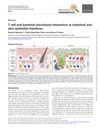
 T cells and bacteria in the gut and skin help maintain health and protect against disease.
 53 citations
,
August 2019 in “American journal of human genetics”
53 citations
,
August 2019 in “American journal of human genetics” This study found that FOXN1 haploinsufficiency is a significant genetic factor causing T cell lymphopenia at birth, linked to reduced thymic function in both humans and mice.