59 citations
,
January 2003 in “Phytomedicine” This study found that a cream containing 2% Fennel extract reduced hair diameter in idiopathic hirsutism patients more effectively than a cream with 1% Fennel or a placebo.
January 2026 in “Biomacromolecules” This study reports that a novel nanolipogel with moderate rigidity (NLG-2.5) enhances transdermal delivery of fucosterol, displaying superior permeability, targeting hair follicles, and promoting hair growth in androgenetic alopecia model mice by inhibiting inflammation and androgen pathways and promoting angiogenesis.
 8 citations
,
October 2018 in “Journal of The American Academy of Dermatology”
8 citations
,
October 2018 in “Journal of The American Academy of Dermatology” This study evaluated treatments for frontal fibrosing alopecia and found hydroxychloroquine and 5a-reductase inhibitors to be most effective, with 70-72% of patients experiencing stabilization or improvement, but limitations in treatment consistency and assessment methods remain.
January 2012 in “Chinese Clinical Oncology” This study found that for metastatic colorectal cancer patients, substituting calcium folinate with disodium folinate in combination with fluorouracil and oxaliplatin showed similar effectiveness and safety as the mFOLFOX6 regimen.
54 citations
,
November 2007 in “Actas Dermo-Sifiliográficas” Early diagnosis of frontal fibrosing alopecia is crucial to prevent permanent hair loss.

This study found that various reduced folates effectively penetrated an in vitro skin model, promoted cell proliferation and migration, and may enhance wound healing, suggesting potential for topical treatment in skin conditions.
January 2020 in “Global dermatology” This study investigated the effects of GFC with FGF5s and NMN at a depth of 0.8 mm using a microneedle for treating hair loss, but the abstract provides no measurable results.
 5 citations
,
July 2019 in “Photodiagnosis and photodynamic therapy”
5 citations
,
July 2019 in “Photodiagnosis and photodynamic therapy” This study reports a case of a 59-year-old female with refractory follicular mucinosis and diffuse scalp alopecia who achieved complete clinical remission following treatment with a combination of topical tacalcitol and photodynamic therapy.
April 2021 in “Aktuelle Dermatologie” This review discusses frontal fibrosing alopecia, noting its clinical characteristics, possible environmental factors, and lack of evidence-based therapies, but reports no new research findings.
 117 citations
,
March 2013 in “Journal of the European Academy of Dermatology and Venereology”
117 citations
,
March 2013 in “Journal of the European Academy of Dermatology and Venereology” This study reported that while no effective treatment exists for frontal fibrosing alopecia, oral 5-alpha-reductase inhibitors showed the most promise, inducing a good clinical response in 45% of patients.
1 citations
,
January 2001 in “Acta Archaeologica Academiae Scientiarum Hungaricae” This review details the Follicular Unit Extraction technique for hair restoration, highlighting its advantages over traditional strip surgery, but includes no new clinical findings.
March 2023 in “Reactions Weekly” April 2021 in “bioRxiv (Cold Spring Harbor Laboratory)” This study found that new folate salts in aqueous and lipophilic solutions can penetrate skin and enhance wound healing in vitro by converting metabolically, suggesting their potential for topical application.
April 2024 in “Journal of clinical medicine” This review discusses various therapeutic options for frontal fibrosing alopecia and highlights the need for more research, as existing data are largely retrospective and lack precise treatment guidelines.
 14 citations
,
July 2012 in “Journal of the American Academy of Dermatology”
14 citations
,
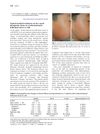
July 2012 in “Journal of the American Academy of Dermatology” This study found that topical tacalcitol improved roughness and scaling in erythromelanosis follicularis faciei et colli, although it was less effective for facial erythema.
 August 2022 in “IntechOpen eBooks”
 This review discusses treatments for frontal fibrosing alopecia and lichen planopilaris, noting that systemic 5-alpha reductase inhibitors are most effective for stabilization and potential hair regrowth, but reports no new clinical results.
 December 2024 in “DIET FACTOR (Journal of Nutritional & Food Sciences)”
 This study reports that fenugreek seed extract (Furocyst®) improved body weight, ovarian cysts, ovary size, hair growth, and menstrual regularity in women with PCOS, indicating its potential as an effective phytotherapeutic option for managing the condition.
September 2019 in “Ukrainian Journal of Dermatology Venerology Cosmetology” In this study, 90 pediatric patients with scalp microsporia were treated with a combination of griseofulvin, Antral, sertaconazole nitrate cream, and Bion 3 Kid, resulting in complete recovery, reduced treatment duration, and prevention of disease recurrence and colds, with high drug tolerability.
 47 citations
,
September 2013 in “Aaps Pharmscitech”
47 citations
,
September 2013 in “Aaps Pharmscitech” This study found that liquid crystalline nanoparticles formulated with Cremophor surfactants significantly enhanced skin permeation of finasteride compared to lower surfactant concentrations.
 7 citations
,
October 2015 in “Actas Dermo-Sifiliográficas”
7 citations
,
October 2015 in “Actas Dermo-Sifiliográficas” This article reviews the increasing incidence of frontal fibrosing alopecia since its first description in 1994 and reports no new results.
August 2023 in “Journal of Investigative Dermatology” In this meta-analysis, researchers found that oral dutasteride may stabilize or improve frontal fibrosing alopecia in patients, but results varied widely, and further controlled studies are needed to confirm its effectiveness as a treatment option.
 April 2016 in “Journal of Investigative Dermatology”
 This study found that a newly developed peptide, FOL-005, significantly inhibited hair growth and counteracted minoxidil's effects in organ-cultured human male scalp skin and mouse models, without apparent toxicity.
 20 citations
,
January 2014 in “Journal of the European Academy of Dermatology and Venereology”
20 citations
,
January 2014 in “Journal of the European Academy of Dermatology and Venereology” This article includes no new results; it discusses ongoing treatment approaches for frontal fibrosing alopecia and lichen planopilaris.
 May 2022 in “International journal of infectious diseases”
 In this case study, a 70-year-old woman with generalized favus caused by Trichophyton schoenleinii achieved a clinical and mycological cure after a one-month terbinafine treatment.
June 2026 in “International Journal of Ayurvedic Medicine” This randomized clinical trial observed that Facia Men’s capsule significantly reduced hair shedding in men with androgenetic alopecia over 12 weeks without affecting renal or liver function, though a small change in blood glucose suggests monitoring metabolic health.
 March 2005 in “Journal of The American Academy of Dermatology”
 The two lotions used day and night may be a good alternative to minoxidil for hair loss treatment with better cosmetic effects and tolerance.
 64 citations
,
June 2009 in “Journal of The American Academy of Dermatology”
64 citations
,
June 2009 in “Journal of The American Academy of Dermatology” This article discusses frontal fibrosing alopecia, noting potential connections to lichen planopilaris, but reports no new clinical findings.
26 citations
,
January 2012 in “Journal of the American Academy of Dermatology” This study found that adding topical eflornithine to hair laser treatment significantly reduced hair counts and inflammatory papules more effectively than laser therapy alone in treating pseudofolliculitis barbae.
 July 2025 in “Journal of the European Academy of Dermatology and Venereology”
 In this study, experts propose a diagnostic and treatment guideline for folliculitis decalvans, emphasizing the role of trichoscopy and introducing a therapeutic algorithm tailored to disease activity, which is significant for clinical management given the lack of specific clinical trials.