Search
for
Sort by
Research
30-60 / 1000+ results
research Phase separation: a new window in RALF signaling
This study found that RALF peptides, through liquid-liquid phase separation, form condensates with pectin and other proteins, playing a pivotal role in plant development and stress response regulation.
research The feasibility and utility of hair follicle sampling to measure FMRP and FMR1 mRNA in children with or without fragile X syndrome: a pilot study
This study observed that repeated hair follicle sampling is feasible and reliable for measuring FMR1 mRNA and FMRP in individuals with Fragile X syndrome, supporting its use in longitudinal studies.
research Topical and transdermal lipid-polymer hybrid nanoparticles (LPN): an integration in advancing dermatological treatments
This review discusses lipid-polymer hybrid nanoparticles for dermatological applications, outlining their structural and formulation advancements, but reports no new clinical results and calls for further research on their therapeutic potential.
research Frontal fibrosing alopecia and lichen planopilaris: epidemiology, treatment, and remission rate (2014-2024)
This study found that frontal fibrosing alopecia had higher long-term remission rates compared to lichen planopilaris, highlighting differences in their clinical presentations and outcomes.

research Análise comparativa das características clínico-patológicas e imunopatológicas do líquen plano pilar e da alopecia frontal fibrosante
Lichen planopilaris and frontal fibrosing alopecia are likely the same disease with different clinical appearances.
research Alopecia Mimicking Lichen Planopilaris in a Patient with Mycosis Fungoides
This case report highlights the diagnostic challenges of distinguishing folliculotropic mycosis fungoides from alopecia areata and lichen planopilaris, emphasizing the importance of histopathological evaluation for accurate diagnosis and treatment.
research Folliculotropic Mycosis Fungoides: Update on Diagnosis, Clinicopathological Stage, and Management
This review discusses folliculotropic mycosis fungoides, highlighting its diagnostic criteria and therapeutic strategies based on disease staging, but does not report new clinical findings.

research A Case of Familial Male-limited Precocious Puberty with a Novel Mutation
This report presents a case of familial male-limited precocious puberty with a novel LHCGR gene mutation, where a boy responded well to treatment with bicalutamide and anastrozole.

research The Feasibility and Utility of Hair Follicle Sampling To Measure FMRP and FMR1 mRNA in Children With or Without Fragile X Syndrome
This study found that repeatedly collecting hair follicles from individuals with fragile X syndrome is feasible for measuring FMR1 and FMRP levels in both home and office settings.
research Folliculotropic mycosis fungoides following renal transplantation
This case report describes a 46-year-old man who developed folliculotropic mycosis fungoides, a form of post-transplant lymphoproliferative disorder, following renal transplantation.

research Folliculotropic mycosis fungoides
This paper discusses the diagnostic challenges and treatment options for folliculotropic mycosis fungoides, emphasizing the differing prognoses between its indolent and aggressive subtypes and reporting no new clinical results.

research Lichen Planopilaris With Foreign-Body Granuloma
This article reports on a typical case of lichen planopilaris with foreign-body granulomas around hair shaft material, suggesting these may be an additional criterion for diagnosing late-stage LPP/FFA.

research Frontal fibrosing alopecia associated with cutaneous lichen planus in a premenopausal woman
This case report describes the first known instance of fibrosing alopecia associated with cutaneous lichen planus, suggesting fibrosing alopecia may be a variant of lichen planopilaris.

research PA13 A hair’s breadth from misdiagnosis
This case report highlights the diagnosis of folliculotropic mycosis fungoides in a 15-year-old boy with atypical skin and hair follicle changes, a rare occurrence in pediatric patients.
research Frontal fibrosing alopecia versus lichen planopilaris: a clinicopathological study
This study found that frontal fibrosing alopecia and lichen planopilaris have similar histopathological features, but FFA exhibits more prominent apoptosis and less inflammation with spared interfollicular epidermis.
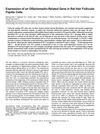
research Expression of an Olfactomedin-Related Gene in Rat Hair Follicular Papilla Cells
This study identified FP-1 as a highly specific extracellular matrix protein in follicular papilla cells, which may play a role in hair growth regulation during specific hair cycle phases.
research Lichen planopilaris versus frontal fibrosing alopecia: histopathologically distinct diseases or not?
Lichen planopilaris and frontal fibrosing alopecia are likely distinct diseases with different tissue involvement.
research A papular eruption on the face. A distinct subtype of lichen planopilaris?
This case report describes an atypical presentation of lichen planopilaris affecting only facial vellus hair, without scalp involvement, in a 46-year-old man.
research How to Discern Folliculotropic Mycosis Fungoides From Follicular Mucinosis Using a Pediatric Case
This case report presents a 6-year-old boy with both folliculotropic mycosis fungoides and primary follicular mucinosis, providing insights on differentiating the two conditions in pediatric patients.

research A Fibrous Hybrid Patch Couples Cell-Derived Matrix and Poly(l-lactide-co-caprolactone) for Endothelial Cells Delivery and Skin Wound Repair
This research found that a biodegradable fibrous membrane incorporating fibroblast-derived ECM accelerated wound healing and improved neovascularization in a mouse model.
research Neonatal follicular mucinosis
This case report describes the first known instance of congenital follicular mucinosis in a newborn, diagnosed through histopathological examination of a scalp lesion.

research LÍQUEN PLANO PILAR – RELATO DE UM CASO ASSOCIADO A DOENÇAS AUTOIMUNES
This paper presents a therapeutic approach with excellent results in a case of lichen planopilaris overlapping with dermatomyositis and scleroderma, although broader applicability is not discussed.
research Nevus lipomatosus cutaneous superficialis with perifollicular fibrosis.
This study reports the first known case of multiple type nevus lipomatosus cutaneous superficialis in a 10-month-old girl, with the unique feature of perifollicular fibrosis.
research Follicular mycosis fungoides mimicking a cutaneous B‐cell lymphoproliferative disorder
This case study describes a patient with rapidly progressing follicular mycosis fungoides, highlighting its unusual histology and challenges in diagnosing it against cutaneous B-cell lymphoma.
research Poly-D,L-Lactic Acid Filler Increases Hair Growth by Modulating Hair Follicular Stem Cells in Aged Skin
In this study, PDLLA treatment in middle-aged mice was observed to enhance hair growth by increasing macrophage M2 polarization and hair follicle stem cell proliferation, potentially rejuvenating the skin's microenvironment and offering a novel approach for age-related hair loss.
research Lichen planus pigmentosus and lichen planopilaris
This review discusses the potential relationship between lichen planus pigmentosus and frontal fibrosing alopecia, presenting a case study but reporting no new clinical findings.

research Lichen Planopilaris
This review discusses the clinical and trichoscopic features of lichen planopilaris and notes its potential underdiagnosis prior to hair transplant, but it reports no new findings.
research 128 Analysis of mice skin distribution using MALDI-MSI after subcutaneous injections of a potent novel peptide hair growth promoter, FOL-005
In a clinical phase I/IIa study, subcutaneous injections of the peptide FOL-005 increased hair growth by 8% and were safe for treating alopecia.
research Folliculotropic mycosis fungoides with central nervous system involvement: Demonstration of tumor clonality in intrafollicular T cells using laser capture microdissection
This case report describes the first use of laser capture microdissection to confirm that atypical lymphocytes in a folliculotropic mycosis fungoides case involving the central nervous system were part of the same tumor clone.