1 citations
,
May 2020 in “bioRxiv (Cold Spring Harbor Laboratory)” In this study, researchers identified a temperature-sensitive mutation in the FERONIA gene of plants that prevents root hair formation at elevated temperatures, highlighting its role in maintaining root hair growth and response to plant hormones.
 39 citations
,
July 2015 in “British Journal of Dermatology”
39 citations
,
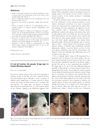
July 2015 in “British Journal of Dermatology” This article discusses the pseudo 'fringe sign' in frontal fibrosing alopecia, highlighting that it is not solely related to traction, and it reports no new clinical results.
Hair movement can indicate hair quality and health.
 66 citations
,
January 2010 in “Journal of The American Academy of Dermatology”
66 citations
,
January 2010 in “Journal of The American Academy of Dermatology” This study reported that mycophenolate mofetil was effective in reducing signs and symptoms of active lichen planopilaris in 83% of patients who had failed multiple prior treatments.
July 2026 in “Materials Today Bio” This study demonstrated that in a mouse melanoma wound model, the MQ Microneedles effectively managed ROS levels to inhibit tumor growth and promote wound healing through light-controlled release.
2 citations
,
September 2021 in “Anais Brasileiros de Dermatologia” Increased sunscreen use may be linked to frontal fibrosing alopecia in Hispanic females.
1 citations
,
January 2012 in “Jounal of The Korean Society of cosmetology” Tremella fuciformis Berk helps protect hair from stress-related damage.
75 citations
,
September 2007 in “Journal of Heredity” This study found that mutations in the FGF5 gene are the primary genetic factor causing long hair in domestic cats through an autosomal recessive mechanism.
11 citations
,
June 1974 in “Journal of Cutaneous Pathology” In this study, electron microscopy of follicular mucinosis showed severe cytoplasmic degeneration in hair follicles, with myelin figures and onion-like lamellar structures, but no indications of mucin release through degeneration or degradation were found.
9 citations
,
November 2014 in “Indian Journal of Endocrinology and Metabolism” This case report describes a young female with a rare combination of 46,XX gonadal dysgenesis and MRKH syndrome, highlighting associated infertility challenges.
5 citations
,
January 2012 in “Journal of Cosmetics Dermatological Sciences and Applications” This study found that Malassezia folliculitis, common among young adult males, can be distinguished from truncal acne by its clinical features and responds well to antifungal treatment.
2 citations
,
January 2013 in “Iraqi journal of Medical Sciences”  23 citations
,
October 2018 in “Australasian Journal of Dermatology”
23 citations
,
October 2018 in “Australasian Journal of Dermatology” This review highlights that frontal fibrosing alopecia’s increasing incidence may involve immune, genetic, hormonal, and environmental factors, yet its pathogenesis remains complex and not fully understood.
 March 2022 in “Research Square (Research Square)”
 This study reported that pelage hair follicle mesenchymal stem cells isolated from mice using Ficoll Density Gradient Sedimentation can be obtained in large numbers and may promote hair growth via exosome secretion.
 May 1993 in “Drugs & Therapy Perspectives”
 Formestane is a preferred second-line treatment for advanced breast cancer in postmenopausal women because it's effective and has fewer side effects.
10 citations
,
November 1993 in “Indian Journal of Dermatology Venereology and Leprology” This report observed that a male developed erythema multiforme linked to both topical and oral minoxidil use for androgenetic alopecia, supported by eruption recurrence with reapplication.
March 2026 in “PubMed Central” This study reports that the prevalence of female pattern hair loss increases with age, affecting 12% of women by age 29, 25% by age 50, and 41% to 50% by age 70 and older, with risk factors including genetics and certain endocrinological conditions.
 8 citations
,
September 2011 in “European Journal of Dermatology”
8 citations
,
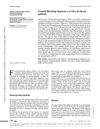
September 2011 in “European Journal of Dermatology” This study reports that most cases of frontal fibrosing alopecia did not show significant improvement with available treatments, and effective management remains unproven.
 63 citations
,
October 2011 in “Archives of Dermatology”
63 citations
,
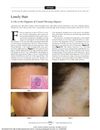
October 2011 in “Archives of Dermatology” Isolated long hairs at the original hairline can help diagnose Frontal Fibrosing Alopecia.
1 citations
,
January 2006 in “Maia-rivista Di Letterature Classiche” This review discusses the bioactive compounds and biological activities of Polygonum multiflorum Thunb. and highlights concerns about its hepatotoxicity, but reports no new clinical results.
 31 citations
,
April 2010 in “British journal of dermatology/British journal of dermatology, Supplement”
31 citations
,
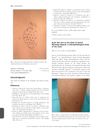
April 2010 in “British journal of dermatology/British journal of dermatology, Supplement” This report describes two patients with frontal fibrosing alopecia who developed acute hair loss on their limbs, revealing that the limb alopecia had similar histological features to scalp alopecia.
8 citations
,
October 2012 in “Transgenic Research” This study found that transgenic mice overexpressing human H-ferritin showed mild growth retardation and a temporary hairless phenotype, highlighting H-ferritin's physiological roles.
 4 citations
,
September 2016 in “PubMed”
4 citations
,
September 2016 in “PubMed” In this study, platelet-rich fibrin matrix combined with follicular unit transplantation increased hair follicle numbers in men with androgenetic alopecia on the treated side of the scalp after six months.
 1 citations
,
January 2021 in “Journal of biological chemistry/The Journal of biological chemistry”
1 citations
,
January 2021 in “Journal of biological chemistry/The Journal of biological chemistry” This study found that loss of the folliculin protein delays transferrin receptor recycling, leading to iron deficiency and suggesting a role in the mechanisms of Birt-Hogg-Dubé syndrome.
1 citations
,
January 2020 in “Bioscientia medicina” This review covers female pattern hair loss, outlining its progression, existing treatments like topical minoxidil and laser therapy, and notes that anti-androgen therapies need further investigation.
4 citations
,
July 2025 in “Annals of the New York Academy of Sciences” This review emphasizes that collaboration between forensic anthropology and molecular anthropology could significantly improve the identification of unknown human remains by creating more comprehensive biological profiles.
 July 1991 in “Endocrinology”
 This study suggests that combining the 5α-reductase inhibitor 4-MA with the antiandrogen Flutamide may improve prostate cancer therapy by additively inhibiting prostatic growth and androgen-sensitive functions in rats.
 April 2016 in “The Journal of Sexual Medicine”
 PFS affects some women, steroids easily bought online, hypogonadism info unreliable, low testosterone linked to CVD.
January 2026 in “JCEM Case Reports” This study of monozygotic transgender male twins observed that consistent hormone therapy led to physical changes such as deepening voice and increased facial/body hair, with no reported mood-related adverse effects.
 20 citations
,
January 2017 in “Scientific reports”
20 citations
,
January 2017 in “Scientific reports” This study found that cetaceans have adapted their fibroblast growth factors to assist in low bone density, hypoxia tolerance, and the development of rigid flippers, reflecting significant evolutionary changes for aquatic life.