Search
for
Sort by
Research
420-450 / 1000+ resultsresearch Reversible severe myopathy during treatment with finasteride

research Identification of Familial Infections Using Multilocus Microsatellite Typing in Tinea Corporis due to Microsporum canis
This study reported three cases of tinea corporis caused by Microsporum canis in a household, linked to a domestic cat, where genetic analysis suggested a familial transmission route.
research Decision letter: Hair follicle dermal condensation forms via Fgf20 primed cell cycle exit, cell motility, and aggregation
This study found that fibroblast growth factor 20 (Fgf20) orchestrates the movement and behavior of dermal fibroblasts, directing their formation into dermal condensates during hair follicle development in mice.
research FGF20 Secreted From Dermal Papilla Cells Regulate the Proliferation and Differentiation of Hair Follicle Stem Cells in Fine‐Wool Sheep
In this study, researchers found that reducing FGF20 expression in dermal papilla cells of fine-wool sheep impedes the growth and differentiation of hair follicle stem cells, providing insights into wool trait improvement and regenerative medicine applications.

research Frontal Fibrosing Alopecia in a Man: Results of Follicular Unit Test Grafting
This article appears to be a table of contents or navigation page for a journal, not presenting any new findings or research results.
research Trichofolliculoma With Mucinosis
This case report describes an unusual trichofolliculoma in a 54-year-old man, notable for its prominent mucinosis, which is typically not as abundant in such tumors.
research Frontal Fibrosing Alopecia. An Example of Disrupted Aryl Hydrocarbon Receptor-Mediated Immunological Homeostasis in the Skin?
This review hypothesizes that excessive facial photo-protection may contribute to frontal fibrosing alopecia by disrupting immunological homeostasis through the aryl hydrocarbon receptor-kynurenine pathway, but it reports no new clinical results.
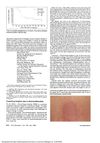
research Fixed-Drug Eruption due to Dextromethorphan
This case report details a fixed-drug eruption in a woman linked to the use of dextromethorphan, marking it as a previously unreported skin reaction to this medication.

research Platelet-Rich Fibrin Matrix (PRFM) for Androgenetic Alopecia
In this study, intradermal injections of autologous platelet-rich fibrin matrix significantly increased hair density in patients with androgenetic alopecia at 2 and 3 months after initial treatment.
research Postcast hypertrichosis in a patient with frontal fibrosing alopecia
This letter to the editor describes a case of postcast hypertrichosis in a patient with frontal fibrosing alopecia and reports no new research findings.

research A Window into Mammalian Basement Membrane Development: Insights from themTurq2-Col4a1Mouse Model
This study describes the use of a genetically engineered mouse model, mTurquoise2-Col4a1, to fluorescently label collagen IV and observe basement membrane dynamics during skin development, revealing its stability and pliability during rapid growth phases.

research BH03: Systemic sclerosis and frontal fibrosing alopecia: a novel combination of scarring alopecia
This case report describes a novel instance of scarring alopecia with features of frontal fibrosing alopecia in a patient with systemic sclerosis, suggesting a potential link between the two conditions not previously reported.
research Investigation of human hair fibers using lateral force microscopy
Hair treatments like bleaching increase friction by exposing tiny pores on the hair surface.
research Development and optimization of finasteride-cinnamon oil-loaded ethanol-free microemulsions for transdermal delivery
This study successfully developed and optimized ethanol-free microemulsion systems for the transdermal delivery of finasteride, showing that the predicted optimal formulations had physicochemical characteristics close to estimated values, without significant damage to treated hair fibers.
research Efficacy and Safety of Once-Daily Minoxidil Foam 5% Versus Twice-Daily Minoxidil Solution 2% in Female Pattern Hair Loss: A Phase III, Randomized, Investigator-Blinded Study.
In this study, once-daily 5% minoxidil foam and twice-daily 2% minoxidil solution both promoted hair regrowth in women with female pattern hair loss, but noninferiority of the foam was not established.

research Clinical Characteristics of Frontal Fibrosing Alopecia in Brazil: A Series of 59 Patients
This study reports that frontal fibrosing alopecia in Brazilian patients is common in postmenopausal women and often associated with hypothyroidism and facial irritation from cosmetic products.

research Reproductive seasonality and maturation throughout the complete life-cycle in the mouflon ram (Ovis musimon)
This study found that in captive mouflon rams, reproductive and physical maturation, marked by changes in hormone levels and physical attributes, progresses gradually across their life span, with sexual maturity tied closely to physical maturity.

research Female pattern hair loss: A clinical, pathophysiologic, and therapeutic review
This article discusses treatments for female pattern hair loss, highlighting that oral antiandrogens and topical minoxidil can effectively arrest progression and reverse miniaturization in many patients with mild-to-moderate cases, but it reports no new clinical results.
research Association of Inflammation With Progression of Hair Loss in Women With Frontal Fibrosing Alopecia
More inflammation leads to faster and worse hair loss in women with frontal fibrosing alopecia.
research Expression of an Olfactomedin-Related Gene in Rat Hair Follicular Papilla Cells
This study identified FP-1 as a highly specific extracellular matrix protein in follicular papilla cells, which may play a role in hair growth regulation during specific hair cycle phases.

research A Cross-sectional Study of Rosacea and Risk Factors in Women with Frontal Fibrosing Alopecia
This study found that women with frontal fibrosing alopecia have a significantly higher prevalence of rosacea compared to controls, particularly those with severe alopecia, and certain factors like perifollicular erythema, higher BMI, and lower progesterone levels were linked to increased rosacea risk.

research A pilot evaluation of scalp skin wounding to promote hair growth in female pattern hair loss
Scalp micro-wounding helps promote hair growth in female pattern hair loss.

research 5% Minoxidil topical foam for men: Hair growth in millennials – a post hoc analysis
Using 5% minoxidil foam twice daily can help regrow hair, especially in younger men aged 20-30.

research Bracketed Stability Evaluation of Topical Minoxidil and Finasteride in Foamil®.
In this study, researchers found that a propylene glycol-free and alcohol-reduced topical foam containing minoxidil and finasteride remained chemically, physically, and microbially stable for 180 days when stored properly at room temperature in light-resistant containers.

research Comparing minoxidil-finasteride mixed solution with minoxidil solution alone for male androgenetic alopecia: a systematic review and meta-analysis of randomized controlled trials
This meta-analysis found that the combination of topical minoxidil-finasteride was more effective than minoxidil alone in improving hair density, hair diameter, and global photographic assessment for male androgenetic alopecia, though larger standardized trials are needed to confirm long-term outcomes.

research Familial frontal fibrosing alopecia in two male families
This article discusses familial frontal fibrosing alopecia in two male families and reports no new clinical findings.

research Comment on: Risk factors for frontal fibrosing alopecia: A case-control study in a multiracial population
The commentary suggests that certain hair and skin care products may be linked to frontal fibrosing alopecia, but not sunscreens, and calls for more thorough research on the causes.
research Minimally invasive procedures for the management of female pattern hair loss
This review discusses minimally invasive procedures for female pattern hair loss and highlights their potential as adjunctive therapies, though the evidence for their efficacy is currently limited.

research 382 Environmental pathobiology of frontal fibrosing alopecia (FFA): Does linalool promote FFA development and progression by inducing epithelial hair follicle stem cell damage and MICA expression in the bulge?
This study suggests that allergens like linalool found in personal care products may contribute to the pathobiology of frontal fibrosing alopecia by affecting immune responses and stem cell function in hair follicles.