 10 citations
,
March 2015 in “Journal of dermatology”
10 citations
,
March 2015 in “Journal of dermatology” This case report describes a 12-year-old boy with severe skin scaling due to novel compound heterozygous null truncation mutations in the TGM1 gene, resulting in loss of transglutaminase 1 activity.
This study reported that prompt diagnosis and treatment with 5-alpha-reductase inhibitors and topical immunomodulators are key to mitigating the effects of frontal fibrosing alopecia and preventing permanent hair loss.
 18 citations
,
February 2012 in “Experimental Dermatology”
18 citations
,
February 2012 in “Experimental Dermatology” This study found no significant association between selected gene variants and female pattern hair loss, suggesting these genes might not be involved in its development.
7 citations
,
May 2022 in “Cancers” This study found that UC.145 influences DKK1 methylation and Wnt signaling in gastric cancer, with implications for patient survival and its potential as a predictive biomarker.
August 2022 in “International Journal of Molecular Sciences” This study found that lncRNA2919 negatively impacts hair follicle regeneration by decreasing follicle depth and density in a rabbit model, suggesting a regulatory role in the hair follicle cycle through DNA methylation.
 15 citations
,
July 2020 in “Dermatologic Therapy”
15 citations
,
July 2020 in “Dermatologic Therapy” This review discusses the pathophysiology, diagnosis, systemic associations, and treatments for female pattern hair loss and reports no new clinical findings.
2 citations
,
December 2024 in “Microscopy Research and Technique” This study introduced a novel microscopy system using an Er3 + −doped femtosecond fiber laser, achieving detailed imaging of biological structures in plant and skin samples with improved spatial resolution for various applications, including in vivo imaging.
 January 2025 in “International Journal of Scientific Research”
 This study found that female pattern hair loss was present in 12.5% of PCOS patients examined, with most cases in younger women, highlighting early detection and management importance.
Folicrex may help with hair growth and health but lacks clinical evidence.
 September 2025 in “Dermatologic Surgery”
 This study found that combining Fractional Microneedling Radiofrequency (FMRF) with topical minoxidil significantly increased hair counts and density more than minoxidil alone or combined with Fractional CO2 in women with androgenic alopecia.
2 citations
,
February 2023 in “Anais Brasileiros de Dermatologia”  April 2018 in “Journal of Investigative Dermatology”
 This study found that NDRG1 expression increases during the proliferation of infantile hemangioma and may positively regulate its growth, while FOXO1 downregulation plays a role in its pathogenesis.
 1 citations
,
June 2023 in “Advances in therapy”
1 citations
,
June 2023 in “Advances in therapy” In a real-world registry study, ripretinib showed effectiveness with a median progression-free survival of 7.70 months and a tolerable safety profile in Chinese patients using it as a fourth-line treatment for advanced GIST, particularly benefiting those with non-gastric tumors.
4 citations
,
May 2023 in “Cells” In this study, baricitinib treatment improved the differentiation of skin-derived precursors into adipocytes for diseases like Hutchinson-Gilford progeria syndrome, suggesting potential benefits when combined with lonafarnib.
 31 citations
,
June 2018 in “Dermatologic Surgery”
31 citations
,
June 2018 in “Dermatologic Surgery” In this randomized, double-blind trial, researchers observed that low-level laser therapy led to significantly greater hair regrowth on treated areas compared to a sham treatment in patients with androgenetic alopecia over 24 weeks, suggesting it as a potentially effective and safe option.
January 2000 in “Chinese Journal of Dermatology” This study found that the Chinese herb Ligustrum lucidum may enhance expression of hair growth-related genes, HGF and VEGF, in cultured mouse hair follicles.
 20 citations
,
January 2016 in “Intractable & Rare Diseases Research”
20 citations
,
January 2016 in “Intractable & Rare Diseases Research” In this clinical experience, treating frontal fibrosing alopecia with oral finasteride, hydroxychloroquine, tacrolimus, and excimer laser was associated with optimal results in patients with active inflammation.
 May 2025 in “Journal of Clinical Images and Medical Case Reports”
 The study observed that patterned fibrosing alopecia, a type of scarring hair loss, appears in some patients after hair transplants, facelifts, and other surgical interventions, sharing features with lichen planopilaris and androgenetic alopecia.
 123 citations
,
August 2005 in “Journal of the European Academy of Dermatology and Venereology”
123 citations
,
August 2005 in “Journal of the European Academy of Dermatology and Venereology” In this study, the researchers observed that treatment with intralesional and topical corticosteroids, finasteride, and minoxidil may stop the progression of frontal fibrosing alopecia in postmenopausal and premenopausal women.
 23 citations
,
April 2021 in “Journal of Clinical Medicine”
23 citations
,
April 2021 in “Journal of Clinical Medicine” This review compiles existing data on frontal fibrosing alopecia and highlights the promise of 5-alpha reductase inhibitors as a treatment option, while noting the need for clarity on its cause and progression.
January 2021 in “Research Square (Research Square)” This study found that long noncoding RNA profiles in Wan strain Angora rabbits may help understand the molecular mechanisms regulating hair follicle density, potentially influencing wool fiber production.
1 citations
,
January 2025 in “Proceedings of the National Academy of Sciences” This study used cryoelectron microscopy to unveil the structure of LPA-bound human LPAR6, revealing unique ligand binding and recognition modes distinct from LPAR1, which may aid in designing targeted compounds for hair loss and cancer.
 January 2026 in “Stem Cell Research & Therapy”
 This study found that targeting the AR/miR-128-3p/IGF-1 pathway with ASLNC168501 shows potential for treating androgenetic alopecia by restoring hair follicle stem cell function and promoting hair regeneration.

This research observed that removing RNase L in mice enhances regenerative capacity through increased IL-36 and wound-induced hair neogenesis, highlighting RNase L as a gene that represses regeneration by moderating immune responses during viral infections.
 2 citations
,
July 2022 in “Frontiers in Medicine”
2 citations
,
July 2022 in “Frontiers in Medicine” This review discusses the current understanding of frontal fibrosing alopecia's pathogenesis, highlighting genetic susceptibility, immune response involvement, and possible links to steroid hormones, but reports no new clinical results.
 2 citations
,
January 2022 in “Experimental Dermatology”
2 citations
,
January 2022 in “Experimental Dermatology” This paper proposes that GDNF signaling may enhance skin regeneration and hair follicle formation by influencing dermal fibroblast differentiation, particularly following injury.
 31 citations
,
April 2010 in “British journal of dermatology/British journal of dermatology, Supplement”
31 citations
,
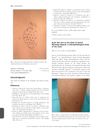
April 2010 in “British journal of dermatology/British journal of dermatology, Supplement” This report describes two patients with frontal fibrosing alopecia who developed acute hair loss on their limbs, revealing that the limb alopecia had similar histological features to scalp alopecia.
 18 citations
,
January 2008 in “Journal of The American Academy of Dermatology”
18 citations
,
January 2008 in “Journal of The American Academy of Dermatology” This study found that the proteins GDNF, NTN, GFRα-1, GFRα-2, and c-Ret are differentially expressed during various stages of the human hair follicle cycle, with potential implications for hair biology.
3 citations
,
February 2023 in “Journal of Investigative Dermatology” Ch55 may help reduce skin scarring and fibrosis.
1 citations
,
December 2022 in “PubMed” This study identified a long noncoding RNA, LOXL1-AS1, with potential diagnostic significance in androgenic alopecia, which may regulate TP53 expression by targeting hsa-miR-5193 within a ceRNA network.