 59 citations
,
February 2021 in “Advanced Functional Materials”
59 citations
,
February 2021 in “Advanced Functional Materials” In this study, a silk-inspired hydrogel system was developed that combines photodynamic therapy and wound healing, which may significantly reduce melanoma recurrence and enhance healing of infected wounds.
 October 2022 in “ACS Applied Materials & Interfaces”
 This study reports that the newly developed SA-Ca(II) hydrogel has tunable mechanical properties, high biocompatibility, and potential applications in wearable protections and stimuli-responsive electronics.
2 citations
,
January 2017 Hair movement can indicate hair quality and health.
 18 citations
,
September 2013 in “Technology”
18 citations
,
September 2013 in “Technology” This study introduces a new multimodal imaging technology to visualize and quantify cell dynamics in natural skin over long durations, demonstrated in GFP bone marrow-transplanted mice, to study dynamic skin regeneration.
7 citations
,
July 2021 in “The Journal of Dermatology” This study in Asian females found that higher use of moisturizers and sunscreen among FFA patients may reflect appearance concerns rather than indicating a direct link to the disease mechanism.
January 2019 in “Florida International University Digital Commons (Florida International University)” This research describes using advanced mass spectrometry imaging techniques to analyze gunshot residue and map molecular components in biological samples, such as tumors and mosquito ovarian follicles, at unprecedented spatial resolution and specificity.
 September 2010 in “Institutional Repositories DataBase (IRDB)”
 Sorafenib can cause a temporary skin condition that goes away after stopping the drug.
February 2012 in “Proceedings of SPIE, the International Society for Optical Engineering/Proceedings of SPIE” This study observed nestin-GFP expressing stem cells in the hair follicle bulge of living mice using high-resolution in-vivo multiphoton tomography, allowing migration tracking within their natural skin environment.
December 2025 in “International Journal of Cosmetic Science” A new tool helps better assess and treat hair loss in Chinese men.
 1 citations
,
January 2022 in “Journal of Pharmaceutical Sciences”
1 citations
,
January 2022 in “Journal of Pharmaceutical Sciences” This study developed a stable, cosmetically appealing formulation for the topical delivery of the peptide FOL-005, enhancing skin permeation and maintaining stability by keeping the peptide solid and in a water-free environment with particle sizes under 10 µm.
July 2021 in “International Journal of Applied Pharmaceutics” This study described the development and evaluation of a finasteride nanogel for treating androgenetic alopecia, reporting higher cumulative drug release and enhanced spreadability compared to a plain gel, suggesting potential as a treatment option.
2 citations
,
July 2025 in “Acta Pharmacologica Sinica” Isoginkgetin reduces inflammation in cells by blocking NF-κB activation.
 June 2024 in “Advanced therapeutics”
 In this study, a novel hydrogel dressing combining photodynamic therapy with organic semiconductor nanoparticles and silk fibroin demonstrated effective antibacterial action and enhanced wound healing and hair follicle regeneration in a mouse model, showing promise as an advanced wound care solution.
Managing telogen effluvium is challenging due to limited scientific evidence.
 31 citations
,
April 2010 in “British journal of dermatology/British journal of dermatology, Supplement”
31 citations
,
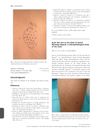
April 2010 in “British journal of dermatology/British journal of dermatology, Supplement” This report describes two patients with frontal fibrosing alopecia who developed acute hair loss on their limbs, revealing that the limb alopecia had similar histological features to scalp alopecia.
January 2017 in “Elsevier eBooks” Telogen effluvium is a condition that causes temporary hair loss due to stress or shock to the body.
 14 citations
,
January 2011 in “Journal of analytical & bioanalytical techniques”
14 citations
,
January 2011 in “Journal of analytical & bioanalytical techniques” This research discusses a validated HPTLC method for simultaneously determining Tamsulosin Hydrochloride and Finasteride in bulk and pharmaceutical dosage forms but reports no new clinical results.
This study found that Finasteride Dispersible Tablets, prepared with an optimized prescription, disintegrate quickly, disperse well, and have a high dissolution speed, suitable for industrial production.
This document supplements a study on androgenetic alopecia, describing materials and methods, and includes figures showing fibrosis in the bulge region of miniaturized hair follicles.
3 citations
,
July 2016 in “Tropical Journal of Pharmaceutical Research” This study found that the proposed LC-MS/MS method accurately quantified the drug content in split tablets of finasteride and terbinafine, revealing significant variability and suggesting that non-scored tablets should not be split.
7 citations
,
June 2024 in “Skin Research and Technology” Combining treatments significantly reduces dark circles and wrinkles better than nanofat alone.
 November 2021 in “World Family Medicine Journal /Middle East Journal of Family Medicine”
 This review discusses evidence from recent clinical trials showing inclisiran effectively lowers LDL cholesterol levels in patients with cardiovascular disease, leading to its use in the UK despite not being approved by the FDA.
53 citations
,
July 2002 in “Journal of Investigative Dermatology” The Dfl mutation in mice causes poor sebaceous gland function and complete hair loss.
4 citations
,
September 2021 in “Sensors” In this study, LED therapy for eyebrow loss in older females with frontal fibrosing alopecia significantly increased eyebrow hair count after 10 treatments and maintained improvement at 6 months, indicating it could be a promising and well-tolerated treatment option.
 1 citations
,
July 2020 in “Benha Journal of Applied Sciences”
1 citations
,
July 2020 in “Benha Journal of Applied Sciences” This study identified that trichoscopy can effectively diagnose frontal fibrosing alopecia by highlighting specific scalp abnormalities in postmenopausal women.
1 citations
,
August 1999 in “ACS symposium series” In this study, fluorescence microscopy revealed that a cationic cellulose ether derivative adsorbed onto hair fibers desorbed significantly when treated with sodium dodecylsulfate.
36 citations
,
July 2004 in “Apmis” This review describes three mouse models using fluorescent proteins to image tumor angiogenesis in real-time, but reports no new clinical results.
28 citations
,
October 1985 in “The Journal of Cell Biology” This study identified two types of hard alpha-keratin filament assemblies in developing human hair follicles, which may help investigate the structural framework of mammalian keratin appendages.
88 citations
,
July 2001 in “British journal of dermatology/British journal of dermatology, Supplement” This study reported that antimicrobial and topical retinoid therapies led to significant changes in the lipid profiles of sebaceous follicular infundibulum, with increased triglycerides and ceramide subfractions observed.