 44 citations
,
November 2009 in “Archives of Dermatology”
44 citations
,
November 2009 in “Archives of Dermatology” This study observed that patients with CYLD mutations frequently experienced severe, painful tumors beyond the head and neck, impacting their quality of life, with hormonal factors possibly contributing to tumor development.
January 2022 in “SSRN Electronic Journal” This study found that lncRNA RP11-818024.3 transfection promoted hair growth in AGA mice and increased cellular proliferation in vitro, potentially involving the FGF2 and PI3K-Akt pathways.
 April 2023 in “Journal of Investigative Dermatology”
 In this study, researchers discovered that fat grafting helps reduce dermal fibrosis in radiation-injured mouse skin by decreasing specific fibroblast subpopulations associated with Fra/c-Jun signaling.
 September 2023 in “Research Square (Research Square)”
 This study found that TNC + fibroblasts are crucial in neuro-immune interactions in various skin diseases, particularly inflammation and tumors, by engaging extensively with immune cells and overexpressing inflammatory genes, suggesting their significant role in skin abnormalities.
 May 2024 in “World Journal Of Advanced Research and Reviews”
 This study found that females with chronic diffuse hair loss, including chronic telogen effluvium and female pattern hair loss, had significantly lower serum ferritin levels compared to controls, suggesting a strong association between decreased iron stores and hair loss.
September 2022 in “Indian Journal of Paediatric Dermatology” This case report documents the first confirmed mutation-proved instance of Clouston syndrome in a large Chinese-Malaysian family, linked to the c.263C>T (A88V) mutation in the GJB6 gene, with no available treatment but highlighting the importance of genetic counseling.
 6 citations
,
December 2022 in “Colloids and Surfaces B: Biointerfaces”
6 citations
,
December 2022 in “Colloids and Surfaces B: Biointerfaces” This study reported that a novel bilayer wound dressing made from PLCL nanofibers and keratin hydrogel, loaded with FGF-2, promoted skin healing and showed potential for use in skin tissue engineering.
 March 2026 in “SKIN The Journal of Cutaneous Medicine”
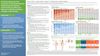
 This study demonstrated that litifilimab significantly reduced disease activity in cutaneous lupus erythematosus by Week 16, with improvements most notable in sunlight-exposed skin areas.
1 citations
,
January 2020 in “Bioscientia medicina” This review covers female pattern hair loss, outlining its progression, existing treatments like topical minoxidil and laser therapy, and notes that anti-androgen therapies need further investigation.
4 citations
,
August 1999 in “Clinical Cosmetic and Investigational Dermatology” This study highlights the potential role of the CYP21A2 and CYP19A1 genes in severe acne vulgaris among Han Chinese, especially males.
 103 citations
,
June 2018 in “International Journal of Molecular Sciences”
103 citations
,
June 2018 in “International Journal of Molecular Sciences” This review discusses the applications and research on fibroblast growth factors, including their use in wound healing, diabetes, and cancer, but it reports no new clinical results.
 November 2020 in “International journal of contemporary pediatrics”
 This study reports two siblings with severe combined immunodeficiency due to a mutation in the FOXN1 gene, characterized by T-cell immunodeficiency, alopecia totalis, and nail dystrophy.
8 citations
,
July 2020 in “Clinical, cosmetic and investigational dermatology” This review hypothesizes that excessive facial photo-protection may contribute to frontal fibrosing alopecia by disrupting immunological homeostasis through the aryl hydrocarbon receptor-kynurenine pathway, but it reports no new clinical results.
33 citations
,
May 2015 in “JAMA Dermatology” This study identifies comedonal or cystic fibrofolliculomas as novel diagnostic clues for earlier recognition of Birt-Hogg-Dube syndrome, potentially facilitating timely surveillance of associated systemic complications.
 November 2024 in “Journal of Investigative Dermatology”
 TGF-β signaling is essential for new hair growth after wounds.
 October 2023 in “Indian dermatology online journal”
 This report describes a case study of a 23-year-old female exhibiting multiple trichodiscomas, a type of benign tumor of the hair follicular discs common in familial cases and potentially linked to Birt-Hogg-Dube syndrome, though genetic testing was not performed due to financial constraints.
63 citations
,
April 2005 in “Mechanisms of development” This study found that heterozygous mice overexpressing Claudin-6 experienced alterations in epidermal and hair follicle differentiation, leading to distinctive coat characteristics and a disrupted epidermal permeability barrier.
 January 2018 in “Stem cell biology and regenerative medicine”
 This review discusses how the nuclear lamina integrates biochemical and mechanical signals to influence gene expression and skin homeostasis, but reports no new clinical results.
May 2024 in “Reactions weekly” 19 citations
,
May 2018 in “Molecular Medicine Reports” This study found that miR-339-5p negatively regulates loureirin A-induced differentiation of hair follicle stem cells, potentially impacting skin repair and regeneration by inhibiting the Wnt/β-catenin signaling pathway.
 September 2024 in “Portuguese Journal of Dermatology and Venereology”
 This review discusses central centrifugal cicatricial alopecia, its similarities to lichen planopilaris, and emphasizes the need for further research due to its underdiagnosis and impact on African-descended women.
February 2026 in “Indian Dermatology Online Journal” This study reports that oral tofacitinib treatment in a patient with refractory lichen planus pigmentosus and frontal fibrosing alopecia resulted in near-complete resolution of hyperpigmentation and cessation of hairline recession over 18 months, and suggests it may be a promising therapy for these challenging conditions.
 November 2023 in “Deleted Journal”
 In this study, the researchers found no superiority of combining 308-nm excimer laser with intralesional corticosteroid over corticosteroid alone for treating frontal fibrosing alopecia, and reported side effects such as erythema and postinflammatory hyperpigmentation in both treatment groups.
 1 citations
,
July 2016 in “British Journal of Dermatology”
1 citations
,
July 2016 in “British Journal of Dermatology” Men with a certain type of hair loss often use facial moisturizers, and a specific antibiotic treatment may help another hair condition.
3 citations
,
January 2022 in “Burns & Trauma” This study found that CTHRC1 is crucial for sweat gland function and vascular network integrity in mice, and its administration improved sweat gland performance by reconstructing nearby blood vessels.
 33 citations
,
January 2010 in “Case reports in dermatology”
33 citations
,
January 2010 in “Case reports in dermatology” This article presents a case study of a 50-year-old woman with frontal fibrosing alopecia and discusses the role of dermoscopy in differentiating it from other types of alopecia, reporting no new clinical results.
12 citations
,
December 2011 in “Journal of Dermatological Science” This study suggests that the C-terminal of AHF is crucial for its binding to keratin bundles and modulating the keratin meshwork in hair follicles.
7 citations
,
August 2019 in “American Journal of Dermatopathology” This study found that limb hair loss in frontal fibrosing alopecia is inflammatory and permanent, but lacks the classic scarring features seen in scalp alopecia, prompting potential misdiagnosis as alopecia areata.
June 2026 in “Frontiers in Medicine” This study evaluated the 308-nm excimer laser as an adjuvant treatment for frontal fibrosing alopecia and found it may stabilize hairline recession and improve erythema and perifollicular hyperkeratosis, with transient erythema as the only reported adverse effect.
3 citations
,
August 2017 in “Clinical case reports” A rare skin condition causes red and dark patches on the face and limbs.