11 citations
,
October 2014 in “Gene” In this study, researchers characterized the FGF5 gene in Chinese Merino sheep, identified a new mRNA splicing variant, FGF5S, and noted its restricted expression in the brain, spleen, and skin.
 January 2015 in “Hair transplant forum international”
 This snippet mentions an increase in women seeking surgical hair restoration and subsequently encountering more cases of frontal fibrosing alopecia, but the abstract doesn't contain results or conclusions.
 2 citations
,
November 2007 in “Journal of Investigative Dermatology”
2 citations
,
November 2007 in “Journal of Investigative Dermatology” This study found that bulge keratinocytes in mice develop resistance to glucocorticoid treatment more slowly than interfollicular keratinocytes and do not significantly aid in repairing glucocorticoid-induced skin atrophy within five days.
October 2025 in “Clinical and Experimental Pediatrics” In this case report and literature review, researchers identified a novel mutation in the CLDN1 gene linked to neonatal ichthyosis-sclerosing cholangitis syndrome and found that its phenotype varies widely, suggesting a multidisciplinary approach is crucial for management.
 31 citations
,
April 2010 in “British journal of dermatology/British journal of dermatology, Supplement”
31 citations
,
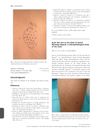
April 2010 in “British journal of dermatology/British journal of dermatology, Supplement” This report describes two patients with frontal fibrosing alopecia who developed acute hair loss on their limbs, revealing that the limb alopecia had similar histological features to scalp alopecia.
April 2019 in “Journal of Investigative Dermatology” This study found that blocking LFA-1 signaling completely prevented the development of alopecia areata in C3H/HeJ mice, suggesting that LFA-1 plays a crucial role in the disease's pathogenesis and could be a target for new therapies.
 January 2024 in “Dermatology practical & conceptual”
 In this publication, the authors explored whether there is a scientific basis for using lymecycline to treat frontal fibrosing alopecia, but the abstract does not provide study results or conclusions on its efficacy.
 49 citations
,
January 2003 in “Clinical and Experimental Dermatology”
49 citations
,
January 2003 in “Clinical and Experimental Dermatology” This report from the UK reviews the literature on post-menopausal frontal fibrosing alopecia and highlights its under-recognition and distinctive characteristics compared to lichen planopilaris, but does not provide new results.
2 citations
,
June 2021 in “Sultan Qaboos University medical journal” This case report presents three sisters with familial frontal fibrosing alopecia, making it the 25th documented familial case, with treatment results observed in one sister.
58 citations
,
November 2004 in “The journal of investigative dermatology/Journal of investigative dermatology” This study found that mutations in the Foxn1 gene in nude mice affect not only hair but also nail structure and differentiation, offering insights into nail hypergranulosis pathogenesis relevant to human nail diseases.
 8 citations
,
September 2024 in “BMC Genomics”
8 citations
,
September 2024 in “BMC Genomics” In this study, researchers found that the novel gene circCFAP20DC enhances the proliferation of goat follicular granulosa cells by activating the RB pathway, facilitating their progression from the G1 to S phase during follicular development.
September 2022 in “Zenodo (CERN European Organization for Nuclear Research)” This article discusses Fluxactive Complete, a natural supplement for prostate health, and reports no new clinical results.
5 citations
,
October 2020 in “Veterinary record case reports” In this case report, a 15-year-old golden retriever with calcinosis cutis showed accelerated improvement in FLE-treated skin infections compared to untreated areas, highlighting FLE's potential as a treatment adjunct.
 2 citations
,
April 2022 in “African Health Sciences”
2 citations
,
April 2022 in “African Health Sciences” In this study, FLI was significantly higher in women with PCOS and NAFLD compared to those without NAFLD, and an FLI < 30 could not effectively rule out NAFLD in lean PCOS patients.
 4 citations
,
January 2020 in “Skin appendage disorders”
4 citations
,
January 2020 in “Skin appendage disorders” This case report describes a unique presentation of frontal fibrosing alopecia characterized by a hair loss pattern that resembles the Greek letter upsilon, supported by trichoscopic and histological findings.
March 2026 in “Anais Brasileiros de Dermatologia” Lichen planopilaris and frontal fibrosing alopecia are likely distinct diseases with different tissue involvement.

This study found significant correlations between scalp and nail involvement and laboratory findings in Korean patients with chronic cutaneous lupus erythematosus, highlighting their importance for diagnosis and management.
 12 citations
,
September 2018 in “Naturwissenschaften”
12 citations
,
September 2018 in “Naturwissenschaften” This study found that melatonin at 0.2 g/L for 72 hours most effectively enhances cashmere growth in Liaoning cashmere goats by upregulating the lncRNA MTC, which activates NF-kB signaling.
57 citations
,
August 2002 in “American Journal Of Pathology” Cathepsin L deficiency causes hair and skin issues in mice.
12 citations
,
January 2016 in “Skin Appendage Disorders” This study reports an association between frontal fibrosing alopecia and lupus erythematosus, noting progressive alopecia in the frontotemporal hairline despite treatment with hydroxychloroquine.
 7 citations
,
March 2018 in “Asian-Australasian journal of animal sciences”
7 citations
,
March 2018 in “Asian-Australasian journal of animal sciences” This study observed that the OCIAD2 and DCN genes in Liaoning cashmere goats have opposite effects on hair growth by interacting with the TGF-β signaling pathway, influencing follicle morphogenesis and periodic changes.
1 citations
,
May 2025 in “BMC Genomics” In this study, researchers identified key lncRNAs and target genes potentially involved in the transformation of the hair follicle cycle, which could advance understanding of lncRNAs' roles in hair follicle development.
 December 2023 in “The Sri Lanka Journal of Dermatology”
 In this case report, a 12-year-old girl was diagnosed with alopecia as part of the rare ALX4-related frontonasal dysplasia sequence, highlighting the condition's uniqueness in pediatric dermatology.
 January 2019 in “Proceedings for Annual Meeting of The Japanese Pharmacological Society”
 In this study, injecting Nε-(carboxymethyl) lysine into skin tissue weakened hair shaft and follicle formation, likely by inhibiting cell proliferation and migration needed for hair follicle morphogenesis.
18 citations
,
May 2011 in “Journal of Investigative Dermatology” Wnt signaling affects the development and growth of Langerhans cells in mice.
July 2026 in “JAAD reviews.” Female Pattern Hair Loss affects women's quality of life, with limited treatment options and a need for more research.
Linalool in personal care products may worsen frontal fibrosing alopecia by damaging hair follicle stem cells and triggering harmful immune responses.
January 2012 in “Chinese Clinical Oncology” This study found that for metastatic colorectal cancer patients, substituting calcium folinate with disodium folinate in combination with fluorouracil and oxaliplatin showed similar effectiveness and safety as the mFOLFOX6 regimen.
 April 2023 in “Journal of Investigative Dermatology”
 This study found that recombinant type III collagen may aid skin aging management by promoting fibroblast proliferation and migration, with a modest impact on inflammatory marker IL-6, though it did not significantly affect TNF-a secretion in vitro.
 44 citations
,
November 2009 in “Archives of Dermatology”
44 citations
,
November 2009 in “Archives of Dermatology” This study observed that patients with CYLD mutations frequently experienced severe, painful tumors beyond the head and neck, impacting their quality of life, with hormonal factors possibly contributing to tumor development.