10 citations
,
August 2021 in “Cosmetics” This study identified an optimal sulfate-free and silicone-free conditioning shampoo formulation using 1% hyaluronic acid at 800 kDa, 10% acidic sophorolipid, and 1% sodium chloride, which maintains essential conditioning and cleansing properties without compromising on performance.
8 citations
,
August 2014 in “Biochemical and Biophysical Research Communications” The study found that over-expressing ornithine decarboxylase in the outer root sheath of the hair follicle in mice increases UVB-induced tumor growth and invasive squamous cell carcinoma compared to inter-follicular epidermal keratinocytes.
5 citations
,
November 2023 in “Journal of Investigative Dermatology” This study observed that cutaneous microwounds created by fractional photothermolysis heal differently from typical wounds, displaying rapid re-epithelialization and limited inflammation, which may help reduce scar formation by delaying collagen remodeling and minimizing myofibroblast activation.
 1 citations
,
July 2023 in “International Journal of Molecular Sciences”
1 citations
,
July 2023 in “International Journal of Molecular Sciences” This study found that a hypoxic microenvironment enhanced the proliferation and pluripotency of adipose mesenchymal stem cells, promoting hair follicle formation and upregulating specific growth factors in Arbas Cashmere goats.
 November 2024 in “Applied Sciences”
 This study suggests that a supercritical CO2 extract from wild-strawberry-processing waste may be an innovative and sustainable ingredient for cosmetic applications, particularly in treating androgenic-related skin conditions.
December 2019 in “Reproduction Fertility and Development” This study found that mouse embryonic fibroblasts better supported the growth and maintenance of LGR5+ epidermal stem cells compared to porcine fetal fibroblasts, under various culture conditions.
26 citations
,
April 2024 in “Particle and Fibre Toxicology” In this study, researchers investigated the penetration and cellular responses to nanoplastics in human skin models with compromised barriers, finding that nanoplastics can penetrate the skin, accumulate in cells, and trigger inflammatory responses through specific signaling pathways.
22 citations
,
April 2022 in “Stem cell research & therapy” This study found that extracellular vesicles derived from hair follicle mesenchymal stromal cells demonstrated similar potential to those from adipose tissue in promoting cell proliferation and migration, enhancing angiogenesis, and protecting cells under stress, suggesting promise for chronic wound treatment.
1 citations
,
April 2025 in “International Journal of Biological Macromolecules” This study found that Forskolin-loaded carboxymethyl chitosan-silk nanofiber hydrogels promoted wound healing by accelerating wound closure, enhancing neovascularization, and supporting hair follicle regeneration, while also being non-toxic and encouraging the proliferation of certain cell types.
April 2026 in “IntechOpen eBooks” The researchers presented a case study on Exo.Reset®, a cosmetic formulation using extracellular vesicle technology, demonstrating systematic application of recognized standards to ensure scientific rigor and regulatory compliance in skin rejuvenation product development, providing a practical model for EV-based cosmetic innovations.
 January 2024 in “Advanced Science”
 In this study, researchers used a chemical cocktail and hydrogel microspheres to successfully guide fibroblasts into dermal papilla cells, promoting wound healing and in situ hair follicle regeneration while reducing scar formation, in both in vitro and in vivo experiments.
2 citations
,
December 2025 in “Gels” This study developed a biomimetic 3D skin model with vascularization potential to assess the impact of nano-zinc oxide (nano-ZnO), finding that nano-ZnO significantly influenced genes related to apoptosis, inflammation, and oxidative stress in skin cells.
 23 citations
,
May 2015 in “Science China Life Sciences”
23 citations
,
May 2015 in “Science China Life Sciences” This article reviews how the microenvironment influences adult stem cell behavior and discusses strategies to enhance stem cell function but reports no new experimental results.
 16 citations
,
March 2019 in “Experimental dermatology”
16 citations
,
March 2019 in “Experimental dermatology” This study found that injury affects the behavior of hair follicle dermal stem cells, steering them towards recruitment into the dermal papilla, a shift influenced by the hair cycle stage.
 4 citations
,
November 2015 in “Journal of Investigative Dermatology”
4 citations
,
November 2015 in “Journal of Investigative Dermatology” This study found that filamin A plays a crucial role in fibroblasts' ability to sense and respond to mechanical stimuli, significantly affecting wound closure and fibroblast-mediated processes in mice.
 28 citations
,
February 2016 in “F1000Research”
28 citations
,
February 2016 in “F1000Research” This review introduces an integrated view of hair follicle behavior, highlighting a Yin Yang model of regulation and suggesting glycans as key elements in hair follicle growth control, without reporting new clinical findings.
 12 citations
,
September 2017 in “Molecular and Cellular Endocrinology”
12 citations
,
September 2017 in “Molecular and Cellular Endocrinology” This review analyzes how androgens impact sexual desire and reproductive behaviors, emphasizing molecular interactions, but provides no new clinical results.
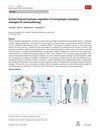
This review highlights that surface mechanical regulation can program macrophage behavior through specific mechanical cues on material surfaces, potentially advancing immunotherapies and regenerative medicine by enabling precise control over macrophage functions.
 2 citations
,
October 2017 in “Revista Da Associacao Medica Brasileira”
2 citations
,
October 2017 in “Revista Da Associacao Medica Brasileira” The study found that silencing the gene p16INK4a in dermal papilla cells promotes their growth and aggregative behavior, suggesting a potential therapeutic target for androgenetic alopecia.
 260 citations
,
June 2011 in “Cell”
260 citations
,
June 2011 in “Cell” This study found that Wnt signaling in the hair follicle is crucial for coordinating the behavior of epithelial and melanocyte stem cells, which drives hair regeneration and melanocyte differentiation in mice.
 10 citations
,
May 2018 in “Neuropharmacology”
10 citations
,
May 2018 in “Neuropharmacology” This study suggests that inhibitors of steroidogenic enzymes may have therapeutic potential for certain behavioral disorders linked to dopaminergic hyperfunction, despite concerns about their endocrine impacts.
 354 citations
,
February 2011 in “Genes & Development”
354 citations
,
February 2011 in “Genes & Development” This study found that abolishing H3K27me3 in mouse skin by targeting Ezh2 and Ezh1 affects hair follicle development and epidermal behavior, revealing functional differences between these tissues.
 9 citations
,
July 2008 in “Oncology Reports”
9 citations
,
July 2008 in “Oncology Reports” In this study, TC-1 cells, resembling stromal cells formed by epithelial-mesenchymal transition, significantly affected the behavior of normal human keratinocytes, supporting the role of stromal cells in tumor progression.
 1 citations
,
June 2010 in “Development”
1 citations
,
June 2010 in “Development” This review summarizes discussions from a 2010 stem cell biology meeting, covering the origin, behavior, and therapeutic potential of pluripotent and multipotent stem cells, without reporting new experimental findings.
 135 citations
,
December 2013 in “Seminars in Cell & Developmental Biology”
135 citations
,
December 2013 in “Seminars in Cell & Developmental Biology” This review examines the literature on the molecular and cellular makeup of the hair follicle niche and how it influences stem cell behavior during hair regeneration, but does not provide new experimental results.
 12 citations
,
November 2015 in “Cell Death & Differentiation”
12 citations
,
November 2015 in “Cell Death & Differentiation” This study found that immune cells, including T cells and macrophages, significantly influence stem cell behavior and tissue regeneration by secreting cytokines and inflammatory factors in mice.
 2 citations
,
April 2018 in “Journal of Investigative Dermatology”
2 citations
,
April 2018 in “Journal of Investigative Dermatology” This case study in a renal transplant patient observed that eruptive KA-type SCCs exhibited aggressive behavior and genetic expression changes following intralesional chemotherapy, indicating potential caution against routine use of such treatments in similar cases.
 166 citations
,
August 2010 in “Proceedings of the National Academy of Sciences of the United States of America”
166 citations
,
August 2010 in “Proceedings of the National Academy of Sciences of the United States of America” This study reports a less invasive method for detecting human clock gene expression using hair follicle cells, which accurately reflects individual behavioral rhythms and suggests a time lag issue for rotating shift workers.
 127 citations
,
January 2015 in “Journal of Biological Rhythms”
127 citations
,
January 2015 in “Journal of Biological Rhythms” This review discusses the role of the circadian clock in skin functions such as cell proliferation and UV protection and reports no new results; the authors note its potential in studying immune regulation and seasonal behaviors.
 113 citations
,
June 2015 in “Stem Cell Research & Therapy”
113 citations
,
June 2015 in “Stem Cell Research & Therapy” This study found that activation or inhibition of Wnt/β-catenin and Notch signaling pathways in rats can alter wound healing, possibly by affecting epidermal stem cell activity and keratinocyte behavior.