83 citations
,
May 2021 in “Biomolecules” This study found that an injectable composite hydrogel containing cerium bioactive glass improved wound healing in diabetic rats by promoting angiogenesis and offering antibacterial properties, suggesting its potential for enhancing diabetic foot wound repair.
 1 citations
,
January 2025 in “Advances in Dermatology and Allergology”
1 citations
,
January 2025 in “Advances in Dermatology and Allergology” In this animal study, PRF enhanced the repair of chronic wounds in rats by reducing inflammation and promoting collagen deposition and new blood vessel formation, potentially through activating the Wnt/β-catenin signaling pathway.
 13 citations
,
March 2020 in “Genes”
13 citations
,
March 2020 in “Genes” This study found that FGF5-/- rabbits exhibited a significant long hair phenotype by prolonging the anagen phase, suggesting FGF5 acts as a negative regulator of hair growth.
 16 citations
,
August 2015 in “Protein Expression and Purification”
16 citations
,
August 2015 in “Protein Expression and Purification” This study found that recombinant human FGF9 expressed in Arabidopsis thaliana oil bodies significantly promoted the proliferation of NIH/3T3 cells.
1 citations
,
April 2022 in “Journal of Biological Regulators and Homeostatic Agents/Journal of Biological Regulators & Homeostatic Agents” This study reported that among 1337 patients receiving biocompatible artificial hair implants, common side effects included mild inflammation (7%) and itching (<3%), while patient satisfaction was high at 96%, though COVID-19 may have impacted some results.
 46 citations
,
December 2001 in “Journal of Endocrinology/Journal of endocrinology”
46 citations
,
December 2001 in “Journal of Endocrinology/Journal of endocrinology” This study found that mouse FLRG protein, a secreted glycoprotein, is expressed in certain tissues and plays a role distinct from follistatin during wound healing, suggesting different functions in vivo.

This study demonstrates that a novel autologous hair follicle-derived epithelial sheet can effectively repigment skin in patients with stable vitiligo, offering a potential new treatment option.

This research found that keratin hydrogels derived from human hair may support cell viability and proliferation, indicating potential as 2D and 3D soft tissue culture scaffolds.
 February 2025 in “Archives of Dermatological Research”
 In this study, researchers administered injectable platelet-rich fibrin (i-PRF) to 30 patients with androgenetic alopecia, finding an 80% response rate after 6 months, with improved hair density and reduced scalp symptoms, while reporting minimal adverse reactions.
 32 citations
,
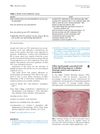
September 2017 in “Journal of the American Academy of Dermatology”
32 citations
,
September 2017 in “Journal of the American Academy of Dermatology” In this study, researchers reported that oral isotretinoin effectively treated facial papules in frontal fibrosing alopecia, with histopathologic findings suggesting the involvement of elastic fibers and sebaceous glands in papule formation beyond perifollicular inflammation.
 2 citations
,
September 2020 in “Biomedical materials”
2 citations
,
September 2020 in “Biomedical materials” This study found that recombinant human hair keratin proteins K31 and K81 show greater potential for inducing skin cell differentiation compared to natural keratin coatings.
42 citations
,
April 2016 in “Plastic and reconstructive surgery/PSEF CD journals” This study found that hydrogels supplemented with fractionated platelet-rich plasma recruited more dermal-derived stem cells and accelerated healing, leading to hair growth and skin regeneration in rats.
 123 citations
,
August 2005 in “Journal of the European Academy of Dermatology and Venereology”
123 citations
,
August 2005 in “Journal of the European Academy of Dermatology and Venereology” In this study, the researchers observed that treatment with intralesional and topical corticosteroids, finasteride, and minoxidil may stop the progression of frontal fibrosing alopecia in postmenopausal and premenopausal women.
1 citations
,
March 2006 in “The FASEB journal” This study found that keratin scaffolds derived from human hair promoted excellent cell viability and showed minimal inflammatory response and vascular integration when tested in in vitro and in vivo settings.
 25 citations
,
May 2014 in “Facial Plastic Surgery”
25 citations
,
May 2014 in “Facial Plastic Surgery” In this study, intradermal injections of autologous platelet-rich fibrin matrix significantly increased hair density in patients with androgenetic alopecia at 2 and 3 months after initial treatment.
December 2025 in “FEBS Open Bio” In this study, fibroblasts from long-term skin biopsy cultures retained their ability to reprogram into induced pluripotent stem cells after 16 months, despite undergoing transcriptional changes and decreased proliferation rates over successive generations.
 April 2018 in “Journal of Investigative Dermatology”
 This study found that 1550-nm Er:Glass fractional laser treatment significantly increased hair density and shaft diameter in patients with androgenetic alopecia, though the mechanism may not involve Wnt10A or IGF-1 expression.
August 2019 in “Journal of the American Academy of Dermatology” Frontal fibrosing alopecia may be caused by an autoimmune reaction and hormonal imbalance.
 July 2015 in “Journal of the Dermatology Nurses’ Association”
 This review covers the clinical presentation and challenges in treating frontal fibrosing alopecia in postmenopausal women and concludes that more research is needed to understand its etiology and develop effective treatments.
28 citations
,
December 2016 in “Journal of Biomedical Materials Research Part A” This study found that mesenchymal progenitor cells from human hair roots seeded onto polymer scaffolds stimulated the production of mineralized proteins, enhancing bone-like structures, with optimal results at a pore size of 35 µm.
 January 2026 in “Preprints.org”
 This review explores current knowledge on fibroblast lineage specification and its impact on scar-free wound healing, noting that early fetal skin fibroblasts support regeneration, while later developmental shifts lead to fibrosis, highlighting potential strategies to reprogram adult fibroblasts for regenerative repair.
1 citations
,
January 1984  155 citations
,
September 2008 in “British journal of dermatology/British journal of dermatology, Supplement”
155 citations
,
September 2008 in “British journal of dermatology/British journal of dermatology, Supplement” This study observed that frontal fibrosing alopecia predominantly affects postmenopausal women, can be associated with lichen planus, and may lead to progressive hairline recession, though this progression is not consistent in all cases.
 October 2021 in “Austin journal of biomedical engineering”
 In this study, researchers modified an acellular scaffold with different concentrations of eggshell membrane protein, finding that a 5% concentration effectively enhanced tissue regeneration in mice with excisional wounds, achieving complete healing within 14 days without causing immunogenicity or inflammation.
 November 2023 in “Deleted Journal”
 In this study, the researchers found no superiority of combining 308-nm excimer laser with intralesional corticosteroid over corticosteroid alone for treating frontal fibrosing alopecia, and reported side effects such as erythema and postinflammatory hyperpigmentation in both treatment groups.
6 citations
,
December 2024 in “International Journal of Biological Macromolecules” This study introduced a novel exosome-loaded sprayable hydrogel (ADA-aPF127@LL18/Exo) that significantly enhanced wound healing in a deep partial thickness burn model, showing improved antibacterial efficacy and promoting tissue recovery processes like epithelialization and hair follicle regeneration.
 80 citations
,
June 2008 in “Biomaterials”
80 citations
,
June 2008 in “Biomaterials” This study found that poly(ethylene-co-vinyl alcohol) membranes support the self-assembly of dermal papilla cells into compact spheroidal microtissues capable of inducing new hair follicles, suggesting potential for large-scale production for hair follicle regeneration.
3 citations
,
March 2023 in “Cell Biology International” In this study, ASC-enriched autologous fat grafting was found to be more effective and satisfying than conventional fat grafting for treating facial contour deformities with hyperpigmentation.
 13 citations
,
March 1998 in “Journal of Biomedical Materials Research”
13 citations
,
March 1998 in “Journal of Biomedical Materials Research” This study found that island grafting in guinea pigs enabled the isolated study of early skin regeneration processes, distinguishing them from natural wound closure mechanisms like epithelialization and contraction.
This study found that a modified scaffold with VEGF165 genetically modified hair follicle stem cells significantly promoted blood vessel growth and wound healing in rats, suggesting its potential as a skin substitute in clinical settings.