
According to this review, frontal fibrosing alopecia in men exhibits unique clinical features and is often misdiagnosed, underscoring the need for validated diagnostic criteria and treatment evaluation.
September 2023 in “Facial Plastic Surgery” This article discusses safe planning and decision-making in follicular unit excision for beginner surgeons and reports no new clinical results.
 11 citations
,
June 2012 in “Acta histochemica”
11 citations
,
June 2012 in “Acta histochemica” This study found that Gsdma3 mutations in mice led to thicker skin and longer hair infundibula, possibly by negatively regulating β-catenin expression in the epidermis.
June 2025 in “Journal of Ultrasound in Medicine” This study reports that high-frequency ultrasound can characterize frontal fibrosing alopecia by assessing dermal atrophy, hair follicle changes, and subclinical inflammation.

This study found that injecting growth factor concentrates into the scalp of five patients with androgenic alopecia led to notable improvements in hair density and quality over eight weeks, with patients reporting satisfaction and minimal side effects.
 November 2024 in “International Society of Hair Restoration Surgery”
 This treatise provides guidelines and suggestions for the safe practice of follicular unit transplantation but reports no new clinical results.
2 citations
,
June 2018 in “International Journal of Pharmacological Research” This article reviews treatments for progeria, including aspirin, hydrotherapy, and farnesyl transferase inhibitors, but reports no new clinical results.
 54 citations
,
November 2017 in “Scientific Reports”
54 citations
,
November 2017 in “Scientific Reports” In this study, researchers observed that hyperandrogenic PCOS patients exhibited distinct miRNA and TGFβ signaling gene expression patterns in granulosa cells, suggesting these factors may play a role in PCOS pathogenesis.
 104 citations
,
October 2016 in “PLoS ONE”
104 citations
,
October 2016 in “PLoS ONE” This study found that CRISPR/Cas9-mediated disruption of the FGF5 gene in goats increased hair follicle numbers and fiber length, suggesting more cashmere production could be achieved.
 6 citations
,
August 2020 in “JCRPE”
6 citations
,
August 2020 in “JCRPE” This report presents a case of familial male-limited precocious puberty with a novel LHCGR gene mutation, where a boy responded well to treatment with bicalutamide and anastrozole.
 9 citations
,
July 2021 in “Frontiers in Pharmacology”
9 citations
,
July 2021 in “Frontiers in Pharmacology” This study found that intradermal injection of cholesterol-modified siRNA targeting FGF5 or FGF18, or topical application of FGF18-targeted siRNA, effectively influenced hair follicle cycles in mice, suggesting potential benefits for alopecia management.
 24 citations
,
January 2015 in “Evidence-based Complementary and Alternative Medicine”
24 citations
,
January 2015 in “Evidence-based Complementary and Alternative Medicine” In this study, Polygonum multiflorum Radix promoted hair growth in mice, with oral administration being more effective, likely through FGF-7, while topical application favored SHH-related mechanisms.
39 citations
,
May 2002 in “Oral Microbiology and Immunology” In this study, dihydrotestosterone increased proliferation and decreased IL-6 production in in-vitro fibroblasts from hereditary gingival fibromatosis and normal gingiva, effects partially reversed by anti-androgens.
157 citations
,
May 2016 in “Plastic and reconstructive surgery/PSEF CD journals” This review of facial feminization surgery literature suggests it is generally safe and satisfactory for patients, though more research is needed to establish best practices and quality-of-life outcomes.
2 citations
,
January 2023 in “PubMed” This review discusses the potential role of FGF5 as a therapeutic target in prostate cancer and other conditions but reports no new results, highlighting a need for further research on FGF5 inhibitors.
 2 citations
,
September 2002 in “Journal of Endocrinological Investigation”
2 citations
,
September 2002 in “Journal of Endocrinological Investigation” The GH-IGF-I axis is likely involved in the hormonal imbalances seen in non-obese women with functional hyperandrogenism.
 1 citations
,
June 2014 in “International Journal of Dermatology”
1 citations
,
June 2014 in “International Journal of Dermatology” This correspondence discusses follicular mucinosis in association with pregnancy but does not report new clinical results, instead calling attention to the observed connection.
June 2026 in “Frontiers in Medicine” This study evaluated the 308-nm excimer laser as an adjuvant treatment for frontal fibrosing alopecia and found it may stabilize hairline recession and improve erythema and perifollicular hyperkeratosis, with transient erythema as the only reported adverse effect.
 11 citations
,
January 2018 in “Acta dermato-venereologica”
11 citations
,
January 2018 in “Acta dermato-venereologica” In this study, researchers identified gremilin-2 as a highly specific gene to the dermal sheath cup, suggesting it plays a key role in maintaining its properties.
 1 citations
,
October 2008 in “Expert Review of Dermatology”
1 citations
,
October 2008 in “Expert Review of Dermatology” This review discusses frontal fibrosing alopecia, noting its frequent misdiagnosis and highlighting the need for larger studies to better understand its epidemiology, causes, and treatment options; it reports no new clinical findings.
 166 citations
,
April 2012 in “Journal of The American Academy of Dermatology”
166 citations
,
April 2012 in “Journal of The American Academy of Dermatology” This study reviewed clinical data from 60 patients with frontal fibrosing alopecia and found increasing prevalence and generally poor response to treatment, with the cause remaining unclear.
This study examined epidemiological data on patients with frontal fibrosing alopecia in Greece and found demographic patterns consistent with international studies.
 9 citations
,
August 2014 in “Journal of The American Academy of Dermatology”
9 citations
,
August 2014 in “Journal of The American Academy of Dermatology” This article discusses the authors' concerns over the misinterpretation of studies linking smoking and frontal fibrosing alopecia, clarifying that neither study suggests smoking is protective against the condition.
 24 citations
,
July 2017 in “Structure”
24 citations
,
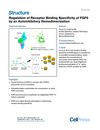
July 2017 in “Structure” In this study, researchers found that ligand homodimerization controls the receptor binding specificity of the FGF9 subfamily, preventing off-target activation of FGFR "b" isoforms.
 September 1997 in “Journal of the European Academy of Dermatology and Venereology”
 Hirsute women with ovarian-sourced hirsutism are more likely to have irregular periods, with higher BMI and altered hormone ratios.
This article describes a new hair transplant technique combining FUT and FUE to increase graft numbers in patients with high levels of baldness and reduced scalp laxity, but it does not report clinical outcomes.
November 2024 in “Dermatology and Therapy” In this review, cosmetic practices such as non-ablative lasers, autologous fat injections, and oral isotretinoin may help alleviate certain symptoms of frontal fibrosing alopecia, while treatments like deep chemical peels and ablative laser therapies are contraindicated due to potential scarring risks.
9 citations
,
April 2006 in “International Journal of Dermatology” This article reviews the potential for α-difluoromethylornithine to help control hair growth and prevent cancer, but it does not present new clinical results.
 October 2024 in “SPIRE - Sciences Po Institutional REpository”
 This study highlights that human hair follicle dermal papilla cells and glypicans play crucial roles in regulating hair follicle stem cell differentiation.
EGF and FGF signaling stops hair follicle development in mice.