 January 2025 in “Indian Journal of Dermatology”
 This review discusses the various factors implicated in the etiology of frontal fibrosing alopecia and notes the need for effective treatments, reporting no new clinical findings.
 November 2025 in “Frontiers in Oral Health”
 This case study highlights the novel occurrence of a genian fistula with intraoral hair follicle inclusion in a patient without prior facial surgery, emphasizing the need for a comprehensive approach combining clinical, radiologic, and histopathologic analysis for accurate diagnosis and management.
 4 citations
,
January 2019 in “Skin appendage disorders”
4 citations
,
January 2019 in “Skin appendage disorders” This study found that Follicular Maps, derived from trichoscopic images, remained consistent over time and unaffected by hair cycling or noncicatricial alopecia, offering a precise tool for diagnosing and monitoring hair and scalp conditions.
 51 citations
,
May 2019 in “Biomaterials”
51 citations
,
May 2019 in “Biomaterials” This study developed a method for generating germ-like tissues called bbHFGs, which efficiently promoted hair follicle formation in mice, potentially advancing hair regenerative medicine applications.
 33 citations
,
January 2010 in “Case reports in dermatology”
33 citations
,
January 2010 in “Case reports in dermatology” This article presents a case study of a 50-year-old woman with frontal fibrosing alopecia and discusses the role of dermoscopy in differentiating it from other types of alopecia, reporting no new clinical results.
 January 2024 in “Asian Journal of Medical Sciences”
 In this study, researchers in South India observed that dermoscopic features like hair diameter diversity and miniaturized hair were common in female pattern hair loss, with yellow dots and honeycombing indicating more advanced stages, highlighting dermoscopy's utility in diagnosing and differentiating FPHL early.
 15 citations
,
September 2021 in “Archives of Plastic Surgery”
15 citations
,
September 2021 in “Archives of Plastic Surgery” This review addresses the preoperative considerations and surgical techniques for facial feminization, focusing on facial areas such as the forehead, orbits, and nose, and outlines literature on patient-reported outcomes after such procedures.
 October 2020 in “Clinical and Experimental Dermatology”
 Hair loss improved after removing pituitary tumor.
 33 citations
,
September 1998 in “Dermatologic Surgery”
33 citations
,
September 1998 in “Dermatologic Surgery” This article proposes a classification for small graft transplants that includes technical factors to improve communication and facilitate comparative studies, reporting no new clinical results.
 June 2024 in “British Journal of Dermatology”
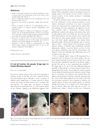
 This case report highlights the diagnosis of folliculotropic mycosis fungoides in a 15-year-old boy with atypical skin and hair follicle changes, a rare occurrence in pediatric patients.
 39 citations
,
July 2015 in “British Journal of Dermatology”
39 citations
,
July 2015 in “British Journal of Dermatology” This article discusses the pseudo 'fringe sign' in frontal fibrosing alopecia, highlighting that it is not solely related to traction, and it reports no new clinical results.
 81 citations
,
January 2003 in “The FASEB Journal”
81 citations
,
January 2003 in “The FASEB Journal” This study found that follistatin and activin interactions are important for hair follicle development and cycling in mice, suggesting that they may regulate processes involving BMP-2 and its antagonist.
 33 citations
,
January 2015 in “Journal of Cosmetic Dermatology”
33 citations
,
January 2015 in “Journal of Cosmetic Dermatology” This study reports that familial frontal fibrosing alopecia was diagnosed earlier in premenopausal women compared to postmenopausal women, though long-term outcomes remain uncertain without a definitive treatment.
 September 2017 in “Journal of Investigative Dermatology”
 This study found that certain circulating miRNAs in skin and plasma may serve as potential biomarkers for distinguishing frontal fibrosing alopecia from control cases, highlighting the need for further validation in larger cohorts.
5 citations
,
January 2001 in “Journal of dermatological science” In this study, researchers found that the G(S)alpha subunit is strongly expressed in neonatal mouse hair follicles, indicating it may play a role in initiating follicle growth.
January 2016 in “Indian dermatology online journal” This case report describes a 50-year-old woman with frontal fibrosing alopecia who showed no improvement despite multiple treatments, including intralesional triamcinolone and topical glucocorticoids.
 19 citations
,
November 1971 in “Clinica Chimica Acta”
19 citations
,
November 1971 in “Clinica Chimica Acta” In this study, the researchers found that the absence of the NFI-C transcription factor delayed the hair growth cycle in mice by affecting key gene expressions and signaling pathways.
 March 2026 in “Zenodo (CERN European Organization for Nuclear Research)”
 This publication presents a library of geometric medicines designed to selectively target pathogenic bacteria and fungi with high precision while minimizing ecological harm, available for free on a non-commercial basis.
1 citations
,
August 2018 in “Journal of the American Academy of Dermatology” A young woman developed facial bumps before hair loss, which is unusual for her condition.
August 2019 in “Journal of the American Academy of Dermatology” Frontal fibrosing alopecia may be caused by an autoimmune reaction and hormonal imbalance.
 14 citations
,
January 2020 in “Frontiers in Endocrinology”
14 citations
,
January 2020 in “Frontiers in Endocrinology” This study reports that in ovarian cell development, FSH-induced OCT4 expression is regulated through the GSK3β/β-catenin pathway mediated by the PI3K/Akt pathway.
19 citations
,
January 2019 in “Animals” This study suggests that PDGFA and BMP2 play a role in the hair follicle cycle in cashmere goats, with PDGFA particularly involved in activating the growth phase.
 March 2022 in “Research Square (Research Square)”
 This study reported that pelage hair follicle mesenchymal stem cells isolated from mice using Ficoll Density Gradient Sedimentation can be obtained in large numbers and may promote hair growth via exosome secretion.
 March 2023 in “Journal of clinical review & case reports”
 This study observed that in Mexico, Frontal Fibrosing Alopecia predominantly affects postmenopausal women, with an increased incidence in recent years, and highlights the challenge of early diagnosis to prevent irreversible hair loss.
In this study, RNA-sequencing identified differentially expressed genes, including FGF5, FGFR1, and RRAS, that affect the hair follicle growth cycle in Inner Mongolian Cashmere goats.
 August 2024 in “Life Science Alliance”
 This study found that topical application of TGF-β mimic promoted enhanced wound healing and tissue regeneration in mice, suggesting its potential as a therapeutic option for improving wound healing.
 23 citations
,
May 2020 in “Cell Death and Disease”
23 citations
,
May 2020 in “Cell Death and Disease” This study generated FGF5-knockout Dorper sheep using the CRISPR/Cas9 system, resulting in significantly increased fine-wool and active hair-follicle density, and explored downstream signaling pathways for potential applications in androgen alopecia treatment.
 123 citations
,
August 2005 in “Journal of the European Academy of Dermatology and Venereology”
123 citations
,
August 2005 in “Journal of the European Academy of Dermatology and Venereology” In this study, the researchers observed that treatment with intralesional and topical corticosteroids, finasteride, and minoxidil may stop the progression of frontal fibrosing alopecia in postmenopausal and premenopausal women.
 12 citations
,
August 2011 in “European Journal of Endocrinology”
12 citations
,
August 2011 in “European Journal of Endocrinology” This study found that anti-Müllerian hormone (AMH) is a valuable primary variable for classifying functional androgenization, especially in distinguishing ovarian-related groups, and supports the novel stratification system.
 January 2022 in “Journal of Cosmetic Dermatology”
 This study found that combining basic fibroblast growth factor with minoxidil improved hair treatment efficiency and patient satisfaction compared to minoxidil alone for early-stage androgenetic alopecia in men.