February 2025 in “Actas Dermo-Sifiliográficas” This study found that oral minoxidil can improve hair and eyebrow growth and increase the density of the frontotemporal hairline in patients with FFA, though adverse effects were reported by a third of participants.
 September 2016 in “Faculty Opinions – Post-Publication Peer Review of the Biomedical Literature”
 Once-daily 5% minoxidil foam increases hair regrowth and density in women with hair loss, but not as effectively as twice-daily 2% minoxidil solution, though it's safer and more convenient.
21 citations
,
March 2018 in “JEADV. Journal of the European Academy of Dermatology and Venereology/Journal of the European Academy of Dermatology and Venereology” This review reported that 5-alpha-reductase inhibitors were effective in stabilizing disease progression or reducing the rate of progression in some cases of frontal fibrosing alopecia, though evidence on safety remains limited.
26 citations
,
October 2017 in “PubMed” According to this study, systemic retinoids, specifically oral isotretinoin and acitretin, were more effective than finasteride in stabilizing the frontal hairline in female patients with frontal fibrosing alopecia, achieving treatment goals in over 70% of cases.
 7 citations
,
September 2015 in “Actas Dermo-Sifiliográficas”
7 citations
,
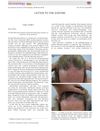
September 2015 in “Actas Dermo-Sifiliográficas” This article reviews the challenges of treating frontal fibrosing alopecia and the potential role of hair transplantation, noting the lack of effective medical treatments and uncertainty surrounding transplant outcomes.
 April 2023 in “JAAD international”
 This study observed that among a Moroccan population with frontal fibrosing alopecia, common comorbidities included lichen planus pigmentosus (36.8%), rosacea (28.9%), thyroid disorders (23.7%), and dyslipidemia (21.1%), highlighting potential relationships mediated by shared inflammatory or metabolic pathways.
 26 citations
,
June 2018 in “Australasian Journal of Dermatology”
26 citations
,
June 2018 in “Australasian Journal of Dermatology” Stopping sunscreen use on the forehead led to hair regrowth in a woman with frontal fibrosing alopecia.
2 citations
,
October 2015 in “Mikrobiyoloji bülteni” This case report describes a 20-year-old female with favus caused by T. schöenleinii, which initially improved with antifungal treatment but recurred due to poor adherence, underscoring favus as an ongoing health issue in Turkey.
25 citations
,
April 2017 in “PloS one” In this study, specific SNPs in the FST gene were significantly associated with various wool quality traits in Chinese Merino sheep, suggesting potential markers for breeding programs.
 1 citations
,
January 2019 in “Acta dermato-venereologica”
1 citations
,
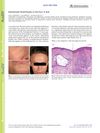
January 2019 in “Acta dermato-venereologica” The woman's skin and hair symptoms were confirmed as frontal fibrosing alopecia, and while facial papules are common in such cases, there's no effective local treatment, but systemic treatments can help.
 8 citations
,
October 2018 in “Journal of The American Academy of Dermatology”
8 citations
,
October 2018 in “Journal of The American Academy of Dermatology” This study evaluated treatments for frontal fibrosing alopecia and found hydroxychloroquine and 5a-reductase inhibitors to be most effective, with 70-72% of patients experiencing stabilization or improvement, but limitations in treatment consistency and assessment methods remain.
 July 2022 in “Research Square (Research Square)”
 This study found that Egyptian women with frontal fibrosing alopecia had lower serum PPARγ levels and a higher occurrence of PPARG gene polymorphism compared to healthy controls, suggesting a potential role for PPARγ in the condition's development.
January 1982 in “Clinical Cosmetic and Investigational Dermatology” This case report describes a 54-year-old woman with familial dyskeratotic comedones who experienced slight improvement in her skin lesions after three months of treatment with topical retinoids and urea cream.
 8 citations
,
March 2016 in “Hair transplant forum international”
8 citations
,
March 2016 in “Hair transplant forum international” This article discusses hair angle manipulation using the Mega FUE® device but reports no clinical results; disclosure of the author's ownership of the manufacturing company is noted.
January 2023 in “Dermatologic Therapy” This review found that intralesional corticosteroid injections and 5-alpha-reductase inhibitors were reported as the most effective treatments for frontal fibrosing alopecia, with oral isotretinoin showing promise for facial papule improvement.
October 2024 in “Benha Journal of Applied Sciences” This study of fifty female patients with frontal fibrosing alopecia in Egypt found that it is a complex condition with no definitive treatment, as it often co-occurs with lichen planus and thyroid issues.
 9 citations
,
October 2018 in “Journal of international medical research”
9 citations
,
October 2018 in “Journal of international medical research” This study found no correlation between the extent of frontal fibrosing alopecia and quality of life, but observed a strong association with thyroid disease in affected women.
 February 2021 in “Pakistan Armed Forces Medical Journal”
 This article presents a case study of favoure racouchot syndrome involving the scalp in a farmer, which has not been previously described as part of this condition, but offers no new research findings.
8 citations
,
August 2017 in “Skin appendage disorders” Red dots on the upper chest may be an early sign of certain types of hair loss.
 16 citations
,
February 2010 in “Journal of the European Academy of Dermatology and Venereology”
16 citations
,
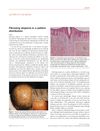
February 2010 in “Journal of the European Academy of Dermatology and Venereology” This article is a letter to the editor about fibrosing alopecia in a pattern distribution and reports no new research findings.
1 citations
,
October 2025 in “Journal of Investigative Dermatology” In this study of women with frontal fibrosing alopecia, delgocitinib cream improved the molecular signature of lesions and demonstrated potential as a treatment, showing significant transcriptomic changes and some clinical improvements over 12 weeks compared to a cream vehicle.
15 citations
,
January 2015 in “Skin Appendage Disorders” This report discusses a series of patients with frontal fibrosing alopecia experiencing increased scalp sweating, which the authors hypothesize may be related to local skin inflammation affecting sweat gland activity.
 63 citations
,
October 2011 in “Archives of Dermatology”
63 citations
,
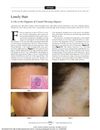
October 2011 in “Archives of Dermatology” Isolated long hairs at the original hairline can help diagnose Frontal Fibrosing Alopecia.
 2 citations
,
April 2018 in “Journal of Investigative Dermatology”
2 citations
,
April 2018 in “Journal of Investigative Dermatology” This study suggests that frontal fibrosing alopecia is a highly inflammatory disease involving TH1 and JAK-STAT pathways, without reduced hair keratins, highlighting JAK-STAT signaling as a potential therapeutic target.
June 2026 in “Dermatology” In this study, frontal fibrosing alopecia showed a higher cumulative remission rate compared to lichen planopilaris, despite similar timeframes and relapse rates between the two conditions.
 10 citations
,
June 2020 in “Journal of Cosmetic Dermatology”
10 citations
,
June 2020 in “Journal of Cosmetic Dermatology” This study found a high prevalence of genital Lichen sclerosus and autoimmune comorbidities in patients with frontal fibrosing alopecia, suggesting a possible shared autoimmune process.
This study found that women with polycystic ovary syndrome had significantly higher levels of the protein fetuin-A compared to healthy controls.
 103 citations
,
June 2018 in “International Journal of Molecular Sciences”
103 citations
,
June 2018 in “International Journal of Molecular Sciences” This review discusses the applications and research on fibroblast growth factors, including their use in wound healing, diabetes, and cancer, but it reports no new clinical results.
3 citations
,
January 2024 in “Poultry Science” This study demonstrated that FOXO3 influences feather follicle development in goose embryos by regulating the Wnt/β-catenin signaling pathway in dermal fibroblasts, resulting in changes to feather size and structure without altering follicle density.
 February 2021 in “Cureus”
 In this case report, the authors describe a rare presentation of alopecia areata mimicking frontal fibrosing alopecia, emphasizing the diagnostic value of trichoscopy and the need to consider alopecia areata in differential diagnoses.