25 citations
,
April 2008 in “Clinical and experimental dermatology” This case series describes Erythromelanosis follicularis faciei et colli in five Indian patients, suggesting it may be more common than currently reported.

In this narrative review, researchers evaluated existing literature on the treatment of frontal fibrosing alopecia, finding that while no curative treatment exists, clinical improvements can be achieved through personalized and combined therapy approaches.
 2 citations
,
January 2017 in “Przegla̧d dermatologiczny”
2 citations
,
January 2017 in “Przegla̧d dermatologiczny” This study identified two distinct trichoscopic patterns in the mid-frontal scalp of patients with frontal fibrosing alopecia who also display clinical features of androgenetic alopecia.
 1 citations
,
May 2021 in “Annals of the rheumatic diseases”
1 citations
,
May 2021 in “Annals of the rheumatic diseases” This study found that tofacitinib may be effective for treating pediatric rheumatic diseases, with especially promising results in patients with autoinflammatory diseases, arthritis and alopecia, and juvenile dermatomyositis.
August 2025 in “Cosmetics” This review discusses the possible link between cosmeceuticals and frontal fibrosing alopecia but reports no conclusive findings; the authors stress further research on environmental triggers is needed.
 June 2024 in “British Journal of Dermatology”
 This case report highlights the diagnosis of folliculotropic mycosis fungoides in a 15-year-old boy with atypical skin and hair follicle changes, a rare occurrence in pediatric patients.
 37 citations
,
April 2019 in “Journal of The American Academy of Dermatology”
37 citations
,
April 2019 in “Journal of The American Academy of Dermatology” This review assessed the effectiveness of various treatments for frontal fibrosing alopecia and found that intralesional steroids and 5α-reductase inhibitors showed the most positive outcomes in slowing or halting hair loss, though the lack of placebo-controlled studies and consistent outcome measures limits definitive conclusions.
 15 citations
,
December 2017 in “Journal of The European Academy of Dermatology and Venereology”
15 citations
,
December 2017 in “Journal of The European Academy of Dermatology and Venereology” This letter discusses potential pathogenetic links among frontal fibrosing alopecia, androgenetic alopecia, and fibrosing alopecia in a pattern distribution and reports no new clinical findings.
This study found that patients with frontal fibrosing alopecia showed significant alterations in protein expression in forehead corneocytes, suggesting the condition may have systemic implications beyond the scalp.
 7 citations
,
January 2009 in “Biological & pharmaceutical bulletin”
7 citations
,
January 2009 in “Biological & pharmaceutical bulletin” This study found that applying ferrous ferric chloride skin lotions to newborn mice stimulated skin cell proliferation and differentiation, increased hair growth, and inhibited alopecia-related hair loss.
 16 citations
,
January 2005 in “Pediatric Dermatology”
16 citations
,
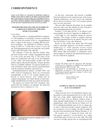
January 2005 in “Pediatric Dermatology” This brief report describes a case of Fox-Fordyce disease in a prepubertal girl but reports no new clinical findings.
 3 citations
,
January 2022 in “Journal of The American Academy of Dermatology”
3 citations
,
January 2022 in “Journal of The American Academy of Dermatology” This study found that sunscreen and moisturizer use was associated with a higher likelihood of developing frontal fibrosing alopecia in the reviewed studies.
1 citations
,
July 2021 in “Forensic science international” This study found that segmental single hair analysis produced ocfentanil concentration profiles similar to those from hair lock analysis, supporting its use in cases with limited samples.
 May 2026 in “International Journal of Drug Delivery Technology”
 This case study highlights Erythromelanosis follicularis faciei et colli as an easily overlooked pigmentary disorder characterized by a distinctive triad requiring precise diagnosis for effective patient counseling and cosmetic management.
December 2025 in “Actas Dermo-Sifiliográficas” This consensus from 22 Spanish dermatologists recommends using a multimodal therapy starting with oral dutasteride, combined with topical and/or intralesional agents, and adding hydroxychloroquine if inflammation persists, to manage frontal fibrosing alopecia due to its irreversible hair loss and lack of specific approved treatments.
 January 2025 in “Journal of Case Reports and Scientific Images”
 In this case report, a 65-year-old woman was diagnosed with folliculotropic mycosis fungoides after experiencing scarring alopecia and intense pruritus, highlighting the importance of early diagnosis due to its aggressive nature.
 1 citations
,
October 2023 in “Journal of the Pakistan Medical Association”
1 citations
,
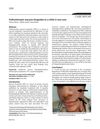
October 2023 in “Journal of the Pakistan Medical Association” This source describes a case of a 12-year-old male diagnosed with folliculotropic mycosis fungoides, presenting with an asymptomatic, erythematous plaque. Histology and immunohistochemistry confirmed FMF, which is typically rare in children and marked by follicular infiltration by CD4+ lymphocytes.
 December 2015 in “Actas Dermo-Sifiliográficas”
 This review addresses the challenges in treating frontal fibrosing alopecia, highlighting the limited effectiveness of medical treatments and the demand for hair transplantation despite its risks, but it reports no new clinical results.
 May 2019 in “Australasian Journal of Dermatology”
 The conclusion is that managing hair loss conditions like FFA and melanoma requires individualized approaches, considering new findings and balancing treatment benefits with potential risks.
This study examined epidemiological data on patients with frontal fibrosing alopecia in Greece and found demographic patterns consistent with international studies.
July 2022 in “Journal of Cosmetic Dermatology” This study found that in patients with frontal fibrosing alopecia, combining topical tacrolimus with isotretinoin is more effective after four weeks of treatment compared to tacrolimus with finasteride, though both regimens offered some benefit.
34 citations
,
June 2020 in “British journal of dermatology/British journal of dermatology, Supplement” In this study, researchers observed that follicular damage and stem cell loss in frontal fibrosing alopecia may be mediated by immune attacks at the bulge region, suggesting potential for JAK/STAT-targeting treatments to prevent progression.
 1 citations
,
January 2014 in “Hair therapy & transplantation”
1 citations
,
January 2014 in “Hair therapy & transplantation” This report describes benefits of advanced hair transplant techniques, micro-FUE and U-FUE, which may result in natural, undetectable hair restoration and discrete post-procedure appearance.
 September 2017 in “Journal of Investigative Dermatology”
 This study found that certain circulating miRNAs in skin and plasma may serve as potential biomarkers for distinguishing frontal fibrosing alopecia from control cases, highlighting the need for further validation in larger cohorts.
19 citations
,
November 2012 in “Cell Communication and Signaling” This study found that Fibroblast growth factor-9 (FGF-9) accelerates epithelial invagination in engineered ectodermal organs and suggests its potential role in organogenesis and regeneration research.
 30 citations
,
June 2008 in “Dermatologic Surgery”
30 citations
,
June 2008 in “Dermatologic Surgery” In this study, the SAFE System for follicular unit extraction demonstrated a favorable average follicle transection rate of 6.14% and is accessible for physicians with basic technical skills, showing promise for wider adoption.
 December 2023 in “Journal of materials chemistry. B”
 This study found that a nanoemulsion containing perfluorooctyl bromide effectively increased oxygen levels in an anoxic environment, enhancing hair dermal papilla cell growth and significantly promoting hair organ elongation.
 March 2026 in “Dermatology and Therapy”
 This prospective study observed that low-dose oral minoxidil improved anterior hairline and eyebrow coverage in adult women with frontal fibrosing alopecia and was generally well-tolerated.
 17 citations
,
November 2018 in “Dermatology”
17 citations
,
November 2018 in “Dermatology” The authors concluded that Hispanic/Latino ethnicity, facial papules, and premenopausal status in patients with frontal fibrosing alopecia may indicate a susceptibility to more severe disease, potentially necessitating early treatment.
 August 2016 in “Journal of Investigative Dermatology”
 This study observed that the osteopontin-derived peptide FOL-005 inhibited hair growth in human scalp skin models, contrary to its hair growth promotion in mice, supporting further clinical testing for excessive hair growth treatment.