11 citations
,
June 2010 in “Dermatologic surgery” This article contains information about journal subscriptions and does not report any research findings.
 25 citations
,
August 2010 in “Journal of Biological Chemistry”
25 citations
,
August 2010 in “Journal of Biological Chemistry” This study found that NFI-C plays a crucial role in the transition from the telogen to anagen phase of the hair follicle cycle, affecting hair growth initiation in mice.
8 citations
,
December 2017 in “Small Ruminant Research” This study reports that variation in the ovine TCHH gene may influence wool fibre curvature, with specific gene variants affecting the mean fibre curvature in sheep.
 November 2023 in “Journal of cosmetic dermatology”
 This report describes three cases of erythromelanosis follicularis faciei et colli showing significant improvement in facial telangiectasia following treatment with a 595-nm pulsed dye laser, with minimal recurrence observed during follow-up.
1 citations
,
January 1987 in “PubMed” This study reported that in a histopathologic analysis of five parenteral heroin users with candida folliculitis, candida and pseudohyphae were frequently found in association with hair follicles.

This study found that dermoscopy combined with calcium fluorescent white staining effectively aided in the early diagnosis and treatment evaluation of tinea capitis by highlighting specific hair changes and fluorescent patterns associated with different dermatophyte infections in a sample of 20 patients.
 30 citations
,
December 2017 in “Journal of The American Academy of Dermatology”
30 citations
,
December 2017 in “Journal of The American Academy of Dermatology” This correspondence discusses proposed updates to the diagnostic criteria for frontal fibrosing alopecia, emphasizing the importance of differentiating it from other types of alopecia.
4 citations
,
July 2010 in “International Journal of Cosmetic Science” This study observed that hair fibers in older women become more curved with age, decreasing hair luster due to their disordered alignment and structural differences between the convex and concave sides.
21 citations
,
January 2020 in “Brazilian Journal of Medical and Biological Research” This study found that lncRNA H19 may regulate CTGF expression in KGN cells by acting as a "sponge" for miR-19b, potentially influencing polycystic ovary syndrome development.
3 citations
,
February 2020 in “DOAJ (DOAJ: Directory of Open Access Journals)” This review discusses the challenges of managing intraoperative floppy iris syndrome during cataract surgery and highlights the importance of preoperative risk assessment and multidisciplinary collaboration, reporting no new clinical results.
July 2024 in “Journal of Investigative Dermatology” A new test helps find drugs to treat head and neck cancer by targeting c-Rel.
1 citations
,
October 2010 in “2010 3rd International Conference on Biomedical Engineering and Informatics” This study successfully cloned and characterized the LEF-1 gene from Inner Mongolia Cashmere Goats, potentially aiding efforts to enhance cashmere production through genetic modification.
7 citations
,
March 2022 in “The FASEB journal” This study observed that mice with a whole-body deficiency of Cystathionine-β-synthase developed severe hyperhomocysteinemia and related mild symptoms without increased mortality, indicating HHCy may not directly cause end organ damage.
 September 2022 in “PubMed”
 Entadfi, a mix of finasteride and tadalafil, is used for BPH.
August 2018 in “Journal of the American Academy of Dermatology” 6 citations
,
July 2021 in “Frontiers in Genetics” This study identified a new heterozygous missense variant in CST6 associated with autosomal dominant keratosis follicularis spinulosa decalvans in an Austrian family, affecting epidermal differentiation and hair formation.
1 citations
,
May 2024 in “Skin Appendage Disorders” This study describes trichoscopic findings in 11 dark-skinned women with central centrifugal cicatricial alopecia and highlights the potential of trichoscopy for early diagnosis and treatment.
 September 2023 in “Journal of the American Academy of Dermatology”
 Topical tofacitinib helped a man with severe scalp condition after other treatments failed.
August 2019 in “Journal of the American Academy of Dermatology” Frontal fibrosing alopecia may be caused by an autoimmune reaction and hormonal imbalance.
 September 2021 in “CRC Press eBooks”
 This article discusses features, genetics, and diagnostic challenges of central centrifugal cicatricial alopecia in African American women but reports no new clinical results.
 14 citations
,
July 2012 in “Journal of the American Academy of Dermatology”
14 citations
,
July 2012 in “Journal of the American Academy of Dermatology” This study found that topical tacalcitol improved roughness and scaling in erythromelanosis follicularis faciei et colli, although it was less effective for facial erythema.
 1 citations
,
April 2022 in “The Journal of Family Practice”
1 citations
,
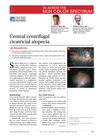
April 2022 in “The Journal of Family Practice” This report describes early and late stages of central centrifugal cicatricial alopecia in two Black women, highlighting progression from a small to a large central patch of hair loss.
 4 citations
,
April 2018 in “Biotechnology Letters”
4 citations
,
April 2018 in “Biotechnology Letters” Human growth factor 20 can boost mouse whisker growth.
 January 2026 in “Dermatology Online Journal”
 This case report highlights that CCCA can present with multifocal patchy hair loss in younger men of African descent, suggesting the need for careful evaluation when diagnosing atypical alopecia patterns.
11 citations
,
January 2022 in “Experimental Dermatology” This study suggests that patients with severe, extensive central centrifugal cicatricial alopecia may exhibit a distinct gene expression pattern in the lesional scalp, highlighting potential targets for future research on disease severity and therapies.
14 citations
,
February 2011 in “Experimental dermatology” This study identifies cartilage oligomeric matrix protein (COMP) as a key extracellular matrix component in human hair follicle cycling, potentially regulated by TGFβ signaling, and suggests its importance in normal hair follicle biology.
56 citations
,
September 2010 in “Veterinary pathology” This study found that certain C57BL/6 mouse substrains have a genetic vulnerability to skin lesions resembling central centrifugal cicatrical alopecia in humans, potentially worsened by high vitamin A levels.
 1 citations
,
December 2023 in “Curēus”
1 citations
,
December 2023 in “Curēus” This study observed that five out of fourteen individuals aged 13-16 years, who were homozygous for the p.C282Y mutation related to hemochromatosis, had increased liver and phlebotomy-mobilized iron levels.
January 2004 in “Linchuang pifuke zazhi” This study found that in fetal skin development, both α- and β-catenins showed similar expression patterns, indicating their related roles in the development of the epidermis and skin appendages.
 5 citations
,
February 2015 in “JEADV. Journal of the European Academy of Dermatology and Venereology/Journal of the European Academy of Dermatology and Venereology”
5 citations
,
February 2015 in “JEADV. Journal of the European Academy of Dermatology and Venereology/Journal of the European Academy of Dermatology and Venereology” This article is a letter discussing optical coherence tomography-assisted diagnosis of follicular keratosis of the chin and reports no new research findings.