July 2001 in “APMIS. Acta pathologica, microbiologica et immunologica Scandinavica./APMIS” This article reviews the potential causes of insufficient androgen action during fetal development, such as enzyme and receptor gene mutations or environmental disruptors, but reports no new results.
111 citations
,
May 2001 in “Human reproduction update” This review discusses the role of genetic mutations and environmental endocrine disruptors in insufficient androgen action, which can result in conditions like hypospadias, cryptorchidism, and micropenis, during male fetal development.
 January 2020 in “Research Portal Denmark”
 This study concludes that anti-androgenic chemicals causing short anogenital distance in male fetuses also induce a feminized transcriptional profile in the perineum, implicating Wnt and estrogen signaling in the process.
 62 citations
,
August 2018 in “Frontiers in Endocrinology”
62 citations
,
August 2018 in “Frontiers in Endocrinology” This review discusses the physiological roles of ovarian androgens in follicle development and atresia, emphasizing their contributions to polycystic ovary syndrome and normal follicle maturation but provides no new clinical results.
53 citations
,
January 1986 in “Endocrinology” This rat study suggests that 5α-dihydrotestosterone plays a critical role in inhibiting nipple development in male fetuses by causing the regression of the nipple anlage in utero.
 16 citations
,
December 2021 in “Frontiers in Endocrinology”
16 citations
,
December 2021 in “Frontiers in Endocrinology” This review discusses the role of sex hormones in COVID-19 severity and reports no new clinical results; the authors suggest further research for gender-based personalized treatment options.
 25 citations
,
January 2000 in “Hormone Research in Paediatrics”
25 citations
,
January 2000 in “Hormone Research in Paediatrics” This article reviews androgen insensitivity syndrome and highlights the factors contributing to phenotypic diversity in 46,XY patients with AR gene mutations, reporting no new clinical results.
 October 2019 in “European heart journal”
 This study found that androgen deprivation therapy is associated with an increased risk of acquired long-QT syndrome and Torsades de Pointes, particularly highlighting enzalutamide's greater association with sudden death compared to other therapies.
 August 2012 in “Pharmaceutical Medicine”
 The document concludes that various medications and treatments can have significant, sometimes adverse, effects on health outcomes.
 February 2010 in “ePrints Soton (University of Southampton)”
 This research found that androgen bioactivity plays a role in normal female sexual differentiation, suggesting females develop within a significant androgenic environment, with implications for understanding conditions like congenital adrenal hyperplasia.
 253 citations
,
March 2006 in “The Journal of Clinical Endocrinology and Metabolism”
253 citations
,
March 2006 in “The Journal of Clinical Endocrinology and Metabolism” This review discusses the hypothesis that polycystic ovary syndrome may originate in fetal life due to prenatal androgen exposure, but reports no new clinical results.
 2 citations
,
August 2023 in “Journal of Endocrinological Investigation”
2 citations
,
August 2023 in “Journal of Endocrinological Investigation” In this study, researchers found that pregnant mice exposed to excessive androgen led to thinner ventricular walls and cardiac hypertrophy in offspring, suggesting that prenatal androgen exposure adversely affects cardiac health through reduced cardiomyocyte proliferation.
 35 citations
,
May 2022 in “Baillière's best practice and research in clinical endocrinology and metabolism/Baillière's best practice & research. Clinical endocrinology & metabolism”
35 citations
,
May 2022 in “Baillière's best practice and research in clinical endocrinology and metabolism/Baillière's best practice & research. Clinical endocrinology & metabolism” This review discusses the current understanding of androgen biosynthesis, mechanisms of action, and their roles in human biology, as well as related congenital and acquired disorders, but it reports no new research findings.
 100 citations
,
September 2017 in “Molecular and Cellular Endocrinology”
100 citations
,
September 2017 in “Molecular and Cellular Endocrinology” This review discusses the molecular mechanisms of androgens and androgen receptors in skin disorders, particularly androgenetic alopecia, and reports no new clinical results; it highlights potential areas for future treatment development.
 93 citations
,
February 2009 in “Annals of the New York Academy of Sciences”
93 citations
,
February 2009 in “Annals of the New York Academy of Sciences” This review describes the roles of 5α-reductase isozymes in prostate development and pathology and reports no new clinical results.
 7 citations
,
January 1994 in “Annual Reports in Medicinal Chemistry”
7 citations
,
January 1994 in “Annual Reports in Medicinal Chemistry” This review discusses hormonal manipulation for conditions like prostatic disorders and skin issues and highlights promising treatments like casodex and finasteride, but it reports no new clinical results.
 December 2020 in “Current Sexual Health Reports”
 This review discusses the role of neurosteroids and androgens throughout different life stages, noting the potential disruptions caused by 5α-reductase inhibitors like finasteride, but no new clinical results are reported.
 9 citations
,
August 2000 in “Journal of Periodontal Research”
9 citations
,
August 2000 in “Journal of Periodontal Research” Finasteride reduces testosterone conversion, progesterone lessens this, and levamisole enhances finasteride's effect.
This study found that Avicennia marina extract and its active compound avicequinone C inhibit enzymes and receptors related to androgenic alopecia, potentially supporting hair growth in cultured dermal papilla cells.
 February 2014 in “Revista Argentina de Cardiología”
 In this study, testosterone was found to increase the risk of arrhythmias in a rat heart model, while finasteride reduced this arrhythmogenic effect.
 131 citations
,
September 2017 in “Molecular and Cellular Endocrinology”
131 citations
,
September 2017 in “Molecular and Cellular Endocrinology” This article discusses the role of androgens in metabolic and reproductive health and reports no new experimental results; the focus is on androgen receptor activation by testosterone and 5α-dihydrotestosterone.
 30 citations
,
August 2019 in “Medical Sciences”
30 citations
,
August 2019 in “Medical Sciences” This review summarizes evidence suggesting that excess androgens play a key role in the origins of polycystic ovary syndrome, highlighting opportunities for developing targeted treatments.
13 citations
,
February 2021 in “Brain Sciences” This study found that in adolescent male rats, androgens enhance inhibitory avoidance memory, possibly by interacting with androgen receptors in the amygdala and hippocampus.
 2 citations
,
November 2012 in “InTech eBooks”
2 citations
,
November 2012 in “InTech eBooks” The document concludes that sex hormones are crucial for mammalian reproduction, health, and behavior, and require more research for therapeutic use.
 29 citations
,
February 2018 in “Genetics research international”
29 citations
,
February 2018 in “Genetics research international” This review summarizes the influence of gene polymorphisms on genetic predisposition to polycystic ovary syndrome, but reports no new experimental or clinical results.
 103 citations
,
October 2003 in “Birth Defects Research”
103 citations
,
October 2003 in “Birth Defects Research” This review discusses the multifactorial etiology of hypospadias, including genetic predispositions and possible environmental factors, and highlights the need for further studies on genetic and environmental contributions to its increasing prevalence, without presenting new findings.
 101 citations
,
April 1994 in “Baillière's clinical endocrinology and metabolism”
101 citations
,
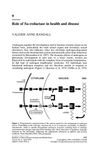
April 1994 in “Baillière's clinical endocrinology and metabolism” This review discusses the role of 5α-reductase enzymes in androgen action and related disorders, noting that their specific inhibitory drugs show promise for conditions like benign prostatic hypertrophy; it reports no new clinical results.
3 citations
,
April 2024 in “Molecular Human Reproduction” This study found that paxillin knockdown in human granulosa-derived cells and mouse models decreased androgen receptor protein levels and altered gene expression, suggesting paxillin's role in protecting against androgen excess effects, as observed in a polycystic ovary syndrome mouse model.
55 citations
,
June 2012 in “Steroids” This study found that testosterone modulates vascular cell behavior through direct actions that do not rely on its conversion to estradiol.
 3 citations
,
April 2015 in “American journal of biomedical sciences”
3 citations
,
April 2015 in “American journal of biomedical sciences” This review discusses the molecular mechanisms of androgen action in human hair follicles and reports no new findings; the authors emphasize the need for further research to improve treatments for hair disorders.