17 citations
,
February 2023 in “Cosmetics” This study explores the use of bioinspired 3D printed hollow microneedles, which may offer improved delivery of anti-wrinkle formulations, and reviews the current landscape and challenges of existing wrinkle treatments and microneedle technology.
16 citations
,
March 2023 in “Clinical Cosmetic and Investigational Dermatology” This study demonstrated that regular use of LactoSporin cream for 10 weeks significantly reduced wrinkles and fine lines in healthy female participants, although improvements in skin elasticity and hydration were not significantly better than placebo when measured by certain instruments.
 15 citations
,
July 2021 in “Bosnian Journal of Basic Medical Sciences”
15 citations
,
July 2021 in “Bosnian Journal of Basic Medical Sciences” This review discusses the therapeutic effects of stem cell therapy in various diseases and emphasizes the need for controlled differentiation and further large-scale trials, but reports no new findings.
12 citations
,
September 2024 in “JID Innovations” This review highlights the potential of microfluidic skin-on-a-chip models in skin research, emphasizing their ability to mimic human skin structure and improve control over cellular and molecular distribution compared to traditional in vitro models.
 9 citations
,
March 2022 in “Antioxidants”
9 citations
,
March 2022 in “Antioxidants” This review summarized and classified 32 approved synthetic and natural-identical antioxidants, examining their regulatory status, safety, pharmacological properties, and effectiveness on human health, aiming to clarify their antioxidant actions and encourage further research in the field.
1 citations
,
June 2025 in “International Journal of Molecular Sciences” This review highlights that hirsutism in the GCC is influenced by genetic and lifestyle factors, cultural stigmas, and lacks adequate diagnostic tools, stressing the need for culturally tailored research and public health initiatives.
 1 citations
,
March 2023 in “Frontiers in Cardiovascular Medicine”
1 citations
,
March 2023 in “Frontiers in Cardiovascular Medicine” A specific gene variant is linked to heart disease, increased heart muscle, curly hair, and thick skin on palms and soles.
 March 2026 in “Preprints.org”
 This study investigated the secretome of adipose mesenchymal stem cells and fibroblasts used in skin care products, finding 16 therapeutic pathways involving numerous signaling mechanisms, which may offer skin benefits through anti-inflammatory and regenerative effects.
This review analyzed literature on primary cutaneous lymphomas involving the scalp, finding that scalp involvement in these cases often leads to non-scarring focal alopecia and may indicate more aggressive disease.
May 2024 in “Molecules/Molecules online/Molecules annual” This narrative review reports that well-selected plant extracts and their active compounds may improve hair health by promoting hair growth and preventing hair loss, potentially aiding in developing targeted therapies for alopecia.
April 2024 in “International journal of molecular sciences” This narrative review discusses the promising role of photobiomodulation in dermatology, emphasizing its non-invasive nature and potential benefits, but acknowledges the need for further research to establish standard protocols.
March 2024 in “Antioxidants” This study examines the effects of excessive or prolonged exposure to blue light on retinal function and highlights its potential health implications, noting that both photoreceptor and intrinsically photosensitive retinal ganglion cells (ipRGCs) are particularly sensitive to blue wavelengths.
In this study, rat vibrissa follicles transplanted into mice demonstrated survival, partial sympathetic nerve reinnervation, and increased norepinephrine levels 37 days post-implantation, suggesting potential for hair growth despite not returning to normal nerve function.
 May 2023 in “Frontiers in Endocrinology”
 This review article discusses recent updates on the skin manifestations associated with thyroid disease, emphasizing their role as early indicators of thyroid hormone dysregulation.
 August 2020 in “Pakistan Journal of Zoology”
 This study identified a novel genetic mutation, c.429delC in the hairless gene, associated with atrichia with papular lesions in two Pakistani families.
35 citations
,
February 2023 in “Journal of Clinical Medicine” This review discusses treatments for demodicosis in adults and children and provides no new clinical results; the authors emphasize the need for careful diagnosis and therapy selection.
 30 citations
,
September 2017 in “Environmental health perspectives”
30 citations
,
September 2017 in “Environmental health perspectives” This study found that potential exposure to Corexit™ dispersants during the Deepwater Horizon cleanup was associated with increased respiratory, dermal, and eye irritation symptoms among responders both during the cleanup and up to three years later.
 10 citations
,
December 2015 in “Clinics in Dermatology”
10 citations
,
December 2015 in “Clinics in Dermatology” This review highlights the eye and skin manifestations of endocrine-related metabolic diseases but provides no new clinical results.
4 citations
,
December 1985 in “Archives of Dermatological Research” Eye lens capsules are the best for growing human skin cells.
This review discusses forensic DNA phenotyping and its potential applications, particularly for human identification in Latin American populations, but notes challenges due to genetic diversity and reports no new results.
 June 2017 in “Asian journal of pharmaceutical and clinical research”
 This study found that a green tea extract gel was stable across various temperatures, did not cause eye irritation, and significantly increased eyelash growth compared to a placebo after two months of use in human volunteers.
 January 1997 in “Journal of The American Academy of Dermatology”
 This book review discusses "Eye and Skin Disease" by Mannis, Macsai, and Huntley, highlighting its comprehensive examination of the interconnections between dermatologic and ophthalmologic conditions, valuable for both specialties.
30 citations
,
April 2023 in “Indian Journal of Ophthalmology” This review examines various new approaches for treating dry eye disease, including biomaterials, regenerative therapy, and tissue engineering, and emphasizes the need for clinical efficacy studies to advance these therapies for human use.
27 citations
,
January 2016 in “Cellular Physiology and Biochemistry” This study found that the extract of Bidens pilosa L. improved dry eye symptoms associated with androgen deficiency in rats by enhancing tear production, stabilizing the tear film, and reducing lacrimal gland inflammation.
18 citations
,
March 2014 in “Journal of Pharmacological and Toxicological Methods” This study found that ovariectomized and finasteride-treated rats showed significant tear film deficiency and downregulation of sex steroid receptors in ocular tissues, suggesting potential models for studying dry eye disorders.
 8 citations
,
August 2016 in “Acta dermato-venereologica”
8 citations
,
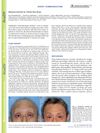
August 2016 in “Acta dermato-venereologica” Timolol eye-drops can cause hair loss.
 3 citations
,
July 2022 in “Dermatologic Therapy”
3 citations
,
July 2022 in “Dermatologic Therapy” This study reported that using non-absorbable magnesium microneedle patches for 12 weeks improved under-eye wrinkles as measured by a grading scale and wrinkle index, with minimal discomfort and no significant change in dermal thickness.
 December 2025 in “Cureus”
 In this retrospective cohort study, researchers found that patients with androgenetic alopecia using 5α-reductase inhibitors had a significantly higher risk of developing dry eye disease compared to those not using these medications.
 January 2025 in “Clinical and Experimental Optometry”
 This study found that men with androgenetic alopecia had significantly higher rates of dry eye symptoms and meibomian gland dysfunction compared to healthy controls, suggesting a potential link between the condition and these ocular issues.
 January 2025 in “Turkiye Klinikleri Journal of Ophthalmology”
 This study found no significant differences in dry eye disease parameters between female patients with androgenetic alopecia and healthy controls, although meibum quality was better in the alopecia group, suggesting complex hormonal interplay affecting ocular health.