 94 citations
,
January 2007 in “Cutaneous and Ocular Toxicology”
94 citations
,
January 2007 in “Cutaneous and Ocular Toxicology” This review discusses the long-term cutaneous and ocular complications from sulfur mustard exposure in the Iranian population, identifying pruritus and malignant changes as significant issues and highlighting eye surface damage leading to visual decline.
August 2024 in “Journal of the American Academy of Dermatology” Nail color change might be an early sign of skin pigmentation from minocycline.
5 citations
,
November 2020 in “Forensic Science International Genetics” This study found that using trait prevalence-informed priors may improve the prediction accuracy of appearance traits in Bayesian models, but their application is limited by sparse knowledge on trait prevalence.
2 citations
,
November 2024 in “JAAD Case Reports” Anti-PD-L1 immunotherapy can cause hair loss and unexpected hair color change, but treatment can restore hair growth and color.
8 citations
,
February 2023 in “Actas Dermo-Sifiliográficas” This review summarizes trichoscopic features for diagnosing common hair loss disorders and reports no new clinical results, emphasizing their diagnostic utility in conditions like alopecia areata and trichotillomania.
 85 citations
,
April 2007 in “Dermatologic Clinics”
85 citations
,
April 2007 in “Dermatologic Clinics” This article reviews drug-induced hair changes, highlighting that while many drugs are occasionally linked to hair loss, this connection has been conclusively established for only a few, and such hair loss is typically reversible.
22 citations
,
June 2001 in “International Journal of Cosmetic Science” This review discusses the role of iron from cosmetic sources in skin nutrition and reports no clinical results, highlighting its significance for skin, hair, and nail health.
1 citations
,
July 2025 in “Journal of Cosmetic Dermatology” This review found that lip aging differs significantly from facial aging and suggests focusing on distinct anti-aging strategies for lips, considering gender differences and unique physiological characteristics.
 74 citations
,
March 1963 in “Archives of Dermatology”
74 citations
,
March 1963 in “Archives of Dermatology” This article reviews historical reports of skin changes, such as pseudoacanthosis nigricans, associated with cholesterol-lowering drugs like triparanol and nicotinic acid, but presents no new clinical findings.
2 citations
,
October 2023 in “Cosmetics” This study found that applying 0.005% latanoprost topically to eyelashes significantly increased their length and darkened their color in healthy volunteers over three months, without causing any side effects or changes in intraocular pressure compared to a placebo.
 January 1990 in “Springer eBooks”
 Some chemicals can permanently or temporarily remove color from skin and hair, which can be distressing and is not well-regulated in cosmetics.
 82 citations
,
February 2017 in “Cold Spring Harbor Perspectives in Biology”
82 citations
,
February 2017 in “Cold Spring Harbor Perspectives in Biology” The TGF-β family helps control how cells change and move, affecting skin, hair, and organ development.
 86 citations
,
October 2017 in “Translational pediatrics”
86 citations
,
October 2017 in “Translational pediatrics” This review discusses how ophthalmic findings can reveal key endocrine disorders and reports no new clinical results, emphasizing the eye's role in diagnosing and managing systemic diseases like diabetes and Graves' ophthalmopathy.
 10 citations
,
August 2012 in “Current Problems in Pediatric and Adolescent Health Care”
10 citations
,
August 2012 in “Current Problems in Pediatric and Adolescent Health Care” This review explores hair signs related to nutrition disorders, such as thin and dyspigmented hair, without presenting new clinical findings; the authors highlight unknowns regarding underlying causes.
62 citations
,
December 1941 in “Experimental biology and medicine” In this study, phenylthiocarbamide intake was associated with hair graying in rats, while switching to tap water led some rats to regain their original fur color, suggesting dietary factors influence pigmentation.
31 citations
,
November 2015 in “PloS one” In this study, modulating Tyrosinase expression altered mouse coat color by affecting melanosome accumulation, indicating that melanosome maturity plays a role in determining skin and hair color beyond total melanin content.
 March 2026 in “Egyptian Journal of Forensic Sciences”
 This review critically examines Forensic DNA Phenotyping, highlighting high accuracy in predicting certain traits but also legal and ethical challenges, particularly around regulatory fragmentation and issues of genetic privacy.
 November 2022 in “Journal of the Endocrine Society”
 This case study reports a rare instance of an estradiol-secreting adrenocortical carcinoma in a 58-year-old male, causing feminization and Marie-Antoinette syndrome, with potential paraneoplastic aortitis.
 38 citations
,
January 2023 in “International Journal of Medical Sciences”
38 citations
,
January 2023 in “International Journal of Medical Sciences” This review discusses the potential of repeated low-level red-light therapy to inhibit myopia progression through metabolic effects, highlighting its molecular and cellular impact, but reports no new clinical results.
 44 citations
,
January 2005 in “Dermatology”
44 citations
,
January 2005 in “Dermatology” This article reviews the clinical and diagnostic features of hair shaft disorders, emphasizing the role of structured patient assessments and the avoidance of hair trauma, but reports no new results.
November 2025 in “Journal of Clinical Medicine” This review article explores the potential systemic nature of alopecia areata, highlighting the association with ocular abnormalities and suggesting that shared pathogenic pathways may lead to eye symptoms occurring at younger ages than usual.
 4 citations
,
October 2012 in “Expert Review of Dermatology”
4 citations
,
October 2012 in “Expert Review of Dermatology” Dermoscopy greatly improves melanoma diagnosis and reduces unneeded surgeries.
 June 2026 in “Gümüşhane Üniversitesi Fen Bilimleri Enstitüsü Dergisi”
 This study observed that biodegradable PVA/agar films with incorporated Achillea millefolium L. essential oil, especially at 1% (v/v), demonstrated good mechanical performance and selective antibacterial activity against E. coli, suggesting their potential as wound dressings.
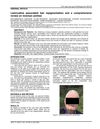
This review reports the first known case of hair repigmentation associated with lamivudine use and examines mechanisms related to drug-induced hair repigmentation, suggesting potential therapeutic strategies for reversing hair graying.
January 2020 in “Revista Dermatológica Centro Uraga” This article describes how recognizing distinct trichoscopic features aids in diagnosing various dermatological conditions and hair loss, but it reports no new clinical findings.
 22 citations
,
April 2013 in “Dermatologic surgery”
22 citations
,
April 2013 in “Dermatologic surgery” In this study, daily application of bimatoprost 0.03% ophthalmic solution for 9 months significantly improved eyebrow appearance in individuals with mild to moderate eyebrow hypotrichosis, without observed side effects.
 1 citations
,
April 2020 in “bioRxiv (Cold Spring Harbor Laboratory)”
1 citations
,
April 2020 in “bioRxiv (Cold Spring Harbor Laboratory)” This study suggests that seasonal rhythm genes in cashmere goat skin are differentially expressed with changing daylight, potentially affecting hormone transformation and light sensitivity.
 52 citations
,
October 1999 in “Developmental Dynamics”
52 citations
,
October 1999 in “Developmental Dynamics” This study found that the hairless gene in mice has a more extensive role in development than previously thought, as indicated by its expression in various tissues and associated abnormalities in hr/hr mutants.
 December 2022 in “IntechOpen eBooks”
 This paper discusses forensic DNA phenotyping, emphasizing its ability to infer visible traits from biological samples without reference samples, but notes ethical and legal concerns related to its use.
17 citations
,
January 2015 in “Dermatology online journal” This report describes a patient experiencing hair repigmentation linked to adalimumab therapy, a TNF inhibitor, a phenomenon not previously associated with this class of drugs.