 September 2023 in “Kerala Journal of Ayurveda”
 In this case report, a 24-year-old woman with PCOS-related symptoms improved her menstrual regularity and reduced symptoms like mood swings and facial hair growth through Ayurvedic treatments, highlighting their potential role in managing secondary amenorrhea without adverse effects.
 September 2016 in “Elsevier eBooks”
 Different types of hair loss in dogs and cats have various causes and treatments, with outcomes ranging from good to uncertain.
 1 citations
,
December 2017 in “Research for Rural Development/Research for Rural Development (Online)”
1 citations
,
December 2017 in “Research for Rural Development/Research for Rural Development (Online)” This study found no correlation between clinical signs and sex steroid levels in ferrets with hyperadrenocorticism and noted that androstenedione was elevated in many cases.
 3 citations
,
January 2015 in “Case reports in psychiatry”
3 citations
,
January 2015 in “Case reports in psychiatry” This case report describes a 21-year-old male who experienced sertraline-induced diffuse hair loss that improved after discontinuing the medication.
 February 2026 in “Frontiers in Endocrinology”
 In this case study, a woman with congenital adrenal hyperplasia experienced substantial improvement in musculoskeletal and neurobehavioral symptoms after low-dose testosterone therapy, highlighting its potential role in managing chronic glucocorticoid overtreatment effects.
 989 citations
,
August 2007 in “The Lancet”
989 citations
,
August 2007 in “The Lancet” This article reviews the clinical features, diagnostic criteria, and possible genetic and environmental influences of polycystic ovary syndrome but provides no new research findings.
 99 citations
,
June 1999 in “The Journal of Clinical Endocrinology and Metabolism”
99 citations
,
June 1999 in “The Journal of Clinical Endocrinology and Metabolism” This commentary discusses the potential use of testosterone therapy for various conditions in women and reports no new clinical results; the authors advocate for more discussion and research in this area.
 50 citations
,
April 2000 in “Fertility and Sterility”
50 citations
,
April 2000 in “Fertility and Sterility” This study found that a combination therapy of Diane 35 with finasteride was more effective at reducing hirsutism scores in women with idiopathic hirsutism or polycystic ovary syndrome after 3 months compared to Diane 35 alone.
 26 citations
,
March 2014 in “Arquivos Brasileiros De Endocrinologia E Metabologia”
26 citations
,
March 2014 in “Arquivos Brasileiros De Endocrinologia E Metabologia” This review discusses the definition, causes, diagnostic strategies, and treatment options for hirsutism in women without reporting new clinical results, and highlights the impact of the condition on self-esteem.
 20 citations
,
January 2003 in “Treatments in Endocrinology”
20 citations
,
January 2003 in “Treatments in Endocrinology” Testosterone therapy can help improve mood, sexual function, and bone health in women with low androgen levels, but more research is needed to establish safe and effective guidelines.
 6 citations
,
July 2013 in “Acta Clinica Belgica”
6 citations
,
July 2013 in “Acta Clinica Belgica” This review discusses idiopathic hirsutism and suggests that combination treatment, including androgen suppression and cosmetic methods, is most effective, but notes that its pathogenesis remains unclear.
 4 citations
,
January 2015 in “Journal of drug assessment”
4 citations
,
January 2015 in “Journal of drug assessment” This study found that finasteride gel 0.25% significantly decreased hair growth in women with idiopathic hirsutism over six months without any reported side effects.
 May 2024 in “Brazilian Journal of Hair Health”
 This article discusses how 5-alpha-reductase inhibitors like finasteride and dutasteride are used to treat androgenetic alopecia, while highlighting the ongoing debate over their potential side effects, including sexual dysfunction and psychological issues.
This extended abstract discusses various treatments for alopecia, including low-level light therapy, which has shown promise but requires further research to establish effectiveness, especially in combination with other therapies.
 September 2009 in “Annales D Endocrinologie”
 This article reviews the clinical signs, diagnostic approaches, and treatment options for hyperandrogenism in women, focusing on hirsutism and specifies that cyproterone acetate is effective for severe cases, but reports no new clinical results.
 August 2009 in “International Journal of Dermatology”
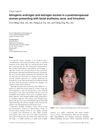
 This case report describes a postmenopausal woman who experienced facial erythema, acne, and hirsutism due to excess androgen and estrogen levels.
 November 2004 in “Medical Journal of Indonesia”
 This review discusses the impact of hormonal changes on female skin and hair loss and suggests that antiandrogenic treatments may help mitigate these effects, but reports no new clinical results.
 March 2004 in “Current Sexual Health Reports”
 Testosterone's role in women's sex drive is unclear and needs more research, as low levels don't always mean less sexual interest and high levels can cause side effects.
 31 citations
,
May 2019 in “Nature communications”
31 citations
,
May 2019 in “Nature communications” This study found that Blimp1+ cells from mice can generate sebaceous gland organoids in vitro, which mimic natural gland traits and may aid in studying acne vulgaris.
 January 2024 in “Wiadomości Lekarskie”
 This research explores the impact of advanced technologies, such as machine learning and robotics, on cardiothoracic surgery, noting that innovations like artificial hearts and enhanced circulatory support systems may improve patient outcomes by aiding diagnostics, surgery planning, and postoperative care.
This source outlines common health issues in weanling gerbils, including skin infections often tied to beta-hemolytic Staphylococcus aureus, and obesity-related conditions like diabetes, as well as respiratory infections and musculoskeletal problems, without detailing specific new study results.
 April 1999 in “Therapeutische Umschau”
 This review discusses androgenic alopecia and related hair disorders, focusing on their pathogenesis and treatment strategies, and reports no new clinical findings.
 14 citations
,
December 1998 in “The Journal of Clinical Endocrinology and Metabolism”
14 citations
,
December 1998 in “The Journal of Clinical Endocrinology and Metabolism” This study found that MENT is 10 times more potent than testosterone in suppressing gonadotropins and contributing to anabolism in monkeys, with a potentially wider therapeutic index for human androgen replacement and male contraception.
23 citations
,
October 2020 in “Anais brasileiros de dermatologia/Anais Brasileiros de Dermatologia” This consensus report outlines Brazilian dermatologists' recommendations for treating alopecia areata, highlighting intralesional corticosteroids for localized cases and systemic therapy for extensive, active disease, along with monitoring side effects.
 271 citations
,
December 2005 in “New England journal of medicine/The New England journal of medicine”
271 citations
,
December 2005 in “New England journal of medicine/The New England journal of medicine” This article discusses evaluation and treatment options for a 19-year-old woman with slowly progressive hair growth and reports no new clinical findings.
 232 citations
,
June 1975 in “Journal of Steroid Biochemistry”
232 citations
,
June 1975 in “Journal of Steroid Biochemistry” In this study, a treatment regimen combining cyproterone acetate and ethinyl estradiol significantly improved acne and seborrhoea in most women after three months, but had varied effects on hirsutism and alopecia.
 55 citations
,
July 2016 in “Dermatologic Therapy”
55 citations
,
July 2016 in “Dermatologic Therapy” This article reviews treatment options for androgenetic alopecia and suggests that therapy should be personalized and targeted at various pathophysiological aspects, but reports no new clinical findings.
 32 citations
,
April 1999 in “Expert Opinion on Investigational Drugs”
32 citations
,
April 1999 in “Expert Opinion on Investigational Drugs” Clinical studies reported that finasteride reduces scalp dihydrotestosterone levels and improves hair growth in men with androgenetic alopecia, supporting its role as a treatment option.
 30 citations
,
October 2014 in “Journal of The American Academy of Dermatology”
30 citations
,
October 2014 in “Journal of The American Academy of Dermatology” This article reviews current treatment options for acne, hirsutism, and androgenetic alopecia in women with PCOS, recommending individualized and multidisciplinary approaches, but reports no new clinical results.
 21 citations
,
April 2011 in “Physiological Research”
21 citations
,
April 2011 in “Physiological Research” In this review, the role of DHT in male-type obesity and metabolic diseases is discussed, with increased levels potentially exacerbating cardiovascular disease risk; the paper reports no new results.