 January 2025 in “Journal of Pharmacognosy and Phytochemistry”
 This study developed an herbal shampoo with Emblica officinalis (amla) and Eclipta alba (bhringraj), known from Ayurvedic medicine, which showed effective cleansing ability and improved hair texture and manageability, suggesting it is a promising chemical-free option for hair care.
 March 2026 in “Zenodo (CERN European Organization for Nuclear Research)”
 This study developed and evaluated a polyherbal hair dye using Phyllanthus reticulatus fruit, finding it to be a safe, effective, and environmentally friendly alternative to synthetic dyes, with added antioxidant and antimicrobial benefits for scalp health.
 1 citations
,
February 2022 in “International Journal of Health and Pharmaceutical (IJHP)”
1 citations
,
February 2022 in “International Journal of Health and Pharmaceutical (IJHP)” This study found that a combination of cantigi and henna leaf extracts, in a 1:2 ratio, demonstrated the strongest antioxidant activity with an IC50 value of 29.85 µg/mL.
 1 citations
,
July 2023 in “Journal of Animal Science and Biotechnology”
1 citations
,
July 2023 in “Journal of Animal Science and Biotechnology” This study discovered that lambs with coarse, ancestral-like wool in a population of modern fine wool sheep exhibited overexpression of the SOSTDC1 gene, linked to epigenetic changes, which helps understand the development and diversification of wool types in sheep breeding.
December 2024 in “Applied Functional Materials” This study reported that a scalp serum containing Zanthoxylum ailanthoides extract effectively reduced inflammation and increased melanin production in cell assays, while demonstrating stable formulation and microbial safety, suggesting its potential to address scalp issues and enhance scalp health.
 March 2026 in “Zenodo (CERN European Organization for Nuclear Research)”
 This study formulated and evaluated a polyherbal hair dye using Phyllanthus reticulatus fruit and other natural ingredients, reporting that the dye provided satisfactory color, stability, scalp pH compatibility, and did not cause irritation, also demonstrating antioxidant and antimicrobial properties that benefit scalp health.
October 2007 in “European Neuropsychopharmacology”  4 citations
,
September 2011 in “American Journal of Clinical Dermatology”
4 citations
,
September 2011 in “American Journal of Clinical Dermatology” This case series suggests that EE/CMA 0.03mg/2mg may help manage dermatological disorders related to androgen excess, as evidenced by symptomatic improvements in the four patients treated.
4 citations
,
January 2018 in “Research journal of pharmacy and technology” This study found that Wera leaf extract, particularly its n-hexane fraction, significantly stimulated hair growth, suggesting its potential as an antialopecia treatment.
 March 2026 in “Zenodo (CERN European Organization for Nuclear Research)”
 This review compiles existing knowledge on the botanical characteristics, traditional uses, phytochemistry, and pharmacological activities of Eclipta alba, highlighting its potential therapeutic properties and encouraging further pharmacological and phytochemical exploration of this traditionally used medicinal plant.
July 2025 in “Carbohydrate Polymers” This study investigated the extracellular polysaccharides from the edible green alga Parachlorella sp. BX1.5, finding that they have potential applications in cosmetics and health products due to their stability, antioxidant properties, and effects on hair growth in mice.
May 2024 in “NATIONS UNIVERSITY INTERNATIONAL JOURNAL OF MULTI-DISCIPLINARY STUDIES” This study aimed to determine the phenolic compound composition in Equisetum arvense stem extracts using HPLC, as the plant is commonly used in cosmetics for skin and hair care, but results are not reported here.
5 citations
,
February 2020 in “Open Access Macedonian Journal of Medical Sciences” In this study, ethanol extracts of Hibiscus rosa-sinensis leaves were found to promote hair growth in mice, with 10% concentration shown to be most effective over a 25-day observation period.
 May 2026 in “International Journal of Research Publication and Reviews”
 The researchers reported that a polyherbal hair dye using Phyllanthus reticulatus fruit provided effective color, stability, and scalp compatibility without irritation, positioning it as a safe and eco-friendly alternative to synthetic dyes.
 October 2025 in “Advanced Healthcare Materials”
 In a study on wound healing, researchers described injectable POEGMA‐DA hydrogels as a promising non-toxic alternative to traditional wound closure methods, showing effective tissue adhesion and enhanced regeneration of skin structures in a mouse model without significant inflammation.
 November 2015 in “Indian drugs”
 This study found that the aerial roots of Ficus benghalensis Linn contain flavonoids, phenolics, and saponins, with an ethyl acetate extract being particularly rich in flavonoids.
27 citations
,
April 2007 in “European Journal of Pharmacology” Progesterone increases alcohol tolerance and withdrawal anxiety, while DHEAS prevents them.
3 citations
,
January 2014 This study concluded that a green tea extract hair tonic was stable, promoted more hair growth than 2.5% minoxidil, and did not cause skin irritation.
January 2025 in “Green energy and technology” 14 citations
,
January 1977 in “PubMed” This study found that a specific variant in hair keratin was present mainly in Caucasian samples, with few exceptions showing likely Caucasian admixture.
August 2022 in “Theriogenology” This study found that allopregnanolone has a bimodal effect on prolactin secretion in sheep, stimulating PRL mRNA expression but inhibiting hormone release under stress and pregnancy conditions.
 February 2026 in “Zenodo (CERN European Organization for Nuclear Research)”
 This study evaluated an herbal shampoo formulated with Amla, Aloe vera, and Bhringraj, finding it to have good cleansing capability, acceptable foaming, suitable pH, and conditioning performance, suggesting it as a stable, safe, and effective alternative to synthetic shampoos for hair and scalp health.
November 2025 in “Essential Chem” In this study, Eclipta alba extract showed potential for hair regrowth by increasing the proliferative activity of human dermal papilla cells by 45% in vitro, with evidence suggesting activation of the Wnt signaling pathway.
 56 citations
,
January 1996 in “Journal of Forensic Sciences”
56 citations
,
January 1996 in “Journal of Forensic Sciences” This study found that rhodamine B penetrated human hair fibers more effectively from an aqueous solution compared to a methanol/ethanol solvent, with penetration depending on hair morphology.
 11 citations
,
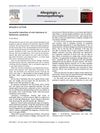
October 2011 in “Allergologia et immunopathologia”
11 citations
,
October 2011 in “Allergologia et immunopathologia” A girl with Netherton syndrome was able to eat wheat without allergies after a special treatment.
 1 citations
,
March 2024 in “International Journal of Applied Pharmaceutics”
1 citations
,
March 2024 in “International Journal of Applied Pharmaceutics” This study found that varying the concentration of propylene glycol in rice water shampoo gel affects physical properties such as viscosity and foam height, without impacting organoleptic qualities or pH stability.
This study concluded that herbal hair dye formulations, particularly two-stage applications with henna, provide darker colors and may offer added protective benefits for hair and skin due to their plant-based ingredients.
 118 citations
,
May 2015 in “European journal of pharmaceutics and biopharmaceutics”
118 citations
,
May 2015 in “European journal of pharmaceutics and biopharmaceutics” This study found that the pH-sensitive hydrogel HECHA13, containing isoliquiritigenin, effectively inhibited the growth of Propionibacterium acnes and showed promise for transdermal delivery in acne treatment.