 6 citations
,
February 2025 in “Scientific Reports”
6 citations
,
February 2025 in “Scientific Reports” This study found that MEGA PROTAC improved the prediction of ternary structures with higher maximum DockQ scores compared to the BOTCP method in 16 out of 22 test cases.
 40 citations
,
October 2009 in “Journal of Biomedical Nanotechnology”
40 citations
,
October 2009 in “Journal of Biomedical Nanotechnology” This review discusses pyrene excimer nucleic acid probes for detecting biomolecules and protein-DNA interactions and reports no new experimental findings.
 28 citations
,
November 2013 in “The journal of investigative dermatology/Journal of investigative dermatology”
28 citations
,
November 2013 in “The journal of investigative dermatology/Journal of investigative dermatology” This study found that the selective PPARγ modulator GMG-43AC may inhibit unwanted hair growth by inducing catagen phase while preserving hair follicle epithelial progenitor cells, suggesting potential in anti-hirsutism therapy.
 3 citations
,
May 2018 in “European Journal of Dermatology”
3 citations
,
May 2018 in “European Journal of Dermatology” Photodynamic therapy may not work for erythroplasia of Queyrat and could lead to invasive squamous cell carcinoma.
46 citations
,
May 2013 in “The journal of investigative dermatology/Journal of investigative dermatology” This review discusses the state-of-the-art knowledge on pseudoxanthoma elasticum, summarizing recent advancements in genetics, pathomechanisms, and potential treatments but reports no new clinical findings.
151 citations
,
August 2011 in “The EMBO Journal” The enzyme PA-PLA1α is important for proper hair follicle development.
 7 citations
,
November 2010 in “Genesis”
7 citations
,
November 2010 in “Genesis” Mouse Scube3 affects teeth, tongue, vibrissae, and eye development, but not facial structure or limb growth.
 May 2026 in “International Journal of Molecular Sciences”
 In this study, a new formulation of human placental extract showed antioxidant and neurite outgrowth activities, significantly reduced hair graying in mice, and alleviated neuropathy symptoms, suggesting potential therapeutic benefits.
7 citations
,
January 2020 in “Dermatology online journal” In this case report, adult-onset porokeratotic eccrine ostial and dermal duct nevus improved with topical tazarotene treatment, as evidenced by dermatoscopic images.
71 citations
,
October 2017 in “Journal of Investigative Dermatology” PPAR-γ agonists like pioglitazone may help manage lichen planopilaris but don't fully reverse scarring.
 January 1999 in “American Journal of Medical Genetics Part A”
 This case report describes a rare occurrence of ectodermal dysplasia features in a 14-year-old with MBTPS1 gene variants, expanding the known spectrum of related disorders.
 11 citations
,
January 2008 in “International journal of environment and health”
11 citations
,
January 2008 in “International journal of environment and health” This review discusses the environmental contamination and health risks of Platinum Group Elements, highlighting their potential bioaccumulation and associated health issues, especially in vulnerable populations like children, and reports no new experimental findings.
 August 2019 in “Journal of Investigative Dermatology”
 This study found that tight junctions extend to the most superficial layer of the stratum granulosum in human skin, challenging previous claims of their limited presence in the epidermis.
September 2008 in “Faculty Opinions – Post-Publication Peer Review of the Biomedical Literature” Loss of Dsc3 function in the epidermis impaired cell adhesion, leading to blistering and hair loss, which suggests a potential cause of PV-like skin diseases according to this study.
 14 citations
,
October 2006 in “Journal of The American Academy of Dermatology”
14 citations
,
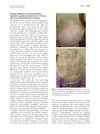
October 2006 in “Journal of The American Academy of Dermatology” This report highlights a case where a woman's use of the dopamine agonist pramipexole for Parkinson's disease was associated with hair loss, which improved after discontinuing the drug.
17 citations
,
October 2023 in “Molecules” In laboratory and artificial skin model experiments, this study found that plant-derived PDRN from Korean ginseng effectively promoted skin cell regeneration and strengthened the skin barrier, suggesting a sustainable alternative to animal-derived PDRN.
109 citations
,
February 2018 in “CB/Current biology” This study concluded that the receptor-like kinase ERULUS, regulated by auxin, is crucial for modulating cell wall composition and pectin dynamics during root hair growth in Arabidopsis.
1 citations
,
December 2023 in “Frontiers in Behavioral Neuroscience” The study found that in mice, conditional knockout of p53 in epidermal keratinocytes reduced food intake following UVB exposure and resulted in anxiety-related behaviors, suggesting that p53 plays a role in appetite stimulation and anxiety via UVB-induced β-endorphin production.
 18 citations
,
January 2000 in “Food Science and Technology Research”
18 citations
,
January 2000 in “Food Science and Technology Research” In this study, partially purified apple polyphenols were found to inhibit preadipocyte differentiation in mouse cells by reducing GPDH activity and triglyceride accumulation.
24 citations
,
December 2013 in “Archives of Dermatological Research”  April 2023 in “Journal of Investigative Dermatology”
 This study found that PX-12 inhibited the NLRP3 inflammasome and reduced psoriasis-like symptoms in a mouse model, suggesting its potential as a treatment for psoriasis.
 2 citations
,
December 2017 in “Skin appendage disorders”
2 citations
,
December 2017 in “Skin appendage disorders” An elderly man's non-healing scalp lesion was successfully treated with a strong topical steroid.
3 citations
,
June 2025 in “Gyemyeong uidae haksulji” This review suggests that PDRN shows promise as a safe and versatile regenerative agent for wound healing and other dermatological applications, based on its dual mechanisms and clinical evidence of efficacy.
 October 2021 in “Revista Medicina Cutánea Ibero-Latino-Americana”
 This case report describes a patient who developed PRIDE syndrome-associated skin issues, including a pruritic papulopustular rash and alopecia, after starting treatment with the EGFR inhibitor erlotinib.
77 citations
,
September 2017 in “Journal of Investigative Dermatology” This study found that TRPV3 ion channels on human epidermal keratinocytes suppress cell proliferation, induce cell death, and trigger a proinflammatory response, suggesting a role in cutaneous inflammatory processes.
 3 citations
,
December 2019 in “International Journal of Pharmacology”
3 citations
,
December 2019 in “International Journal of Pharmacology” This study found that Poria cocos extract may enhance human follicle dermal papilla cell proliferation through the AKT signaling pathway, indicating its potential for hair growth promotion.
 40 citations
,
June 2013 in “Molecular Pharmaceutics”
40 citations
,
June 2013 in “Molecular Pharmaceutics” This study demonstrates that transfected epidermal stem cells using a novel 3D transfection system significantly enhanced wound healing and may serve as an effective therapeutic agent and gene delivery method for wound treatment.
P-3074 effectively blocks scalp DHT better than oral finasteride.
16 citations
,
January 2023 in “Regenerative Biomaterials” This study examined 3D-printed scaffolds coated with polydopamine and observed that they significantly enhanced osteogenesis and angiogenesis in vitro and in a rat cranium defect model, suggesting their potential for repairing large bone defects.
 40 citations
,
June 2013 in “Biomaterials”
40 citations
,
June 2013 in “Biomaterials” This study developed a 3D engineered hair follicle model that mimics the native hair bulb and may aid in drug screening for hair growth therapies.