November 2024 in “International Journal of Scientific Reports” This meta-analysis found that while both Dienogest and GnRH analogues effectively managed endometriosis-related pain, Dienogest reduced recurrence rates and hot flushes but increased irregular bleeding, making it a safer option due to fewer side effects.
June 2025 in “Preprints.org” This review examines the complex role of the Ectodysplasin-A pathway in skeletal morphogenesis, emphasizing its interaction with other key signaling pathways, and reports no new experimental findings.
10 citations
,
January 2009 This study suggests that collagen XVIII and its variant endostatin may play a role in regulating Wnt-signaling in hair follicles, affecting wound healing and skeletal development in mice.
 82 citations
,
May 2009 in “Development”
82 citations
,
May 2009 in “Development” This study found that downregulation of EGF and KGF signaling is necessary for hair follicle initiation in placodes, revealing a new role for KGF in hair follicle formation in mice.
33 citations
,
August 2000 in “Experimental Cell Research” 2 citations
,
January 2001 in “Medical Journal of National Defending Forces in Northwest China” This study found that endogenous EGF may facilitate the healing of second-degree scald wounds in mice through autocrine, paracrine, and endocrine mechanisms.
 May 2026 in “Scientific Reports”
 In this study, researchers overexpressed Lrig3 in mouse skin and observed hair loss linked to changes in skin protein profiles and signaling pathways, suggesting a potential role for Lrig3 in maintaining skin homeostasis.
September 2025 in “OPAL (Open@LaTrobe) (La Trobe University)” This study found that Ang1 improved survival and proliferation in human follicle dermal papilla cells under DHT-induced stress, suggesting potential as a therapeutic candidate for androgenetic alopecia.
21 citations
,
September 2003 in “Journal of Clinical Investigation” This paper reports that noggin inhibits BMP-2 and BMP-4 functions by binding and blocking their interaction with the BMP receptor, impacting multiple developmental processes without presenting new research results.
13 citations
,
June 2020 in “International Journal of Molecular Sciences” This study found that the humanin analogue HNG significantly promoted hair growth in vitro and in vivo by prolonging the anagen phase and inhibiting hair follicle cell apoptosis in mice.
 9 citations
,
September 2017 in “Journal of Investigative Dermatology Symposium Proceedings”
9 citations
,
September 2017 in “Journal of Investigative Dermatology Symposium Proceedings” In this study, PGD2 was shown to increase testosterone production in human keratinocytes through reactive oxygen species, suggesting potential benefits of antioxidants like N-acetyl-cysteine for AGA patients.
 1 citations
,
April 2022 in “Regenerative Therapy”
1 citations
,
April 2022 in “Regenerative Therapy” This study suggests that the GDNF signaling pathway may enhance skin regeneration, as observed in axolotls and Spiny mice, indicating potential for similar processes in humans.
5 citations
,
December 2018 in “Frontiers in Endocrinology” This study found that nuclear androgen receptor expression was enhanced by dihydrotestosterone in rat gubernacular mesenchyme, but this did not affect muscle morphology or matrix composition during fetal development.
 59 citations
,
April 2016 in “Cell Reports”
59 citations
,
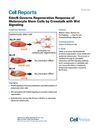
April 2016 in “Cell Reports” This study demonstrated that EdnrB signaling promotes melanocyte stem cell proliferation and differentiation, enhancing hair and epidermal melanocyte regeneration, especially under conditions of active Wnt signaling.
 11 citations
,
March 2020 in “American Journal of Medical Genetics Part A”
11 citations
,
March 2020 in “American Journal of Medical Genetics Part A” This study identified a novel homozygous EDNRA variant linked to Oro-Oto-Cardiac Syndrome and showed that EDNRA signaling is essential for normal craniofacial and cardiovascular development.
 14 citations
,
June 2018 in “Frontiers in pharmacology”
14 citations
,
June 2018 in “Frontiers in pharmacology” In this study, EGCG from green tea promoted mink hair follicle growth and cell proliferation at specific concentrations, potentially through activation of Shh and AKT signaling pathways.
 May 2022 in “Journal of Immunology”
 In this study, a TGF-β mimic molecule from Heligmosomoides polygyrus was observed to enhance wound healing in mice, with improved tissue regeneration and specific immune cell recruitment without increased scarring.
 3 citations
,
August 2021 in “Research Square (Research Square)”
3 citations
,
August 2021 in “Research Square (Research Square)” This study found that increased mRNA expression of the Ectodysplasin-A2-Receptor, observed across multiple species and tissues, may exacerbate inflammation during aging, suggesting potential benefits of blocking EDA2R/EDA-A2 signaling.
 11 citations
,
July 2015 in “Gene”
11 citations
,
July 2015 in “Gene” This study found that dihydrotestosterone (DHT) suppresses prostaglandin E2 and TGF-β induced IGF-I gene promoter activity in osteoblasts, suggesting complex interactions among bone growth regulators and potential complications from anabolic steroid use.

This study identifies Activin A and follistatin as key regulators of hair cell differentiation in the mouse auditory sensory epithelium, influencing the timing and pattern of hair cell development.
 86 citations
,
May 2008 in “Cytokine & growth factor reviews”
86 citations
,
May 2008 in “Cytokine & growth factor reviews” This review discusses recent discoveries about the role of Eda and other TNF-related cytokines in skin appendage development and reports no new experimental results, highlighting developments since the last comprehensive summary in 2003.
 11 citations
,
September 2021 in “Journal of molecular endocrinology”
11 citations
,
September 2021 in “Journal of molecular endocrinology” This review discusses differences in ERβ signaling between rodents and humans and reports no new clinical results; the authors highlight the need for further research in humans before using ERβ agonists clinically.
 March 2026 in “Calcified Tissue International”
 This review discusses the complex role of the EDA pathway in vertebrate skeletal development, emphasizing its interaction with other morphogenic pathways to influence skeletal diversity, but reports no new experimental results.
 173 citations
,
May 2001 in “Human reproduction update”
173 citations
,
May 2001 in “Human reproduction update” This review discusses the role of oestrogens in stimulating growth hormone secretion and influencing linear bone growth in children, and reports no new clinical results; the authors suggest that oestrogens play a key role in pubertal growth spurts for both genders.
56 citations
,
March 1991 in “Journal of Investigative Dermatology” 39 citations
,
November 2007 in “Journal of Histochemistry & Cytochemistry” This study found that in neonatal mice, the absence of the NG2 proteoglycan leads to reduced epidermal thickness and delayed subcutis thickening due to impaired proliferation and adipocyte deficiencies.
32 citations
,
January 2000 in “International Journal of Cancer” In this study, the researchers observed significant down-regulation of Transglutaminase-3 expression in esophageal cancer tissues compared to normal tissues, suggesting its alteration is a common event in esophageal cancer development.
6 citations
,
April 2012 in “PloS one” This study used transgenic mice to show that disrupting TGF-β signaling in K14+ progenitor cells led to increased stem cell proliferation in the tongue.
 June 2020 in “bioRxiv (Cold Spring Harbor Laboratory)”
 This study found that the HoxC gene cluster is crucial for the development of hair and nails in mice, with key regulation by two mammalian-specific enhancers.
 37 citations
,
March 2006 in “Regulatory Peptides”
37 citations
,
March 2006 in “Regulatory Peptides” This study reports that GLP-1 receptors and proglucagon are expressed in the skin of newborn mice, with GLP-1 potentially playing a role in skin development and hair follicle formation.