 26 citations
,
November 2011 in “Arquivos Brasileiros De Endocrinologia E Metabologia”
26 citations
,
November 2011 in “Arquivos Brasileiros De Endocrinologia E Metabologia” This review highlights that hyperandrogenism is a crucial factor for diagnosing PCOS during adolescence, while traditional criteria like polycystic ovarian morphology may be misleading.
 25 citations
,
March 2000 in “Journal of Endocrinological Investigation”
25 citations
,
March 2000 in “Journal of Endocrinological Investigation” Testosterone therapy aims to treat hormone deficiencies and various conditions safely and effectively, but requires careful patient monitoring due to potential side effects.
 24 citations
,
November 2008 in “Arquivos Brasileiros de Endocrinologia & Metabologia”
24 citations
,
November 2008 in “Arquivos Brasileiros de Endocrinologia & Metabologia” In this study, mutations in the vitamin D receptor were identified in Brazilian children with rickets and alopecia, leading to impaired receptor activation and reduced 24-hydroxylase expression.
 22 citations
,
February 2014 in “Arquivos Brasileiros De Endocrinologia E Metabologia”
22 citations
,
February 2014 in “Arquivos Brasileiros De Endocrinologia E Metabologia” An 81-year-old woman's severe male hormone symptoms were caused by an ovarian tumor, which was treated with surgery.
 7 citations
,
January 2015 in “Case reports in endocrinology”
7 citations
,
January 2015 in “Case reports in endocrinology” This case report indicates that HAIR-AN syndrome can lead to severe hyperandrogenism with virilisation signs in women after excluding tumoral causes and identifying signs of insulin resistance.
 5 citations
,
February 2023 in “European journal of endocrinology”
5 citations
,
February 2023 in “European journal of endocrinology” This study found that older patients with Cushing's syndrome had fewer typical symptoms of hypercortisolism, more comorbidities, and were more often treated conservatively compared to younger patients.
 4 citations
,
December 2012 in “Arquivos Brasileiros De Endocrinologia E Metabologia”
4 citations
,
December 2012 in “Arquivos Brasileiros De Endocrinologia E Metabologia” A postmenopausal woman's masculine symptoms improved after surgery for a hormone-producing ovarian tumor.
 June 2025 in “Journal of Endocrinological Investigation”
 This review identifies and discusses various endocrine-related causes of hypertension in children and adolescents, emphasizing the role of genetic predispositions and highlighting the need for systematic diagnostic guidelines and genetic sequencing referrals to improve diagnosis and treatment strategies.
 491 citations
,
July 2000 in “The Journal of Clinical Endocrinology and Metabolism”
491 citations
,
July 2000 in “The Journal of Clinical Endocrinology and Metabolism” This study found that the prevalence of polycystic ovary syndrome was 6.5% in a minimally biased sample of Caucasian women from Spain.
 403 citations
,
November 2005 in “Journal of Endocrinology”
403 citations
,
November 2005 in “Journal of Endocrinology” This review discusses the role of DHEA in intracrinology, highlighting its impact on breast and prostate cancer treatment and potential as a menopause therapy, but reports no new research findings.
 352 citations
,
January 2006 in “The Journal of Clinical Endocrinology and Metabolism”
352 citations
,
January 2006 in “The Journal of Clinical Endocrinology and Metabolism” This study reported that classic anovulatory PCOS was the most common androgen excess disorder, followed by mild ovulatory PCOS and idiopathic hyperandrogenism, among patients evaluated for clinical hyperandrogenism.
 298 citations
,
July 2000 in “The Journal of Clinical Endocrinology and Metabolism”
298 citations
,
July 2000 in “The Journal of Clinical Endocrinology and Metabolism” This study found a 6.5% prevalence of polycystic ovary syndrome among a population of Caucasian women in Spain, based on specific endocrine criteria.
 270 citations
,
April 2007 in “The Journal of Clinical Endocrinology and Metabolism”
270 citations
,
April 2007 in “The Journal of Clinical Endocrinology and Metabolism” This study found that PCOS patients had higher amounts of central abdominal fat compared to weight-matched controls, which was associated with increased insulin resistance.
 215 citations
,
January 2011 in “Reproductive Biology and Endocrinology”
215 citations
,
January 2011 in “Reproductive Biology and Endocrinology” Among reproductive-aged women in Iran, this study found that the prevalence of PCOS varied significantly depending on the diagnostic criteria used, with estimates ranging from 7.1% to 14.6%.
 200 citations
,
October 2009 in “European journal of endocrinology”
200 citations
,
October 2009 in “European journal of endocrinology” This review discusses the multifaceted actions of metformin in polycystic ovary syndrome and reports no new clinical results; the authors emphasize metformin's potential benefits in both cardiometabolic and reproductive aspects of PCOS.
 198 citations
,
April 2020 in “Journal of Endocrinological Investigation”
198 citations
,
April 2020 in “Journal of Endocrinological Investigation” This study found no SARS-CoV-2 RNA in the semen and urine of a COVID-19 patient, suggesting possible viral clearance or absence in these fluids.
 192 citations
,
September 2003 in “The Journal of clinical endocrinology and metabolism/Journal of clinical endocrinology & metabolism”
192 citations
,
September 2003 in “The Journal of clinical endocrinology and metabolism/Journal of clinical endocrinology & metabolism” This study suggests that metformin may be more effective than Dianette in treating moderate to severe hirsutism in women with PCOS, while also reducing markers of insulin resistance.
 185 citations
,
June 2011 in “Molecular and cellular endocrinology”
185 citations
,
June 2011 in “Molecular and cellular endocrinology” This review discusses the regulation and function of vitamin D and its receptor in skin cells, highlighting their roles in processes such as proliferation inhibition, differentiation, and innate immunity, but reports no new results.
 165 citations
,
December 2002 in “Molecular and Cellular Endocrinology”
165 citations
,
December 2002 in “Molecular and Cellular Endocrinology” This study found that finasteride improves scalp hair growth in men with male pattern hair loss by reducing scalp dihydrotestosterone levels, but it did not benefit postmenopausal women with female pattern hair loss.
 150 citations
,
November 2007 in “The Journal of Clinical Endocrinology and Metabolism”
150 citations
,
November 2007 in “The Journal of Clinical Endocrinology and Metabolism” This study determined that nonclassical congenital adrenal hyperplasia has a 2.2% prevalence among hyperandrogenic women in Spain, with basal serum 17-hydroxyprogesterone showing excellent diagnostic performance.
 113 citations
,
April 1999 in “The Journal of Clinical Endocrinology and Metabolism”
113 citations
,
April 1999 in “The Journal of Clinical Endocrinology and Metabolism” This study found that all four treatments—flutamide, finasteride, ketoconazole, and EE-CPA—significantly reduced hirsutism, but EE-CPA and flutamide appeared most effective, with varying effects on androgen levels and side-effect profiles.
 105 citations
,
February 2011 in “The Journal of Clinical Endocrinology & Metabolism”
105 citations
,
February 2011 in “The Journal of Clinical Endocrinology & Metabolism” Treating sleep apnea in young obese women with PCOS can improve heart health and insulin sensitivity.
 101 citations
,
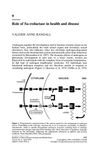
April 1994 in “Baillière's clinical endocrinology and metabolism”
101 citations
,
April 1994 in “Baillière's clinical endocrinology and metabolism” This review discusses the role of 5α-reductase enzymes in androgen action and related disorders, noting that their specific inhibitory drugs show promise for conditions like benign prostatic hypertrophy; it reports no new clinical results.
 99 citations
,
June 1999 in “The Journal of Clinical Endocrinology and Metabolism”
99 citations
,
June 1999 in “The Journal of Clinical Endocrinology and Metabolism” This commentary discusses the potential use of testosterone therapy for various conditions in women and reports no new clinical results; the authors advocate for more discussion and research in this area.
 90 citations
,
August 2002 in “European journal of endocrinology”
90 citations
,
August 2002 in “European journal of endocrinology” This study found that metformin treatment significantly improved hair growth in women with PCOS and hirsutism compared to a placebo.
 78 citations
,
May 1989 in “The Journal of Clinical Endocrinology & Metabolism”
78 citations
,
May 1989 in “The Journal of Clinical Endocrinology & Metabolism” This study found that in hirsute women, daily treatment with 200 mg spironolactone significantly reduced hair growth rates and hair shaft diameters on various body areas over 12 months.
 77 citations
,
June 2006 in “Best Practice & Research Clinical Endocrinology & Metabolism”
77 citations
,
June 2006 in “Best Practice & Research Clinical Endocrinology & Metabolism” This review discusses the importance of androgen production and metabolism in hyperandrogenism, the use of specific serum markers for diagnosis, and the need for improved assays for clinical testing, but reports no new results.
 75 citations
,
July 2013 in “The Journal of Clinical Endocrinology and Metabolism”
75 citations
,
July 2013 in “The Journal of Clinical Endocrinology and Metabolism” This study found that combining low-dose spironolactone with metformin provided greater clinical benefits and improved treatment compliance in women with PCOS compared to either drug alone.
 75 citations
,
October 1999 in “European journal of endocrinology”
75 citations
,
October 1999 in “European journal of endocrinology” This study found that both finasteride and flutamide effectively reduce hirsutism in women with polycystic ovary syndrome or idiopathic hirsutism, but flutamide was more effective.
 71 citations
,
July 2015 in “The Journal of Clinical Endocrinology and Metabolism”
71 citations
,
July 2015 in “The Journal of Clinical Endocrinology and Metabolism” This study found that women with PCOS have elevated serum androgen levels throughout adulthood, with these levels decreasing and variations increasing as they approach menopause.