3 citations
,
March 2024 in “arXiv (Cornell University)” This study describes an AI-powered system for diagnosing dermatological conditions, achieving a weighted score of 0.87 in both contextual understanding and diagnostic accuracy, suggesting it could enhance tele-dermatology applications by supporting remote consultations and care access in underserved regions.
61 citations
,
January 2013 in “International Journal of Biological Macromolecules” This study found that applying both dehydrothermal treatment and carbodiimide crosslinking improved the mechanical properties of porcine acellular dermal matrix scaffolds without added cytotoxicity, suggesting potential applications in tissue engineering.
 March 2026 in “Zenodo (CERN European Organization for Nuclear Research)”
 This publication presents a library of geometric medicines designed to selectively target pathogenic bacteria and fungi with high precision while minimizing ecological harm, available for free on a non-commercial basis.
15 citations
,
November 2020 in “Development” This study found that the ocular surface epithelium in mice contains distinct stem cell populations with unique cell division dynamics that change behaviorally in response to different levels of injury.
4 citations
,
August 2020 in “bioRxiv (Cold Spring Harbor Laboratory)” This study developed the iCOUNT tool, which provides insights into stem cell behavior by tracking cell division events and molecular consequences in human and mouse neural stem/progenitor cells.
January 2016 in “Institutional Repositories DataBase (IRDB)” This study examined the expression of fatty acid transporters and binding proteins in mouse sebaceous glands and found that CD36 did not affect the localization of other related molecules.
117 citations
,
November 2008 in “Drug Development and Industrial Pharmacy” This review discusses the use of microemulsions for transdermal drug delivery and emphasizes the importance of component selection for enhancing drug permeation and skin tolerance, without reporting new clinical results.
June 2025 in “Archives of Dermatological Research” This study found that photobiomodulation-irradiated conditioned medium from human adipose-derived stromal cells enhanced hair growth in mice, suggesting its potential as a treatment for hair loss by increasing growth factor secretion.
8 citations
,
March 2024 in “Regenerative Therapy” This study found that using uniform poly(lactic-co-glycolic) acid microspheres to deliver insulin-like growth factor 1 stabilizes the protein and enhances its sustained delivery, supporting stem cell functions comparably to traditional methods, and showing potential for tissue and organ regeneration.
 April 2023 in “Journal of Investigative Dermatology”
 This study found that dimethyl fumarate improved delayed wound healing in Il36rn-/- mice by reducing neutrophil extracellular trap formation and oxidative stress.
 January 2019 in “The Review of Laser Engineering”
 This study observed that multiphoton excitation microscopy revealed changes in vascular structure and hair papillae in mice subcutaneous tissue following cyclophosphamide treatment for chemotherapy-induced alopecia.
 April 2018 in “The journal of investigative dermatology/Journal of investigative dermatology”
 This study found that in a mouse model of Focal Dermal Hypoplasia, treatment with lithium carbonate improved skin disease symptoms compared to controls, though disease severity varied and posed interpretation challenges.
 1 citations
,
January 2018 in “Methods in molecular biology”
1 citations
,
January 2018 in “Methods in molecular biology” This research describes methods to activate melanocyte stem cells during hair follicle regeneration and to isolate melanocytes from neonatal mouse skin, with the aim of studying melanogenesis for potential clinical applications.
January 2023 in “Brazilian Journals Editora eBooks” 2 citations
,
September 2022 in “Annals of Oncology” This study observed that MIRV improved gastrointestinal symptoms and other quality of life measures in patients with platinum-resistant ovarian cancer compared to chemotherapy.
This paper offers detailed tables of genotypic and phenotypic data on horses, including markers, variants, and haplotypes, but reports no new research results.
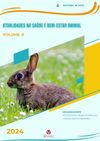 January 2024 in “Editora In Vivo eBooks”
 In this case report, a female mixed-breed dog was observed with dermatophytosis, presenting with alopecia in the neck and ear, highlighting the zoonotic nature of the infection caused by fungi that can affect both animals and humans.
 4 citations
,
August 2017 in “International journal of molecular sciences”
4 citations
,
August 2017 in “International journal of molecular sciences” This study observed two cases of pigmented epithelioid melanocytoma suggesting potential differing origins: one from a hair follicle's outer root sheath and another from an intradermal nevus.
23 citations
,
October 2021 in “AAPS PharmSciTech”  10 citations
,
January 2012 in “Lupus”
10 citations
,
January 2012 in “Lupus” This case report is the first to associate NEMO syndrome with systemic lupus erythematosus, suggesting a potential role for NF-kB essential modulator in the pathogenesis of SLE.
 November 2021 in “World Family Medicine Journal /Middle East Journal of Family Medicine”
 This review discusses evidence from recent clinical trials showing inclisiran effectively lowers LDL cholesterol levels in patients with cardiovascular disease, leading to its use in the UK despite not being approved by the FDA.
 July 2022 in “The journal of investigative dermatology/Journal of investigative dermatology”
 This case study reports that a 26-year-old woman with epidermolysis bullosa prurogompsa also presented with unique findings of co-existing muscular dystrophy and immune-based myasthenia gravis, with significant improvement following steroid treatment.
January 2020 in “JAAD case reports” Systemic mastocytosis may cause a type of hair loss called cicatricial alopecia.
October 2022 in “Amplla Editora eBooks” 
In this laboratory study, the methanolic extract of Eclipta alba demonstrated significant anthelmintic activity against earthworms (Pheretima posthuma), causing paralysis and death at doses of 50-100 mg/ml, with stronger effects observed at higher concentrations compared to the standard treatment, albendazole.
 2 citations
,
December 2022 in “PNAS nexus”
2 citations
,
December 2022 in “PNAS nexus” In laboratory experiments, this study found that the topical prodrug SCD-153, a derivative of 4-methyl itaconate, reduced inflammation-related gene expression and induced significant hair growth in mice, suggesting it as a promising treatment candidate for alopecia areata.
July 2025 in “Dermatology Reports” This review indicates that mesenchymal stem cell therapy may offer clinical improvements for immune-mediated inflammatory skin diseases, showing promise particularly for those unresponsive to traditional treatments, but emphasizes the need for larger, controlled trials to confirm these results.
In this retrospective study, all-female patients with iron deficiency anemia treated with ferric carboxymaltose experienced rapid symptom resolution and increased ferritine and hemoglobin levels, with some reporting manageable side effects such as rash and headache.
 24 citations
,
January 2019 in “Science China Life Sciences”
24 citations
,
January 2019 in “Science China Life Sciences” Chitosan/LiCl composite scaffolds help heal deep skin wounds better.
 March 2026 in “Frontiers in Immunology”
 In this study, a 49-year-old female with metastatic adrenocortical carcinoma experienced an abscopal effect following pulse electric field ablation, suggesting potential as an adjunct to systemic immunotherapy for liver tumors.