 3 citations
,
February 2014 in “Advances in Stem Cells”
3 citations
,
February 2014 in “Advances in Stem Cells” This study concluded that placental mesenchymal stem cells from aborted fetal tissue may serve as an in vitro model for studying spontaneous abortion mechanisms and potential regenerative therapies due to their abnormal gene expression and differentiation capabilities.
1 citations
,
June 2023 in “Journal of Visualized Experiments” This study describes a new intravital microscopy method for observing intestinal regeneration by tracking crypt dynamics in living mice after laser-induced tissue damage, revealing events like crypt fission, fusion, and disappearance over multiple weeks.
 2 citations
,
January 2018
2 citations
,
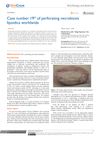
January 2018 This article reports the first case of perforating necrobiosis lipoidica in Colombia and the 19th case worldwide in diabetic patients.
3 citations
,
August 2018 in “Zenodo (CERN European Organization for Nuclear Research)” This study found that when human hair follicles are immersed in hydrogen peroxide, the resulting oxygen bubbles indicate catalase activity, and their absence may suggest tissue death.
 July 2026 in “World Journal of Advanced Research and Reviews”
 In this case report, a 49-year-old heavy smoker experienced scalp necrosis after hair transplantation, but wound closure was achieved within two weeks using a treatment combining topical agents and photobiomodulation; the potential role of photobiomodulation needs further study.
November 2025 in “Journal of Clinical Medicine” This narrative review highlights innovations in regenerative medicine and longevity research within plastic surgery, emphasizing biological, ethical, and regulatory aspects. The study underscores the potential to extend healthspans while balancing these advances with ethical considerations and safety.
November 2025 in “ACS Omega” This study found that incorporating Canavalia ensiformis lectin into alginate and carboxymethylcellulose films enhanced angiogenic factor expression, suggesting these biopolymer films could be an effective alternative for wound treatment.
 5 citations
,
July 2003 in “Pediatric Critical Care Medicine”
5 citations
,
July 2003 in “Pediatric Critical Care Medicine” This study observed that hair loss, which resolved on its own within six months, was reported by some patients after extracorporeal membrane oxygenation, suggesting it as a potential side effect.
November 2025 in “Bioactive Materials” In this study, researchers developed a DNA/GelMA-based cryogel platform that uses phototherapy to combat MRSA infection and promote scarless wound healing, showing enhanced bactericidal activity, tissue regeneration, and anti-inflammatory effects in vivo, suggesting a promising approach for treating infected skin wounds.
18 citations
,
January 1965 in “Stain Technology” This study describes a double embedding technique for preparing tangential sections of hair and wool fibers, recommending specific staining methods for quantitative analysis and demonstrating wool fiber cortical fractions.
Lightly perming scalp hair can lead to new hair growth, potentially treating baldness.
 17 citations
,
April 2017 in “International Journal of Biological Macromolecules”
17 citations
,
April 2017 in “International Journal of Biological Macromolecules” This study found that alginate beads containing monoolein demonstrated promising potential for managing wet wounds by better absorbing excess exudate and delivering adenosine locally, favoring drug localization in damaged porcine skin compared to an aqueous solution without affecting skin viability.
 14 citations
,
January 2020 in “Biomaterials Science”
14 citations
,
January 2020 in “Biomaterials Science” Created microspheres show potential for safe and effective use in prostate artery embolization.
 June 2026 in “International Science Journal”
 This study reviewed recent advances in regenerative technologies for aesthetic and reconstructive medicine and found that adipose-derived stem cells and platelet-rich plasma are well-established for tissue repair due to their safety and effectiveness, while emerging technologies like exosome-based therapies hold future potential.
January 1980 in “Lluc: revista de cultura i d'idees” This study found that Agaricus bisporus-derived β-Glucan particles showed potential as an anticancer, antimicrobial, and antioxidant agent, inducing apoptosis and disrupting mitochondrial membrane potential in cervical cancer HeLa cells.
4 citations
,
September 2022 in “Agronomy” In this study, polyethylene nano-packaging significantly inhibited stipe elongation and maintained the postharvest quality of Flammulina velutipes better than traditional PE packaging by modulating respiration and hormone levels during storage.
124 citations
,
November 2019 in “International Journal of Molecular Sciences” This review discusses different processing methods for isolating human AD-SVFs/AD-MSCs using various kits and reports no new clinical results, highlighting the need for standardized preparation techniques.
 2 citations
,
August 2021 in “The Journal of Urology”
2 citations
,
August 2021 in “The Journal of Urology” This study reported that seminal vesiculoscopy combined with transurethral resection of ejaculatory ducts and balloon dilation effectively resolved hematospermia and improved symptoms in a patient whose condition was unresponsive to medical treatments.

This study used an ex vivo human skin model to show that tropical conditions disrupt skin homeostasis, resulting in epidermal thickening and junctional flattening, and found that Kombucha tea extract may help preserve skin structure under such stress.
August 2017 in “Otolaryngology” Using a buffering solution and applying Platelet-Rich Plasma improves hair graft survival in hair restoration surgery.
28 citations
,
November 2020 in “Polymers” This study found that crosslinking buffalo gelatin with different methods can modify its properties and potential as a skin substitute, though double-crosslinking may increase immunogenicity slightly.
78 citations
,
February 2024 in “ACS Omega” This study developed a bilayer material combining poly(vinyl alcohol) and bacterial cellulose with a gelatin-poly(vinyl alcohol) hydrogel, showing strong potential as a wound dressing due to its good antibacterial properties, cell viability, and sustained drug release.
 December 2025 in “Cureus”
 This case report found that hyperbaric oxygen therapy significantly accelerated postoperative recovery in hair transplantation patients, improving healing, graft integration, and patient satisfaction without complications.
This study explored Black Sea shark liver oil-based emulgels, finding that the addition of borage oil (Gel 2) enhanced the anti-inflammatory and wound healing properties compared to shark liver oil alone (Gel 1) and a reference diclofenac gel, suggesting promising eco-friendly applications in dermatocosmetics.
6 citations
,
December 2024 in “International Journal of Biological Macromolecules” This study introduced a novel exosome-loaded sprayable hydrogel (ADA-aPF127@LL18/Exo) that significantly enhanced wound healing in a deep partial thickness burn model, showing improved antibacterial efficacy and promoting tissue recovery processes like epithelialization and hair follicle regeneration.
This study proposes a new treatment protocol combining autologous regenerative therapy with mesotherapy and photobiostimulation for androgenetic alopecia, leveraging adipose-derived stem cells to stimulate hair follicle regeneration.
7 citations
,
July 2022 in “Plastic & Reconstructive Surgery” This study describes a management approach for scalp electrical injuries, emphasizing thorough debridement as key to successful reconstruction outcomes.
4 citations
,
July 2025 in “Annals of the New York Academy of Sciences” This review emphasizes that collaboration between forensic anthropology and molecular anthropology could significantly improve the identification of unknown human remains by creating more comprehensive biological profiles.
 3 citations
,
July 2023 in “International Journal of Biological Macromolecules”
3 citations
,
July 2023 in “International Journal of Biological Macromolecules” In this study, the researchers developed a hydrogel mimicking the fetal environment that significantly accelerated wound healing and hair follicle regeneration in vivo, with over 94% wound closure in 14 days, surpassing hydrogels lacking certain additives.
143 citations
,
May 2022 in “Pharmaceuticals” This review discusses alginate-based delivery systems for probiotics, highlighting recent advances, challenges, and future directions, but reports no new clinical findings.