 27 citations
,
January 2020 in “Experimental Dermatology”
27 citations
,
January 2020 in “Experimental Dermatology” This review discusses the role of immune cells in mammalian hair cycle control and highlights their potential relevance to human hair cycling disorders, reporting no new clinical findings.
 27 citations
,
May 2017 in “Marine Drugs”
27 citations
,
May 2017 in “Marine Drugs” This study found that Undariopsis peterseniana extract may promote hair growth by activating specific cellular pathways, suggesting potential for treating alopecia.
 27 citations
,
May 2015 in “Neuropharmacology”
27 citations
,
May 2015 in “Neuropharmacology” This study found that Dutasteride, a 5α-reductase inhibitor, demonstrated neuroprotective effects by preventing the MPTP-induced decline of dopaminergic markers in a Parkinson's disease mouse model.
 27 citations
,
January 2013 in “The journal of investigative dermatology/Journal of investigative dermatology”
27 citations
,
January 2013 in “The journal of investigative dermatology/Journal of investigative dermatology” This study identified somatostatin as a potential secretory factor contributing to the immune privilege of human hair follicles.
 27 citations
,
September 1999 in “Journal of Investigative Dermatology”
27 citations
,
September 1999 in “Journal of Investigative Dermatology” This study found that protease nexin-1 mRNA is expressed in human dermal papilla cells and is downregulated by dihydrotestosterone in balding scalp, suggesting a role in male-pattern baldness progression.
 26 citations
,
October 2023 in “Neuroscience Bulletin”
26 citations
,
October 2023 in “Neuroscience Bulletin” In this review, the authors discuss how understanding and co-regulating multiple signaling pathways could lead to effective regeneration of functional hair cells, highlighting current achievements and future approaches such as small molecule drugs and gene therapy for treating sensorineural hearing loss.
 26 citations
,
May 2013 in “Marine Drugs”
26 citations
,
May 2013 in “Marine Drugs” This study found that Ishige sinicola extract increased hair growth and cell proliferation in cultured vibrissa follicles and mice, suggesting potential benefits for treating alopecia through β-catenin activation and 5α-reductase inhibition.
 26 citations
,
January 2013 in “BioMed Research International”
26 citations
,
January 2013 in “BioMed Research International” This review discusses the hormonal influences on hair cycling disorders in post-partum and postmenopausal women and notes the lack of evidence for effective targeted treatments.
 26 citations
,
October 2007 in “Experimental Dermatology”
26 citations
,
October 2007 in “Experimental Dermatology” This study found that l-carnitine stimulated hair growth in vitro by promoting proliferation and reducing apoptosis in human scalp hair follicles, suggesting potential as a treatment for hair loss.
 25 citations
,
June 2018 in “Journal of The American Academy of Dermatology”
25 citations
,
June 2018 in “Journal of The American Academy of Dermatology” This study identified upregulation of genes linked to fibroproliferative disorders, such as platelet-derived growth factor and collagen genes, in patients with central centrifugal cicatricial alopecia, suggesting potential therapeutic targets.
 25 citations
,
March 2017 in “Archives of Dermatological Research”
25 citations
,
March 2017 in “Archives of Dermatological Research” This study suggests that sinapic acid may promote hair growth in human hair follicle dermal papilla cells by activating specific signaling pathways and inducing the expression of growth factors.
 25 citations
,
August 2015 in “International Journal of Cosmetic Science”
25 citations
,
August 2015 in “International Journal of Cosmetic Science” This study suggests that an extract from Malva verticillata seeds could help treat hair loss by modulating the Wnt/β-catenin pathway in cultured human dermal papilla cells.
 25 citations
,
January 2015 in “Advances in Psychosomatic Medicine”
25 citations
,
January 2015 in “Advances in Psychosomatic Medicine” This review discusses common psychodermatologic conditions and provides practical diagnostic and therapeutic recommendations but reports no new results; the authors emphasize the challenge of treating patients who lack insight into their psychiatric symptoms.
 25 citations
,
July 2013 in “Environmental Toxicology and Chemistry”
25 citations
,
July 2013 in “Environmental Toxicology and Chemistry” This study found that spironolactone reduced fish fecundity and caused masculinization of females at certain concentrations, while having no effect on Daphnia magna reproduction, underscoring concerns for environmental exposure to vertebrates.
 25 citations
,
April 2008 in “Archives of Dermatological Research”
25 citations
,
April 2008 in “Archives of Dermatological Research” This study found that transplanted microencapsulated dermal papilla cells in rat footpads can regenerate hair follicles and sebaceous gland structures, suggesting a potential substitute for fresh dermal papillae cells.
 25 citations
,
December 2001 in “Expert Opinion on Pharmacotherapy”
25 citations
,
December 2001 in “Expert Opinion on Pharmacotherapy” This review discusses the therapeutic potential of potassium channel openers for various conditions, but notes that their clinical role is not yet fully established.
 24 citations
,
January 2021 in “Physiological Research”
24 citations
,
January 2021 in “Physiological Research” This review addresses the effects of testosterone on brain development and examines both the established sex differences in brain functions and the debate surrounding structural dimorphism in neuropsychiatric conditions.
 24 citations
,
April 2017 in “Journal of Investigative Dermatology”
24 citations
,
April 2017 in “Journal of Investigative Dermatology” This study identified sex-specific determinants for facial wrinkles, finding that age is the strongest factor and that lifestyle influences like smoking, alcohol use, and skin color differentially affect wrinkling in men and women.
 24 citations
,
January 2015 in “Annals of Dermatology”
24 citations
,
January 2015 in “Annals of Dermatology” In this study, herbal extracts commonly used in traditional medicine were observed to significantly increase the proliferation of human dermal papilla cells, suggesting potential as alternative therapies for enhancing hair growth.
 24 citations
,
January 2008 in “KARGER eBooks”
24 citations
,
January 2008 in “KARGER eBooks” This review discusses recent advances in understanding the pathogenesis of autoimmune alopecia areata and reports no new clinical results; it highlights potential for developing more effective treatments.
 24 citations
,
March 2001 in “Journal of Endocrinology/Journal of endocrinology”
24 citations
,
March 2001 in “Journal of Endocrinology/Journal of endocrinology” In this study, androgen receptors were found only in the mane follicles of red deer stags during the breeding season, suggesting their expression is induced by seasonal hormone changes.
 23 citations
,
August 2018 in “Biochimica and biophysica acta. Molecular and cell biology of lipids”
23 citations
,
August 2018 in “Biochimica and biophysica acta. Molecular and cell biology of lipids” This article reviews the roles of lesser-known secreted phospholipase A2 isoforms in various biological processes, such as immune suppression, metabolic regulation, epidermal hyperplasia, and male reproduction, without reporting new clinical findings.
 23 citations
,
February 2015 in “International Journal of Molecular Sciences”
23 citations
,
February 2015 in “International Journal of Molecular Sciences” This study found that colchicine treatment significantly reduced hair fiber elongation in cultured hair follicles and altered protein expression and activity in dermal papilla cells, suggesting a role for the ubiquitin-proteasome system in its effects.
 23 citations
,
January 2010 in “Journal of Medical Primatology”
23 citations
,
January 2010 in “Journal of Medical Primatology” This study found that alopecia in captive Rhesus macaques may be linked to chronic hypersensitivity dermatitis with CD4+ cell inflammation, possibly influenced by altered housing and reduced pathogen exposure.
 23 citations
,
December 2004 in “Differentiation”
23 citations
,
December 2004 in “Differentiation” This article reviews the interaction between sex hormone pathways and morphogenesis-related signaling in epithelial organ development, using a chicken model to propose testable hypotheses, but reports no new clinical results.
 22 citations
,
July 2012 in “International Journal of Trichology”
22 citations
,
July 2012 in “International Journal of Trichology” This study found that loss of contact between the arrector pili muscle and the hair follicle bulge may explain why hair loss in male and female pattern baldness is largely irreversible, unlike in alopecia areata.
 22 citations
,
February 2008 in “Journal of Neurochemistry”
22 citations
,
February 2008 in “Journal of Neurochemistry” This study found that minoxidil prevents long-term serotonergic toxicity induced by MDMA in rats, primarily by opening mitochondrial KATP channels and involving Akt and MAP kinases in its neuroprotective mechanism.
 22 citations
,
December 2003 in “Veterinary clinical pathology”
22 citations
,
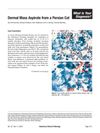
December 2003 in “Veterinary clinical pathology” This case study reported a diagnosis of dermatophytic pseudomycetoma in a Persian cat with dermal nodules, highlighting potential heritable predisposition and suggesting systemic antifungal therapy for fair prognosis.
 21 citations
,
January 2018 in “The Korean Journal of Physiology and Pharmacology”
21 citations
,
January 2018 in “The Korean Journal of Physiology and Pharmacology” This study found that human umbilical cord blood mesenchymal stem cells promoted hair growth by advancing anagen onset and increasing hair follicle regeneration in an in vivo model.
 21 citations
,
March 2013 in “Cancer Epidemiology, Biomarkers & Prevention”
21 citations
,
March 2013 in “Cancer Epidemiology, Biomarkers & Prevention” This study found that early-onset baldness in African-American men is associated with an increased risk of developing prostate cancer and more aggressive tumors, with potential interactions involving age and smoking.