10 citations
,
September 2016 in “Journal of cutaneous medicine and surgery” In this prospective study, dabrafenib and trametinib were associated with various skin side effects, including papillomas, hyperkeratosis, and acneiform eruptions in patients with metastatic melanoma.
 2 citations
,
February 2009 in “Clinical and Experimental Dermatology”
2 citations
,
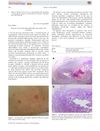
February 2009 in “Clinical and Experimental Dermatology” In this case study, a 51-year-old Japanese man was diagnosed with desmoplastic trichoepithelioma after histological examination of surgically excised facial plaques.
 5 citations
,
August 2014 in “Australasian journal of dermatology”
5 citations
,
August 2014 in “Australasian journal of dermatology” This article discusses a case of delayed onset perforating folliculitis linked to the use of sorafenib, but it reports no new clinical results.
7 citations
,
August 2019 in “American Journal of Dermatopathology” This study found that limb hair loss in frontal fibrosing alopecia is inflammatory and permanent, but lacks the classic scarring features seen in scalp alopecia, prompting potential misdiagnosis as alopecia areata.
 6 citations
,
February 2010 in “Journal of The American Academy of Dermatology”
6 citations
,
February 2010 in “Journal of The American Academy of Dermatology” This case report details a 31-year-old woman with a subcutaneous nodule on her hand characterized by necrosis and lymphocytic infiltrate.
November 2023 in “Journal of Skin and Sexually Transmitted Diseases” In this case report, a 65-year-old woman with non-small cell lung cancer experienced scarring alopecia with papulo-pustular lesions on the scalp due to gefitinib treatment, marking it as a rare instance of gefitinib-induced erosive pustular dermatosis of the scalp.
January 2025 in “Dermatologic Therapy” This study found that ablative fractional carbon dioxide laser treatment improved skin fibrosis, reduced skin hardening, and enhanced hair follicle growth in localized scleroderma patients, with significant improvements across several clinical measures and no severe adverse effects observed.
14 citations
,
May 2017 in “Journal of Investigative Dermatology” This study reports a novel homozygous mutation in the DST gene causing a unique form of epidermolysis bullosa simplex with prurigo papules in a 39-year-old Syrian man.
 May 2015 in “Journal of The American Academy of Dermatology”
 A heart transplant patient developed a skin condition called epidermodysplasia verruciformis after taking immune-suppressing drugs.
7 citations
,
January 2020 in “Dermatology online journal” In this case report, adult-onset porokeratotic eccrine ostial and dermal duct nevus improved with topical tazarotene treatment, as evidenced by dermatoscopic images.
 115 citations
,
December 2017 in “Wiley Interdisciplinary Reviews-Developmental Biology”
115 citations
,
December 2017 in “Wiley Interdisciplinary Reviews-Developmental Biology” This review discusses the origins, differentiation, and function of dermal fibroblasts in skin development and healing, reporting no new clinical results.
11 citations
,
June 2010 in “Dermatologic surgery” This article contains information about journal subscriptions and does not report any research findings.
67 citations
,
December 2009 in “International Journal of Dermatology” This study suggests that hormonal receptor activity in skin regions undergoing mechanical stretching may influence extracellular matrix metabolism and the formation of SD, with variations in receptor functionality throughout lesion development stages.
 21 citations
,
March 2015 in “Journal of The American Academy of Dermatology”
21 citations
,
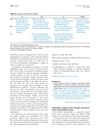
March 2015 in “Journal of The American Academy of Dermatology” In this study, five out of six patients treated with vemurafenib for metastatic melanoma experienced hair loss, which improved after topical steroid treatment.
 May 2020 in “JOJ Dermatology & Cosmetics”
 This report describes a rare case of Trichostasis Spinulosa on the heel, an uncommon location for this type of lesion.
87 citations
,
March 2013 in “Expert Review of Anticancer Therapy” This article summarizes dermatologic adverse events in patients treated with afatinib in clinical trials and discusses strategies for managing these side effects, without providing new clinical results.
 39 citations
,
July 2015 in “British Journal of Dermatology”
39 citations
,
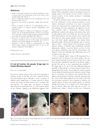
July 2015 in “British Journal of Dermatology” This article discusses the pseudo 'fringe sign' in frontal fibrosing alopecia, highlighting that it is not solely related to traction, and it reports no new clinical results.
 September 2022 in “XXXIX Congresso Brasileiro de Reumatologia”
 In this case report, a 42-year-old woman with cutaneous dermatomyositis showed significant improvement, including reduction of erythema, pruritus, and scaling, after starting JAK inhibitor tofacitinib, especially when conventional systemic treatments failed and intravenous immune globulin wasn't viable.
August 2020 in “OPAL (Open@LaTrobe) (La Trobe University)” This article offers dermoscopic comparisons between fibrosing alopecia and androgenetic alopecia with seborrheic dermatitis but reports no new research findings.
 2 citations
,
March 2022 in “Modern Rheumatology Case Reports”
2 citations
,
March 2022 in “Modern Rheumatology Case Reports” In this study, a case of a patient with dermatomyositis and alopecia universalis showed successful treatment with tofacitinib, suggesting potential responsiveness to janus kinase inhibitors.
33 citations
,
February 2024 in “International Journal of Molecular Sciences” This study highlights the crucial, multifaceted roles of fibroblasts in wound healing and various diseases, including their dysregulation in diabetic foot ulcers, underscoring the need for targeted therapies to address complications and morbidity from such chronic conditions.
 1 citations
,
March 2015 in “Journal of the European Academy of Dermatology and Venereology”
1 citations
,
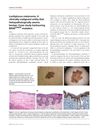
March 2015 in “Journal of the European Academy of Dermatology and Venereology” This letter to the editor shares a case study of lentiginous melanoma that appears clinically malignant but histopathologically benign, involving the BRAFV600R mutation.
31 citations
,
December 2016 in “Anais Brasileiros de Dermatologia” This review discusses the fibrogenic effects of TGFβ1, the regulatory role of PPAR, and the potential involvement of DHEA in frontal fibrosing alopecia, but reports no new clinical results.
1 citations
,
December 2012 in “Journal of dermatological science” This study introduces ficlatuzumab, an anti-HGF monoclonal antibody, in combination with gefitinib in a phase 2 trial to address EGFR TKI resistance in Asian NSCLC patients.
September 2020 in “Oral surgery, oral medicine, oral pathology and oral radiology” This case report describes a pilomatricoma in a 21-year-old woman, highlighting the diagnostic process and illustrating the potential for intraoral surgical access to minimize scarring.
January 2016 in “Indian dermatology online journal” This case report describes a 50-year-old woman with frontal fibrosing alopecia who showed no improvement despite multiple treatments, including intralesional triamcinolone and topical glucocorticoids.
 2 citations
,
August 2012 in “Journal of the American Academy of Dermatology”
2 citations
,
August 2012 in “Journal of the American Academy of Dermatology” This correspondence describes two patients with both epidermolysis bullosa simplex, Dowling-Meara type, and loose anagen hair syndrome, an association not previously reported in the literature.
 39 citations
,
January 2015 in “Annals of dermatology/Annals of Dermatology”
39 citations
,
January 2015 in “Annals of dermatology/Annals of Dermatology” This review discusses three newly identified forms of epidermolysis bullosa related to mutations in DST-e, EXPH5, and ITGA3, offering insights into their genetic and clinical characteristics but reports no new clinical results.
 December 2025 in “Cureus”
 This study reports a case of traumatic anserine folliculosis in a young male, where treatment with topical retinoids and keratolytics combined with avoiding friction significantly improved symptoms after nine months.
This study found that fibroblasts from Emery-Dreifuss muscular dystrophy patients with certain genetic mutations overexpress markers of fibrosis, and gene correction techniques reduced fibrogenic molecule expression in cell models, suggesting potential therapeutic applications.