5 citations
,
February 2005 in “Journal of the American Academy of Dermatology” Focal palmoplantar callosities may help diagnose non-Herlitz junctional epidermolysis bullosa.
 July 2025 in “The Egyptian Journal of Hospital Medicine”
 This study found that serum GPER-1 levels may serve as a biomarker for differentiating androgenetic alopecia from telogen effluvium and healthy controls, although its ability to distinguish between AGA and TE is limited.
24 citations
,
July 2014 in “Journal of Investigative Dermatology” This study reports that a widespread founder SERPINB7 mutation underlies Nagashima-type palmoplantar keratosis, which is a common form of palmoplantar keratosis in Asian populations.
 April 2023 in “Journal of Investigative Dermatology”
 In this study, the KPAI and KP-IGA scoring systems for assessing keratosis pilaris showed excellent interrater and intrarater reliability, offering standardized measures for clinical and research use.
 October 2021 in “Journal of Investigative Dermatology”
 This study found no significant difference in SARS-CoV2 IgG seroconversion rates between patients with immune-mediated inflammatory diseases treated with targeted immune-modulating therapies and those on conventional systemic treatments.
 2 citations
,
March 2022 in “Portuguese Journal of Nephrology & Hypertension”
2 citations
,
March 2022 in “Portuguese Journal of Nephrology & Hypertension” This manuscript describes two case reports of preterm newborns with a rare homozygous mutation in the epidermal growth factor receptor, leading to severe health issues and early mortality despite supportive care.
44 citations
,
May 1997 in “Journal of Biological Chemistry” This study found that regulatory sequences crucial for inducing K6a expression in response to epidermal injury are located in specific upstream regions of the K6a gene in transgenic mice.
 February 2025 in “Journal of the European Academy of Dermatology and Venereology”
 This study found that epidermal growth factor receptor inhibitors can induce erosive pustular dermatosis of the scalp, typically appearing sooner and affecting the scalp more extensively compared to other triggers.
 28 citations
,
March 2010 in “British Journal of Dermatology”
28 citations
,
March 2010 in “British Journal of Dermatology” This abstract contains only supplementary material information and reports no new research findings.
5 citations
,
March 2020 in “Thoracic Cancer” In this phase I study, CT-707, a new ALK inhibitor, showed a 77% response rate among Chinese patients with advanced ALK-rearranged non-small cell lung cancer, suggesting clinical effectiveness despite some adverse events like diarrhea and liver enzyme elevation.
 June 2023 in “British Journal of Dermatology”
 This pilot study found that night shift workers showed fewer signs of wrinkle formation compared to day workers, but there were no significant differences in DNA amplification or collagen percentage.
 9 citations
,
March 2012 in “Experimental dermatology”
9 citations
,
March 2012 in “Experimental dermatology” This meeting report discusses the first symposium on natural gene therapy for skin, preceding the 41st annual meeting of the European Society for Dermatological Research, and reports no new experimental findings.

This proof-of-concept study suggests that the new topical treatment regimen TH07 may offer effective hair growth results in men with androgenic alopecia, using a combination of finasteride, latanoprost, and minoxidil, supported by animal models and clinical studies.
 10 citations
,
November 2015 in “Experimental Dermatology”
10 citations
,
November 2015 in “Experimental Dermatology” The study observed that mRAGE expression is prevalent in keratinocytes of the healthy human epidermis and may regulate inflammation and apoptosis to maintain skin homeostasis rather than responding to aging processes.
 28 citations
,
November 2019 in “Gene”
28 citations
,
November 2019 in “Gene” This article reviews the structure and regulation of the ITGB6 gene and discusses its role in integrin αvβ6 expression, with no new experimental results reported.
February 2023 in “Pharmaceutics” This study found that oral administration of 7, 8–dihydroxyflavone in guinea pigs improved recovery from gentamicin-induced vestibular damage, suggesting potential therapeutic use for vestibular dysfunction in humans.
 April 2016 in “Journal of The American Academy of Dermatology”
 Ixekizumab is effective and safe for patients who did not improve with etanercept treatment for psoriasis.
 40 citations
,
October 2009 in “Journal of Biomedical Nanotechnology”
40 citations
,
October 2009 in “Journal of Biomedical Nanotechnology” This review discusses pyrene excimer nucleic acid probes for detecting biomolecules and protein-DNA interactions and reports no new experimental findings.
 13 citations
,
February 2007 in “British Journal of Dermatology”
13 citations
,
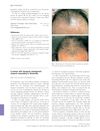
February 2007 in “British Journal of Dermatology” EF and PXE not closely related.
56 citations
,
March 2003 in “Journal of Investigative Dermatology” This study found that 17β-estradiol inhibited RANTES production in human keratinocytes by suppressing nuclear factor κB activity, suggesting a potential mechanism for 17β-estradiol's modulation of psoriasis-related inflammation.
21 citations
,
June 2004 in “Experimental Dermatology” This study found that Ber-EP4 immunoreactivity is present in specific areas of hair follicles across different stages of the hair cycle, particularly in the secondary hair germ, but not in mature anagen follicles.
 April 2014 in “The FASEB Journal”
 This study found that Geranium Sibiricum L extract may promote hair growth by increasing cell proliferation and migration while modulating cytokine expression in human dermal papilla cells under stress conditions.
147 citations
,
October 2021 in “Cancer Communications” This study found that the novel anti-HER2 antibody RC48 demonstrated promising activity and manageable safety in patients with HER2-overexpressing, advanced gastric or gastroesophageal junction cancer after at least two prior chemotherapy lines.
9 citations
,
October 2015 in “Journal of Cutaneous Pathology” This study found that histopathologic features of erythematous papulopustular eruption due to EGFR inhibitors vary with eruption severity and differ between cetuximab and erlotinib treatments.
 December 2025 in “Cureus”
 This case report highlights that scarring alopecia with features of dystrophic epidermolysis bullosa and lichen planopilaris can occur in patients with a COL7A1 mutation, emphasizing the need to recognize concurrent inflammatory causes.
 February 2020 in “Definitions”
 This article discusses the human KRT72 wild-type allele's role in hair formation and reports no new research findings.
 25 citations
,
November 2018 in “Cell reports”
25 citations
,
November 2018 in “Cell reports” This study found that the ablation of Esrp1 and Esrp2 disrupts epithelial tight junctions by affecting Arhgef11 isoform expressions, highlighting a potential mechanistic link between splicing alterations and epithelial barrier defects.
5 citations
,
July 2019 in “Investigational new drugs” TLR7-based compounds may help manage chemotherapy-induced hair loss.
 5 citations
,
March 2019 in “Journal of lipid research”
5 citations
,
March 2019 in “Journal of lipid research” This study reports new fluorogenic ceramidase substrates and highlights RBM14C24:1 as an efficient substrate for neutral ceramidase, while RBM15C18:1 is the best probe for measuring ACER1 and ACER2 activities, potentially aiding high-throughput screening for ceramidase inhibitors.
14 citations
,
May 2022 in “Stem cell reports” This study reported that human induced pluripotent stem cell-derived skin organoids, used to model epidermolysis bullosa, have an epidermal-dermal junction largely lacking type VII collagen, which is important for skin structure.