 April 2023 in “The journal of investigative dermatology/Journal of investigative dermatology”
 This study reported significant transcriptomic changes in keratinocyte and immune cell populations in a mouse model with EGFR-deficient epidermis, suggesting possible targets for mitigating adverse skin events in EGFR-targeted cancer therapy.
November 2015 in “Journal of the Korea Academia-Industrial cooperation Society” This study established a stable cell line for CRF1 receptor screening, which can be used to develop functional cosmetics and modulators potentially affecting hair re-growth.
 September 2018 in “Reactions Weekly”
 Two women had skin reactions from a hair loss treatment and got better after stopping use.
December 2025 in “Journal of Human Immunity” In this case report, a 37-year-old patient with APECED showed significant clinical improvement, including hair regrowth and resolution of skin issues, after 11 months of treatment with ruxolitinib, highlighting the potential of JAK inhibitors in managing this complex autoimmune disease.
Linalool in personal care products may worsen frontal fibrosing alopecia by damaging hair follicle stem cells and triggering harmful immune responses.
19 citations
,
April 2023 in “Antibiotics” This study found that azelaic acid entrapped in transethosomes exhibited enhanced antidermatophyte activity and improved treatment outcomes in guinea pig models of dermatophytosis compared to free azelaic acid.
June 2026 in “International Journal of Ayurvedic Medicine” This randomized clinical trial observed that Facia Men’s capsule significantly reduced hair shedding in men with androgenetic alopecia over 12 weeks without affecting renal or liver function, though a small change in blood glucose suggests monitoring metabolic health.
2 citations
,
June 2025 in “ACS Biomaterials Science & Engineering” This study demonstrates that encapsulating cell-free fat extract in a gelatin methacrylate hydrogel enhances flap repair by sustaining angiogenesis, reducing oxidative stress, and offering favorable biocompatibility in a murine skin flap model, thereby advancing potential clinical flap necrosis treatments.
 26 citations
,
January 2016 in “Annals of Dermatology”
26 citations
,
January 2016 in “Annals of Dermatology” This study found that Ecklonia cava polyphenols increased human dermal papilla cell proliferation and extended hair shaft length in vitro and ex vivo, suggesting potential as a therapeutic candidate for hair loss.
November 2025 in “Advanced Science” In this study, researchers developed a polyphenol–amino acid nanozyme capable of controlled hydrogen peroxide delivery, which effectively activated hair follicles via oxidative stress in a mouse model, suggesting a potential non-pharmacological treatment for alopecia.
60 citations
,
December 1988 in “Journal of Biochemical Toxicology” In this study, TCDD administered to male rats down-regulated EGF receptor in liver plasma membranes and increased protein kinase activity, suggesting EGF receptor–mediated toxicological effects.
August 2021 in “Journal of advances in medicine and medical research” In this study, both excimer light and low level light therapy were found to be safe and effective for treating alopecia areata, with excimer light showing better and more sustained improvement.
 20 citations
,
July 2013 in “PLoS ONE”
20 citations
,
July 2013 in “PLoS ONE” This study found that inhibiting EGFR signaling in mice can prevent alopecia caused by cyclophosphamide treatment, highlighting its potential role in managing chemotherapy-induced hair loss.
 September 2013 in “Hair transplant forum international”
 This abstract describes frontal fibrosing alopecia, a type of cicatricial alopecia identified in post-menopausal women, and reports no new clinical findings.
43 citations
,
December 2006 in “The American journal of pathology” This study found that Edar signaling plays a role in regulating the hair cycle and apoptosis in hair follicle keratinocytes during the catagen phase in mice.
 April 2023 in “Journal of Investigative Dermatology”
 This research developed new in vitro models for high-throughput screening of drugs that could protect or restore immune privilege in hair follicles, finding that Tofacitinib was effective in preventing inflammation-related marker upregulation, while Tacrolimus and αMSH worked specifically in outer root sheath keratinocytes.
September 2018 in “Translational Andrology and Urology” This study found that finasteride was associated with increased erectile dysfunction in men with benign prostatic hyperplasia, but this association was not statistically significant in those with male androgenic alopecia.
 April 2023 in “World Journal Of Advanced Research and Reviews”
 This study in Morocco found that all women with frontal fibrosing alopecia presented frontotemporal hairline recession, with trichoscopic features such as perifollicular erythema and follicular hyperkeratosis being indicative of the condition, and suggested a potential link between cosmetic products or emotional factors and the disease.
 April 2016 in “Journal of the American Academy of Dermatology”
 This study found that in a tertiary academic institution, nearly 1 in 5 dermatology consults were for drug-related skin reactions, with antibiotics frequently identified as the culprits.
June 2025 in “Revista Foco” This review assessed randomised clinical trials on the efficacy and safety of topical and systemic JAK inhibitors for alopecia areata, finding significant hair coverage improvement with ritlecitinibe and baricitinibe, though prolonged treatment is often needed to maintain results.
November 2025 in “OPAL (Open@LaTrobe) (La Trobe University)” This study found that the leaf extract of Tectona grandis and its major bioactive constituents moderately inhibit the 5α-reductase enzyme, which is linked to androgenetic alopecia, and also possess anti-inflammatory properties, showing promise as dual-action candidates for managing this condition.
 January 2015 in “Przegla̧d dermatologiczny”
 This study evaluated 308 nm excimer light therapy for alopecia areata but the abstract does not provide specific clinical results or conclusions.
 29 citations
,
July 2010 in “Journal of Cutaneous Medicine and Surgery”
29 citations
,
July 2010 in “Journal of Cutaneous Medicine and Surgery” This study reported no significant improvement in patients with frontal fibrosing alopecia treated with various therapeutic agents, highlighting the need for more evidence-based treatments, especially in those with active disease.
33 citations
,
February 2012 in “British Journal of Dermatology” This study found significant changes in gene expression related to skin structure and signaling pathways in AEC syndrome skin, offering new insights into the syndrome's molecular underpinnings.
 January 2011 in “Journal of Society of Cosmetic Chemists of Japan”
 This study found that a conditioner containing 18-MEA and SPDA can improve hair's smoothness and reduce flyaways, enhancing hair manageability.
 31 citations
,
October 2010 in “Journal of the European Academy of Dermatology and Venereology”
31 citations
,
October 2010 in “Journal of the European Academy of Dermatology and Venereology” The authors concluded that some patients clinically diagnosed with telogen effluvium may actually have alopecia areata incognita, suggested by the presence of dystrophic hairs and development of alopecia patches.
 3 citations
,
July 2023 in “International Journal of Biological Macromolecules”
3 citations
,
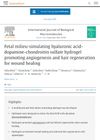
July 2023 in “International Journal of Biological Macromolecules” In this study, the researchers developed a hydrogel mimicking the fetal environment that significantly accelerated wound healing and hair follicle regeneration in vivo, with over 94% wound closure in 14 days, surpassing hydrogels lacking certain additives.
March 2016 in “International Journal of Infectious Diseases” This study reported that peginterferon alpha-2a showed high early and sustained virologic response rates in Albanian hemodialyzed patients with hepatitis C, despite causing several adverse effects.
 June 2026 in “Frontiers in Medicine”
 This study conducted a large-scale comparison using FAERS data to assess the post-marketing safety profiles of spironolactone, eplerenone, and finerenone, finding unique adverse event patterns for each drug and highlighting the need for personalized safety monitoring and further investigation in other pharmacovigilance databases.
 November 2025 in “Mendeley Data”
 This study found that tofacitinib and baricitinib, when administered with unorthodox weight-stratified dosing in pediatric patients with moderate-to-severe AA, showed comparable efficacy and tolerability, though baricitinib's efficacy decreased with non-standard dosing.