1 citations
,
November 2022 in “Indian Journal of Dermatology/Indian journal of dermatology” This case study describes a 12-year-old boy with an unruptured epidermal inclusion cyst on his cheek, highlighting the role of dermatoscopy in diagnosing and differentiating cyst types for treatment.
10 citations
,
November 2019 in “Journal of the European Academy of Dermatology and Venereology” This study observed distinct differences in hair characteristics between individuals with cardio-facio-cutaneous syndrome and Costello syndrome, highlighting the role of the RAS pathway in these RASopathies and aiding clinical diagnosis.
 March 2026 in “Frontiers in Pharmacology”
 The study concluded that the Exprecell™ device for preparing anticoagulant-free f-PRF increases volume yield and simplifies the process while maintaining biological activity comparable to conventional methods, suggesting potential clinical utility.
 109 citations
,
March 2011 in “Journal of controlled release”
109 citations
,
March 2011 in “Journal of controlled release” This study found that econazole nitrate delivered via MPEG-dihexPLA micelles significantly increased skin deposition compared to Pevaryl® cream, potentially enhancing drug bioavailability and clinical efficacy.
January 1994 in “Journal of the society of cosmetic chemists” 41 citations
,
January 1992 in “Journal of medical genetics” This study described seven male patients and six female carriers of keratosis follicularis spinulosa decalvans, highlighting distinct dermatological and ophthalmic markers including follicular hyperkeratosis and corneal dystrophy.

This case series observed that patients with persistent post-COVID-19 symptoms reported considerable improvement after using icosapent ethyl, suggesting potential therapeutic success warranting further research.
13 citations
,
December 2021 in “Journal of Cellular and Molecular Medicine” This case report observed that treatment with human placental mesenchymal stromal cell-derived exosome-enriched extracellular vesicles may improve symptoms of chronic cutaneous graft-versus-host disease, including hyperpigmentation and skin ulcers, in a patient resistant to conventional therapies.
28 citations
,
June 1995 in “The Journal of Dermatology” This study reports that flaky skin mice exhibit skin and nail features that closely resemble human psoriasis vulgaris, suggesting they may serve as a natural model for this condition.
June 2025 in “Stem Cells and Cloning Advances and Applications” In this study, researchers demonstrated that their technology efficiently produces CFx-δ2 from stem cells and accelerates wound healing by enhancing fibroblast activity, reducing inflammation, and promoting blood vessel formation.
7 citations
,
January 2023 in “Anti-Cancer Drugs” In this study, researchers reviewed cases of EGFR inhibitor-induced folliculitis decalvans and reported the first known occurrences associated with afatinib in three female NSCLC patients, highlighting the importance of early diagnosis and management to improve patient quality of life.
32 citations
,
July 2017 in “Oncotarget” This study found that intermittent treatment with FTI lonafarnib and sulforaphane may be a promising therapeutic approach for children with Hutchinson-Gilford progeria syndrome, as it improved the cellular phenotype.
April 2012 in “Cancer Research” In this study, mouse models with EGFR deficiency showed that disrupted hair follicle cycling leads to increased mast cell numbers and inflammation, suggesting EGFR's role in managing hair cycle transitions and preventing folliculitis.
 1 citations
,
March 2020 in “QJM: An International Journal of Medicine”
1 citations
,
March 2020 in “QJM: An International Journal of Medicine” This study concluded that patients with chronic telogen effluvium had significantly lower levels of serum ferritin and lactoferrin compared to controls, suggesting potential benefits of supplementation.
May 2026 in “Advanced Pharmaceutical Bulletin” In this study, black cumin oil-based nanostructured lipid carriers enhanced the delivery and effectiveness of fluticasone for psoriasis in a mouse model, improving skin targeting, inflammation reduction, and permeability compared to standard cream.
May 2015 in “Cancer research” This study found that persistent significant alopecia was a common side effect following FEC-docetaxel chemotherapy, with a 33.4% global incidence, highlighting the need for awareness and potential preventative measures like cooling caps during treatment.
November 2010 in “International Journal of Dermatology and Venereology” This article discusses the clinical manifestations and management strategies of skin side effects from epidermal growth factor receptor inhibitors, but reports no new clinical findings.
 119 citations
,
November 2014 in “Trends in Cell Biology”
119 citations
,
November 2014 in “Trends in Cell Biology” This review discusses the mechanisms and pathways of FGFR signalling and its roles in development, disorders, and therapeutic targeting, but reports no new clinical results.
6 citations
,
December 2024 in “F1000Research” In this review, the researchers highlight the role of fibroblasts in regulating the extracellular matrix and immune responses, emphasizing the impact on macrophages and potential therapeutic insights for fibrotic diseases and cancer.
 1 citations
,
October 2023 in “Journal of the Pakistan Medical Association”
1 citations
,
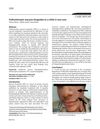
October 2023 in “Journal of the Pakistan Medical Association” This source describes a case of a 12-year-old male diagnosed with folliculotropic mycosis fungoides, presenting with an asymptomatic, erythematous plaque. Histology and immunohistochemistry confirmed FMF, which is typically rare in children and marked by follicular infiltration by CD4+ lymphocytes.
February 2026 in “Small Ruminant Research” This study found that specific genetic variations in the IRF2BP2 gene influence fleece structure in sheep, with one variant completely determining coat type and another significantly modifying fiber characteristics, providing valuable insights for improving fleece quality through selective breeding.
7 citations
,
March 2022 in “International Journal of Molecular Sciences” This study found that FGF21 suppresses inflammation induced by C. acnes in both human skin cells and mouse models, suggesting potential use in acne treatment.
7 citations
,
March 2020 in “Journal of the American Academy of Dermatology” This study observed that trichoscopic changes associated with EGFRI treatment include pili torti and asymmetric hyperpigmented fusiform widening, along with dermoscopic skin manifestations such as scale and branching vessels.
68 citations
,
January 2014 in “Dermatology research and practice” This review discusses the presentation and management of skin toxicity from epidermal growth factor inhibitors, highlighting a correlation between cutaneous adverse effects and tumor response, but reports no new clinical results.
 July 2016 in “Dermatologie pro praxi”
 This article discusses the use of Espumil foam base in pharmacies for preparing dermatological medications and reports no new clinical results.
 2 citations
,
April 2025 in “Lasers in Medical Science”
2 citations
,
April 2025 in “Lasers in Medical Science” This study found that combining fractional CO₂ laser with halometasone cream improved chronic eczema more effectively than halometasone alone, with efficacy varying by laser parameters and showing better results at 4 weeks compared to 1 week. Pain was noted with higher energy treatments.
16 citations
,
September 2021 in “Frontiers in Bioengineering and Biotechnology” In this study, chitosan-modified fucoidan/polyethylene oxide nanofibers were developed, showing promise as bio-scaffolds for tissue-engineered blood vessels by enhancing endothelial cell adhesion and inhibiting monocyte attachment.
 June 2024 in “British Journal of Dermatology”
 This study observed that Black women with central centrifugal cicatricial alopecia had a higher prevalence of uterine leiomyomas compared to those with lichen planopilaris, suggesting a potential association between the conditions.
 4 citations
,
September 2024 in “BMC Oral Health”
4 citations
,
September 2024 in “BMC Oral Health” This review highlights the lack of evidence on dental care access and referral pathways for children with EB, emphasizing the need for dentists and multidisciplinary teams to understand EB for effective treatment; it reports no new study results.
 16 citations
,
December 2018 in “ACS Biomaterials Science & Engineering”
16 citations
,
December 2018 in “ACS Biomaterials Science & Engineering” This research found that a biodegradable fibrous membrane incorporating fibroblast-derived ECM accelerated wound healing and improved neovascularization in a mouse model.