 3 citations
,
August 2024 in “Cureus”
3 citations
,
August 2024 in “Cureus” This study found that DALL-E 2 performed poorly in generating accurate images of most pediatric dermatological conditions, highlighting the need for more domain-specific and inclusive training data.
 October 2021 in “Journal of Investigative Dermatology”
 This study found no significant difference in SARS-CoV2 IgG seroconversion rates between patients with immune-mediated inflammatory diseases treated with targeted immune-modulating therapies and those on conventional systemic treatments.
 3 citations
,
August 2023 in “Drug safety”
3 citations
,
August 2023 in “Drug safety” This source reports that trastuzumab deruxtecan improves outcomes in HER2-positive and HER2-low metastatic breast cancer, emphasizing the need for careful adverse event monitoring, particularly for interstitial lung disease, and managing emetic risk to maximize benefits.
 5 citations
,
January 2018 in “Skin Research and Technology”
5 citations
,
January 2018 in “Skin Research and Technology” This letter compares automated digital image analysis (TrichoScan) with manual marking of hairs in male patients with androgenetic alopecia but reports no new results.
December 2018 in “Dermatologic Surgery” This overview describes the Dermatologic Surgery journal's comprehensive focus on cosmetic and reconstructive skin procedures, but it reports no new research findings.
 70 citations
,
June 2003 in “Journal of Investigative Dermatology Symposium Proceedings”
70 citations
,
June 2003 in “Journal of Investigative Dermatology Symposium Proceedings” This study reports that the TrichoScan method effectively measures hair growth parameters and detected significant improvements in hair counts and thickness in men with androgenetic alopecia after finasteride treatment.
28 citations
,
December 2002 in “Der Hautarzt” TrichoScan accurately measures hair growth and loss, showing increased hair counts and thickness with treatment.
 21 citations
,
December 2016 in “European journal of pharmaceutics and biopharmaceutics”
21 citations
,
December 2016 in “European journal of pharmaceutics and biopharmaceutics” This study found that nano-sized lipid particles improved the skin accumulation and retention of dexamethasone compared to a base cream, suggesting potential benefits for inflammatory skin disease treatment.
75 citations
,
January 2004 in “Molecular and Cellular Biology” In this study, EDA-A2 transgenic mice exhibited multifocal myodegeneration dependent on XEDAR, suggesting a potential role for XEDAR in skeletal muscle homeostasis.
January 2018 in “Journal of Investigative Dermatology” This quiz article provides a series of dermatological diagnosis questions based on a Journal of Investigative Dermatology article and includes explanations but reports no original research findings.
 2 citations
,
January 2014 in “Turkish Journal of Medical Sciences”
2 citations
,
January 2014 in “Turkish Journal of Medical Sciences” This study found that the TrichoScan software effectively differentiated between androgenetic alopecia and telogen effluvium in women with diffuse hair loss, aligning with clinical diagnoses.
1 citations
,
January 1989 in “Carcinogenesis” This study found that dexamethasone treatment inhibited the inflammatory response and the induction of ornithine decarboxylase activity in mouse skin after TPA application, although the effect on ODC was weaker during the hyperplastic stage.
August 2003 in “Special report” This report introduces Barcelona - TrichoScan as a novel software tool purported to effectively analyze hair growth in patients with androgenetic alopecia or androgenetic effluvium, but it provides no clinical data.
 February 2016 in “The journal of investigative dermatology/Journal of investigative dermatology”
 This quiz presents educational questions about alopecia areata, including its diagnosis and underlying mechanisms, but reports no new clinical outcomes.
 August 2025 in “BMC Pregnancy and Childbirth”
 In this study, prenatal ultrasonography was found to be a valuable tool for screening ectodermal dysplasia during pregnancy, and a new EDA gene variant associated with X-linked hypohidrotic ectodermal dysplasia was identified, aiding in more accurate diagnoses and reproductive decision-making.
23 citations
,
October 2007 in “International journal of cancer” This study reports that hair from women with breast cancer showed a unique X-ray diffraction feature, potentially offering a non-invasive method for detecting the disease.
 July 2016 in “Journal of Investigative Dermatology”
 This article introduces an online quiz by the Journal of Investigative Dermatology, connecting its questions to findings from a specific JID article, and it reports no new results.
34 citations
,
January 2016 in “Analytical Chemistry” This study reports that a new DART-HRMS method can effectively analyze intact hair for drug use timelines, with cocaine detection aligning with forensic standards and identifying multiple drugs from high-resolution data.
 21 citations
,
January 2010 in “International Journal of Trichology”
21 citations
,
January 2010 in “International Journal of Trichology” This study concluded that TrichoScan is error-prone in its current form and overestimates certain hair growth parameters, with results not aligning with clinical severity of alopecia.
 28 citations
,
April 2009 in “Annals of laboratory medicine”
28 citations
,
April 2009 in “Annals of laboratory medicine” This study found that the DFS pattern occurs in about 28% of ANA-positive cases and is relatively frequent in autoimmune diseases, contrary to previous observations suggesting no link with these diseases.
5 citations
,
May 2001 in “Proceedings of SPIE, the International Society for Optical Engineering/Proceedings of SPIE” This study developed a double-wavelength laser scanning microphotometer to measure hair shaft and follicle absorbance, improving spatial resolution and reducing light scattering effects in vitro.
 7 citations
,
April 2020 in “Dermatologic Therapy”
7 citations
,
April 2020 in “Dermatologic Therapy” In this study, nine male cases of androgenetic alopecia showed marked improvement after receiving systemic dexpanthenol treatment.
March 2022 in “Journal of Investigative Dermatology” In this study, Wang et al. (2022) found that in patients with cutaneous lupus erythematosus, chronic lesions contained more senescent progenitor cells, marked by p16 and p21, than subacute lesions, suggesting a link between disease chronicity and cellular senescence.
48 citations
,
June 2000 in “Japanese Journal of Cancer Research” This study found that dimethylarsinic acid significantly accelerates skin tumor development in hair follicle-targeted K6/ODC transgenic mice.
April 2022 in “Journal of Investigative Dermatology” This paper presents an interactive quiz related to a study by Deng et al. (2022) in the Journal of Investigative Dermatology, examining androgen receptor-mediated paracrine signaling in androgenetic alopecia, but it provides no new clinical findings.
December 2024 in “Tissue and Cell” In this study, researchers developed a method to automatically detect androgen receptor nuclear translocation in dermal papilla cells using fluorescence markers and image analysis, finding that the receptor's nuclear signal peaks about 20 minutes after DHT exposure.
 August 2016 in “Journal of Investigative Dermatology”
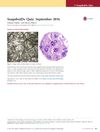
 This quiz based on a Journal of Investigative Dermatology article reports no new clinical results but serves as an educational tool for diagnosing scalp conditions, including scalp psoriasis and psoriatic alopecia.
 1 citations
,
March 2019 in “Journal of AOAC INTERNATIONAL”
1 citations
,
March 2019 in “Journal of AOAC INTERNATIONAL” New method quickly and accurately measures dexpanthenol in hair products.
60 citations
,
August 2022 in “ESMO Open” This review discusses managing common and notable adverse events associated with the antibody-drug conjugate trastuzumab deruxtecan in patients with HER2-positive unresectable/metastatic breast cancer and reports no new clinical results.
 April 2017 in “Journal of Investigative Dermatology”
 In this study, deep phenotyping of 68 patients with XPD gene defects successfully separated individuals by clinical diagnosis and survival status, potentially improving diagnosis and prognosis for xeroderma pigmentosum and trichothiodystrophy.