
This study found that adding Platelet-Rich Plasma to Nanofat treatment for female pattern hair loss significantly increased terminal hair count and thickness after 6 months.
166 citations
,
February 2020 in “Advanced Functional Materials” This study reports that a novel programmable device delivering VEGF through miniaturized needles significantly improved healing outcomes in diabetic mice's chronic wounds compared to traditional topical treatments.
August 2024 in “International Journal of Pharmaceutics” This study found that a specially designed water-in-oil microemulsion containing Panax notoginseng saponins improved hair density and other hair health indicators in mice with telogen effluvium and androgenetic alopecia, offering a promising multi-mechanism strategy for alopecia treatment with potentially fewer side effects than traditional methods.
5 citations
,
January 2020 in “Acta dermatovenerologica Alpina, Pannonica et Adriatica (Tiskana izd.)” This study found that PRP was effective for treating alopecia areata with similar improvement across groups, while topical delivery via fractional CO2 laser or microneedling reduced injection pain.
April 2025 in “Our Dermatology Online” This article presents a case of a seventeen-year-old female with dermatopathia pigmentosa reticularis and emphasizes the importance of distinguishing its clinical features from other similar disorders, supported by dermoscopic and histopathological findings.
12 citations
,
November 2012 in “BioMolecular Concepts” This review discusses the diverse roles of PPARβ/δ in skin health and disease, including its involvement in skin wound healing and inflammatory skin conditions, without presenting new experimental results.
 March 2024 in “Asian journal of medical sciences”
 In this study, researchers found that a ring block technique was the most accepted anesthesia modality for platelet-rich plasma injections in hair loss treatment, with the least post-procedural pain compared to other methods like vibration anesthesia and nerve blocks.
April 2021 in “Journal of Investigative Dermatology” Blocking DPP4 can help prevent fat loss and skin fibrosis.
 1 citations
,
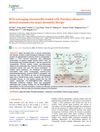
October 2025 in “Nano Research”
1 citations
,
October 2025 in “Nano Research” In this study, researchers developed a dissolvable microneedle patch combining HA-TEMPO and Portulaca oleracea L.-derived nanoparticles, which effectively reduced oxidative stress and inflammation in an atopic dermatitis model while restoring immune balance, suggesting a promising treatment strategy.
14 citations
,
June 1982 in “Archives of Dermatology” This letter to the editor shares concerns about possible systemic effects from topical dinitrochlorobenzene therapy in a 25-year-old man treating alopecia areata.
11 citations
,
September 2024 in “Journal of Advanced Research” This study found that PC 3DP models are reliable preclinical tools that could potentially customize treatment strategies and predict patient prognoses by correlating drug sensitivity profiles with clinical outcomes, though larger patient cohort validation is needed to confirm clinical utility.

This study found that proretinal nanoparticles, applied topically, are safe and effective for penetration into hair follicles, enhancing retinoid biological activity in the skin while reducing irritation compared to conventional retinal formulations.
 1 citations
,
February 2020 in “International journal of research in dermatology”
1 citations
,
February 2020 in “International journal of research in dermatology” This review discusses the potential applications of platelet rich plasma in dermatology and cosmetology for conditions like alopecia and skin rejuvenation and reports no new clinical findings.
 4 citations
,
April 2024 in “Cellular and Molecular Biology”
4 citations
,
April 2024 in “Cellular and Molecular Biology” In this study, injectable platelet-rich fibrin (i-PRF) was found to enhance the proliferative, migratory, and hair-inducing abilities of dermal papilla cells more effectively than platelet-rich plasma through the TGF-β/Smad pathway.
April 2025 in “Russian Pediatric Journal” This review discusses the application of PRP therapy in pediatric settings and highlights the current lack of sufficient data for its widespread clinical use.
 January 2016 in “Hair transplant forum international”
 This abstract discusses platelet-rich plasma, focusing on its composition and potential to stimulate cellular repair and regeneration, but reports no new research findings.
15 citations
,
January 2024 in “Chemical Engineering Journal”  April 2021 in “Journal of Investigative Dermatology”
 This study identified a unique transcriptional signature in occipital hair follicles that may protect them from miniaturization in androgenetic alopecia, using an animal-free model to investigate gene roles.
 September 2022 in “JAAD case reports”
 This case study of a 45-year-old man from Tonga describes the identification of pachyonychia congenita through genetic testing, revealing a mutation in the keratin gene KRT16, associated with chronic painful skin and nail conditions.
 17 citations
,
September 2010 in “Pediatric dermatology”
17 citations
,
September 2010 in “Pediatric dermatology” This report describes a case of widespread Porokeratotic eccrine and hair follicle nevus in a 15-year-old woman with keratitis-ichthyosis-deafness syndrome, involving both eccrine ostia and hair follicle infundibula.
6 citations
,
January 2022 in “Database” This database provides detailed physiological parameters of porcine skin to enhance the MPML MechDermA Model, improving dermal absorption predictions for human studies in the Simcyp Simulator.
 April 2024 in “Asian Journal of Medical Sciences”
 This study found that ring block anesthesia was the most acceptable method for reducing pain during platelet-rich plasma injections for hair loss.
 15 citations
,
January 2017 in “Experimental Neurology”
15 citations
,
January 2017 in “Experimental Neurology” This study found that finasteride significantly reduced levodopa-induced dyskinesia in both male and female rats without diminishing l-DOPA's motor benefits, indicating potential for clinical trials in Parkinson's patients.
 May 2026 in “Journal of Nanobiotechnology”
 This study found that using a palmitoylated peptide, Pal-MPAPO, delivered through hydrogel microneedles effectively promoted hair regrowth in mice with efficacy comparable to minoxidil, while requiring less frequent application.
 10 citations
,
January 2014 in “BioMed research international”
10 citations
,
January 2014 in “BioMed research international” In this study, dermal papilla cells from rat vibrissae showed potential for treating CNS injuries by secreting neurotrophic factors and promoting neuronal differentiation more effectively than bone marrow mesenchymal stem cells.
 42 citations
,
May 2016 in “American Journal of Clinical Dermatology”
42 citations
,
May 2016 in “American Journal of Clinical Dermatology” This review discusses the use of platelet-rich plasma for pattern hair loss treatment and examines existing clinical studies without presenting new clinical results.

This review highlights the potential of microneedles as a pediatric-friendly method for delivering proteins, vaccines, and diagnostics transdermally, noting their ability to penetrate the skin's barrier and suggesting future applications in other parts of the body.
 1 citations
,
April 2022 in “Dermatologic Surgery”
1 citations
,
April 2022 in “Dermatologic Surgery” This article introduces the Progressive Loss (PL) Scale, aimed at helping physicians communicate the long-term cosmetic risks of hair restoration surgery to patients.
 April 2018 in “The journal of investigative dermatology/Journal of investigative dermatology”
 This phase 2a trial evaluated Samcyprone for common wart treatment and found that while a sensitization reaction is necessary for therapeutic response, its level does not predict wart clearance.
 January 2026 in “International Journal of Applied Pharmaceutics”
 This review discusses the integration of nanoparticles with microneedles to improve drug delivery through enhanced stability, bioavailability, and controlled release, noting ongoing challenges with stability, scalability, and safety.