 1 citations
,
April 2017 in “Journal of Investigative Dermatology”
1 citations
,
April 2017 in “Journal of Investigative Dermatology” This study found that a novel 15% topical minoxidil solution achieved a clinically significant hair regrowth response in 60% of women with female pattern hair loss who did not respond to 5% minoxidil, without increasing adverse events.
January 2026 in “Journal of Materials Chemistry B” In this study, researchers developed a delivery system using a deep eutectic solvent to improve hydroxytyrosol absorption for hair regrowth, achieving over threefold greater skin penetration compared to aqueous solutions and demonstrating its effectiveness and biocompatibility in hair regrowth and ROS-scavenging tests.
 1 citations
,
January 2017 in “Organic chemistry”
1 citations
,
January 2017 in “Organic chemistry” This article reviews the traditional uses and documented properties of Tridax procumbens in medicine but reports no original research findings, emphasizing its potential therapeutic applications.
 6 citations
,
October 2016 in “Food Science and Biotechnology”
6 citations
,
October 2016 in “Food Science and Biotechnology” This study found that the water extract of Bituminaria bituminosa demonstrated the highest antioxidant activity and α-glucosidase inhibition among tested extracts, but no cholinesterase or tyrosinase inhibition.
3 citations
,
February 2024 in “International journal of molecular sciences” This review highlights the potential of valorizing citrus by-products, particularly hesperidin from orange peels, as sustainable ingredients in skincare for antiaging, pigmentation, wound healing, and UV damage protection, emphasizing hesperidin's role in a circular economy approach.
 5 citations
,
March 2017 in “Natural Product Research”
5 citations
,
March 2017 in “Natural Product Research” This study identified and characterized eight compounds, including furanocoumarins and pterocarpans, from the aerial parts of Bituminaria basaltica, with β-caryophyllene and germacrene D as main constituents of its essential oil.
 1 citations
,
July 2017 in “International Journal of Advanced Research”
1 citations
,
July 2017 in “International Journal of Advanced Research” This study evaluated the phytochemical properties and in-vitro anti-fungal activity of Tridax procumbens but reports no new clinical results.
December 2024 in “Naunyn-Schmiedeberg s Archives of Pharmacology”  September 2024 in “Journal of Skin and Stem Cell”
 In this study, a combination treatment of microinfusion (MMP®) and topical minoxidil showed a modest increase in hair density in a 28-year-old woman with chronic telogen effluvium, particularly in the parieto-vertex region, suggesting potential benefits but underscoring the need for larger trials to confirm efficacy.

This study found that an ethanolic extract of Ganoderma lucidum, especially at 15mg/kg, may promote hair growth in a rat model of testosterone-induced alopecia, showing effects comparable to minoxidil.
 October 2022 in “Legume Research”
 This study developed a protocol for callus induction and found that certain hormone concentrations enhance the production of flavonoids, phenols, and terpenes in Bituminaria bituminosa.
3 citations
,
January 2022 in “Journal of The American Academy of Dermatology” This study found that 1 mg/day low-dose oral minoxidil significantly increased hair count compared to 0.25 mg/day over 24 weeks in women with female pattern hair loss, though no differences were observed in hair-shedding and quality-of-life scores between the two doses.
 June 2025 in “Universities Journal of Phytochemistry and Ayurvedic Heights”
 This study evaluated the wedelolactone content and antimicrobial activity of Eclipta alba and Wedelia chinensis extracts, finding a potential relationship between the concentration of wedelolactone and their in vitro antimicrobial effects against several pathogenic bacteria and yeast.
February 2023 in “Reactions Weekly”  June 2025 in “Samarra Journal of Pure and Applied Science”
 This study developed a rapid and accurate spectrophotometric method using diazotized sulfanilic acid to measure minoxidil in both pharmaceutical formulations and pure form, demonstrating high precision and linearity within a concentration range of 5-40 μg/ml.
1 citations
,
January 1976 in “Clinical Science” This study concluded that minoxidil combined with a diuretic may effectively reduce blood pressure in moderately hypertensive male patients with minimal side effects.
July 2026 in “Journal of Dermatologic Science and Cosmetic Technology” This study found that extracts from Terminalia bellirica enhanced dermal papilla cell viability, inhibited androgen-related pathways, and stimulated hair regrowth in a mouse model, suggesting potential for treating androgenetic alopecia through multi-target mechanisms.
July 2019 in “JoLS Journal of Life Sciences” This study found that extracts from the plant Platycodon grandiflorum, particularly the butanol extract, demonstrated potential in preventing hair loss by showing significant antioxidant activity, promoting cell proliferation, and inhibiting inflammation in various cell models.
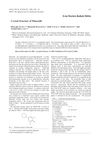 5 citations
,
January 2004 in “Analytical Sciences X-ray Structure Analysis Online”
5 citations
,
January 2004 in “Analytical Sciences X-ray Structure Analysis Online” This structural study reports on the crystal properties of a compound used for treating alopecia, revealing different conformations and nitrogen hybridization in its piperidine rings.
 24 citations
,
May 2013 in “Drug Design Development and Therapy”
24 citations
,
May 2013 in “Drug Design Development and Therapy” This pilot study found that a multimodal minoxidil microemulsion with diclofenac and tea tree oil was more effective and safer than minoxidil alone for treating androgenic alopecia over 32 weeks.
January 2025 in “Reactions Weekly” November 2024 in “Reactions Weekly” May 2023 in “Reactions Weekly”  79 citations
,
March 1999 in “The journal of investigative dermatology/Journal of investigative dermatology”
79 citations
,
March 1999 in “The journal of investigative dermatology/Journal of investigative dermatology” This study found that procyanidin oligomers, particularly dimers and trimers, significantly promoted hair growth in mice and hair epithelial cell cultures, suggesting potential use as hair growth agents.
 June 2026 in “Preprints.org”
 This study found that in healthy young men, oral minoxidil at 5 mg/day led to increased carotid intima-media thickness and vascular aging, suggesting potential cardiovascular side effects at higher doses. A dose-dependent effect was observed, while dutasteride displayed a favorable vascular profile without significant changes.
This study in diabetic db/db mice found that treatment with the antihypertensive agents minoxidil or nebivolol stimulated elastogenesis and inhibited elastolysis, leading to restored elastic fibers, reduced aortic stiffening, and normalized blood pressure.
 2 citations
,
July 2022 in “Journal of the American Academy of Dermatology”
2 citations
,
July 2022 in “Journal of the American Academy of Dermatology” In this study, researchers aimed to evaluate the safety and tolerability of low-dose oral minoxidil in adolescents, as existing data on its use in this population are limited and there are no specific pediatric guidelines for prescribing it. Results are not reported.
 January 2020 in “Journal of Cosmetics, Dermatological Sciences and Applications”
 This study concluded that TrichoxidilTM positively affected hair growth by increasing growth factor expression and fibroblast proliferation, suggesting it may be a promising treatment for androgenetic alopecia.
 May 2024 in “Archives of dermatological research”
 This study found that Enz_MoriL, a compound derived from Morus alba L., promotes hair follicle cell proliferation by affecting the Wnt/β-catenin pathway and can counteract an alopecia areata-like condition by suppressing the JAK-STAT signaling in human hair follicle dermal papilla cells.
6 citations
,
March 2022 in “Molecules” This study found that methyl jasmonate can induce tanshinone biosynthesis in S. miltiorrhiza by affecting the expression of the SmMEC gene, as supported by RT-PCR and transcriptomic data.