January 2021 in “Figshare” This study used Density Functional Theory to calculate finasteride's molecular properties, finding the GGA/PW91 method aligns well with experimental data and identifying key reactive sites for chemical interactions.
 March 1998 in “Journal of dermatological science”
 Diphencyprone initially increases mouse hair growth, then slows it, possibly due to changes in specific protein levels.
January 2012 in “ScholarlyCommons (University of Pennsylvania)” This study found that miRNA biogenesis, facilitated by Dicer and Drosha, is crucial for adult hair follicles' growth and regeneration, highlighting their multiple roles during the hair follicle growth cycle.
15 citations
,
May 2014 in “Journal of Biological Chemistry” In this study, targeting the expression of a keratin KRT5/KRT8 chimeric cDNA in keratin-deficient mice partially restored structural defects in epidermal cells, but did not fully normalize skin health.
 42 citations
,
May 2003 in “Mini-reviews in Medicinal Chemistry”
42 citations
,
May 2003 in “Mini-reviews in Medicinal Chemistry” This study found that newly synthesized steroidal trienones demonstrated stronger 5α-reductase inhibitory activity compared to dienones in various biological models, suggesting potential for developing enhanced antiandrogenic drugs.
January 2018 in “bioRxiv (Cold Spring Harbor Laboratory)” This study found that the mutant hairless rhino bald protein in mice interacts with the vitamin D receptor but cannot repress its transactivation and shows abnormal cellular localization.
27 citations
,
July 1993 in “The journal of investigative dermatology/Journal of investigative dermatology” ![Synthesis and Structural Characterization of a New Dinuclear Platinum(III) Complex, [Pt2Cl4(NH3)2{μ-HN=C(O)Bu^t}2]](/images/assets/fcbeee85-f5bd-406e-936d-9134a0f200d4/small/36266.jpg) 2 citations
,
November 2022 in “Acta crystallographica. Section B, Structural science, crystal engineering and materials./Acta crystallographica. Section B, Structural science, crystal engineering and materials”
2 citations
,
November 2022 in “Acta crystallographica. Section B, Structural science, crystal engineering and materials./Acta crystallographica. Section B, Structural science, crystal engineering and materials” This study reports the synthesis and structural characterization of a novel dinuclear platinum(III) complex with potential antitumor and catalytic activity.
September 2010 in “International Journal of Cosmetic Science” This study describes a microfluorometric method to quantify lipid removal and reattachment on human hair during light exposure and chemical treatments, altering hair surface properties from hydrophobic to hydrophilic.
February 1999 in “The anatomical record” This study observed defects in hair cuticle cross-linking in some, but not all, mouse mutants with sparse or structurally unsound hair.
46 citations
,
December 1998 in “Journal of Biological Chemistry” This study found that keratin 19, unlike keratin 14, forms less stable filaments with keratin 5, suggesting distinct assembly properties and potential unique roles in skin basal cells.
 September 2019 in “The journal of investigative dermatology/Journal of investigative dermatology”
 This study found that deleting all three Tet genes in mice led to shorter hair shafts and altered hair types, with associated changes in gene expression and DNA hydroxymethylation.
July 2023 in “Nature Reviews Chemistry” A new method strengthens hair without using harmful chemicals.
 23 citations
,
June 2017 in “Drug Design Development and Therapy”
23 citations
,
June 2017 in “Drug Design Development and Therapy” This study found that the dimethyl-β-cyclodextrin inclusion system significantly improved the solubility and bioavailability of finasteride compared to the drug alone, enhancing its absorption rate.
 January 2017 in “Rasayan journal of Chemistry”
 This paper describes a new scalable synthesis method for Dutasteride, highlighting its potential for large-scale commercial production.
23 citations
,
June 2014 in “International Journal of Cosmetic Science” This study reported that the treatment of hair with glyoxylic acid straighteners causes major conformational changes within the hair fiber due to interactions between carbonyl and keratin components.
 July 2026 in “bioRxiv (Cold Spring Harbor Laboratory)”
 This study identified a new FAK isoform, FAKΔe4, which is regulated by ECM stiffness and affects cell migration, invasion, and mechanosensing in human-derived data and engineered models.
 July 2022 in “The journal of investigative dermatology/Journal of investigative dermatology”
 This study demonstrated that Tet2 and Tet3 enzymes are crucial for controlling gene expression related to hair differentiation in mice, suggesting DNA demethylation could be a new method for managing hair growth.
 January 2005 in “Seibutsu Butsuri/Seibutsu butsuri”
 Chemical treatments damage hair more than UV exposure, making it thinner and less flexible.
 5 citations
,
December 2021 in “Frontiers in Cell and Developmental Biology”
5 citations
,
December 2021 in “Frontiers in Cell and Developmental Biology” This review outlines how peptidyl arginine deiminases (PADIs) and protein citrullination are involved in hair follicle regeneration and inflammatory alopecia, but presents no new clinical findings.
 January 2022 in “Asian journal of Current Research in Clinical Cancer”
 This study reviews the potential of dibenzo derivatives as safer cancer treatments but finds conflicting evidence about their effectiveness, possibly due to structural differences among the compounds, and reports no new results.
20 citations
,
December 1999 in “Journal of Investigative Dermatology” Mutations in the hHb6 gene cause the hair disorder monilethrix.
February 2020 in “Oxford University Press eBooks” This review details the development of the alpha-helix model for protein structure proposed by Pauling and Corey and confirms its validity through X-ray studies of myoglobin and lysozyme.
6 citations
,
August 2024 in “Biomacromolecules” This study introduces a novel in vitro model for clubfoot fibrosis to enable high-throughput drug screening and found that while the model increased collagen deposition, the antifibrotic drug minoxidil effectively inhibited the expression of collagen cross-linking enzymes.
39 citations
,
September 2019 in “Materials & Design” This study developed a new mask-free method using digital micromirror and microfluidic systems to create multicellular heterospheroids for drug screening, finding that heterospheroids exhibit higher drug resistance and combinatorial drugs are more effective than single drugs in cancer therapeutic applications.
This study observed that hydrophobic modifications of hair matrix proteins significantly alter the humidity-dependent glass transition temperature of human hair.
12 citations
,
January 2013 in “Acta Histochemica” Junctional proteins stabilize the inner root sheath and connect the companion layer in human hair.
 May 2024 in “International Journal of Cosmetic Science”
 This review highlights that hair's chemical bonds, particularly disulfide bonds, are not homogeneous, as previously thought, but instead vary in response to different cosmetic treatments, suggesting a need for further exploration of ionic bonds and hydrophobic interactions.
130 citations
,
April 2001 in “Journal of Investigative Dermatology” This study reports the first keratin gene mutation affecting the tail domain, leading to a unique cytoskeletal abnormality and severe epidermal hyperkeratosis, highlighting the tail domain's critical role in keratin organization.
 13 citations
,
August 2007 in “Bioorganic & medicinal chemistry letters”
13 citations
,
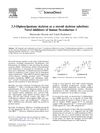
August 2007 in “Bioorganic & medicinal chemistry letters” This study developed a new competitive 5alpha-reductase inhibitor with an IC(50) of 0.84 microM using a novel chemical structure.