 2 citations
,
December 2021 in “Asian Journal of Beauty and Cosmetology”
2 citations
,
December 2021 in “Asian Journal of Beauty and Cosmetology” This study reported that a specific mixing ratio of Dendropanax extract and sea salt showed low cytotoxicity, high cell proliferation, anti-inflammatory, and antimicrobial effects, suggesting potential for functional cosmetics against hair loss.
1 citations
,
January 2012 in “Ancient Science of Life” This study found that the ethanol extract of Eclipta alba significantly reduced gastric lesions and enhanced gastroprotective activity in ulcer-induced rats, suggesting potent antisecretory effects potentially linked to antioxidant properties.
March 2021 in “Arrow - TU Dublin (Technological University Dublin)” This study tested a folate-conjugate drug delivery system and found its cytotoxicity depends on whether the treated cells overexpress folate receptors, suggesting potential for targeted chemotherapy.
May 2026 in “Scientific Reports” This study explored the phytochemical profile of Delphinium brunonianum, reporting that its extracts and synthesized nanoparticles demonstrated significant radical scavenging, enzyme inhibition, and antimicrobial activities, suggesting future potential in medical applications.
 March 2024 in “Journal of Pharmaceutical and Sciences”
 This study investigated the phytochemical composition and antibacterial and antioxidant activities of Zaleya pentandra extracts, finding high total polyphenol and flavonoid content and significant antibacterial effects, particularly in acetone extract, which may be suitable for developing antibacterial agents.
 5 citations
,
January 2010 in “Medicinal Plants - International Journal of Phytomedicines and Related Industries”
5 citations
,
January 2010 in “Medicinal Plants - International Journal of Phytomedicines and Related Industries” This review discusses the diverse pharmacological activities of T. procumbens, such as hypotensive and hair growth-promoting effects, but reports no new clinical findings.
June 2023 in “International Ayurvedic Medical Journal” This review article compiles extensive information on Tridax procumbens, an Ayurvedic herb, detailing its traditional uses, chemical makeup, and various pharmacological properties, including its roles in wound healing and as an antimicrobial agent.
October 2024 in “JURNAL ILMU KEFARMASIAN INDONESIA” This study found that the F6 formulation of a hair tonic containing EDS and ATG extracts produced the most significant hair growth in rabbits, without causing skin irritation and remaining stable throughout the observation period.
 June 2026 in “Zenodo (CERN European Organization for Nuclear Research)”
 In this study, researchers developed and evaluated an herbal hair dye using extracts from plants like henna and amla, which possess antibacterial and antioxidant properties, and found favorable results through various tests such as organoleptic and physico-chemical evaluations.
 November 2023 in “TẠP CHÍ KHOA HỌC TRƯỜNG ĐẠI HỌC QUỐC TẾ HỒNG BÀNG”
 This study isolated and identified three natural compounds—syringaresinol, mayuenolid, and ciwujiaton—from Leersia hexandra, a traditional liver treatment used in Huyện Tam Nông, Đồng Tháp, using advanced chromatography and spectroscopy techniques.
188 citations
,
December 2020 in “Foods” This review explores the potential health benefits of food bioactive compounds, specifically polyphenols, as preventive agents against non-communicable diseases like cancer and cardiovascular disorders, while also addressing challenges like bioavailability and industrial applications.
 March 2018 in “Farmacevtičnij časopis”
 In this study, researchers developed an optimized production process for the herbal tincture "Stimufit," intended for topical use in treating telogen alopecia, using 40% ethanol and a specific extraction method.
This study identified pectin in early immature durian fruits and found that pectin-oligosaccharides derived from them show stronger antioxidant and antiglycation activities, with potential applications in cosmetic products.
2 citations
,
October 2024 in “Pharmaceutics” This study found that reducing the particle size of Tetrastigma hemsleyanum powders improved both dissolution rates and antioxidant activity, suggesting potential benefits for enhancing hepatoprotective effects.
December 2025 in “Brazilian Journal of Chemical Engineering”  November 2016 in “Universiti Putra Malaysia Institutional Repository (Universiti Putra Malaysia)”
 This study found that Dendrobium sabin flower extracts, especially the methanolic one, demonstrated strong antioxidant and anti-aging properties without significant toxicity, suggesting its potential in treating photo-induced skin aging.
March 2013 in “International Journal of Nuclear Energy Science and Engineering” This review covers the use of phytogenic compounds like essential oils and melatonin in dog nutrition and topical applications and reports no new experimental findings; the authors highlight their potential to address issues such as pet stress, sleep disorders, and alopecia.
 December 2024 in “European Journal of Medicinal Plants”
 This study developed a polyherbal powder shampoo utilizing natural ingredients, with formulation F6 demonstrating optimal cleaning action and foaming index, along with satisfactory physicochemical properties, making it the preferred formula among the tested variations.
 2 citations
,
October 2004 in “Organic Process Research & Development”
2 citations
,
October 2004 in “Organic Process Research & Development” This review discusses U.S. patents in organic process development published in July and August 2004 and reports no new experimental results.
54 citations
,
January 2018 in “Journal of Plant Studies” This research review examined existing studies on the medicinal properties of Tridax procumbens and found that its secondary metabolites have potential for treating various ailments, especially in tropical regions, though more studies are needed to fully understand its potential applications and safety.
 3 citations
,
June 2021 in “Cosmetics”
3 citations
,
June 2021 in “Cosmetics” This study found that sulforaphane may help alleviate hair loss by increasing hair count after 18 weeks of use and enhancing the expression of a DHT-degrading enzyme in cellular models.
 21 citations
,
January 2023 in “Biomaterials Science”
21 citations
,
January 2023 in “Biomaterials Science” This study investigated the use of dissolving microneedle patches to improve the skin-lightening effects of alpha-arbutin and resveratrol, finding that the patches enhanced intradermal delivery and slightly decreased the melanin index without affecting skin hydration or causing irritation over 24 hours.
11 citations
,
January 2025 in “Marine Drugs” This review highlights the need for standardized reporting on fucoidan extract properties to better understand the relationships between chemical structures and bioactivities, and to improve the quality and utility of fucoidan-related data.
January 2023 in “Indian Journal of Forensic and Community Medicine” This report describes two cases of thallium poisoning with gastrointestinal symptoms, peripheral neuropathy, and alopecia, which were effectively treated using activated charcoal, potassium chloride, and hemodialysis.
 8 citations
,
July 1990 in “Archives of Dermatology”
8 citations
,
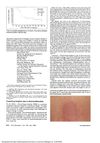
July 1990 in “Archives of Dermatology” This case report details a fixed-drug eruption in a woman linked to the use of dextromethorphan, marking it as a previously unreported skin reaction to this medication.
52 citations
,
December 2020 in “Frontiers in Oncology” This review suggests that Chinese herbal medicine may help reduce side effects of chemotherapy in breast cancer patients, but a lack of high-quality trials limits confidence in this finding.
20 citations
,
February 2021 in “Frontiers in Pharmacology” This study identified key natural medicinal materials used in traditional Chinese medicine across Taiwan for inducing lactation, highlighting Angelica sinensis as a primary core component in galactogenous prescriptions.
17 citations
,
January 2023 in “Frontiers in Pharmacology” This study found that 10,11-dibrominecrebanine (2Br-Cre) and Stephanine demonstrate significant anti-inflammatory and analgesic properties in various experimental models, with 2Br-Cre showing enhanced efficacy over Cre and both compounds potentially mediating their analgesic effects through opioid receptors.
7 citations
,
January 2021 in “Food & Function” In this animal study, Castanea sativa Mill. flower extract did not significantly affect prostate tumorigenesis but demonstrated antioxidant and anti-inflammatory effects on the prostate and liver.
7 citations
,
March 2013 in “Annals of Hematology” Ganoderma lucidum can cause severe skin reactions and hair loss.