 60 citations
,
July 2011 in “Stem Cells and Development”
60 citations
,
July 2011 in “Stem Cells and Development” This review discusses recent findings on hair follicle morphogenesis and regeneration, focusing on molecular signals and stem cells, and suggests that understanding these processes may aid in developing new strategies for wound healing.
24 citations
,
November 2015 in “Frontiers in Genetics” This review discusses the development and potential therapeutic effects of nitroxide small molecule agents for age-related macular degeneration and cardiovascular disease, but reports no new clinical results.
 7 citations
,
August 2017 in “PloS one”
7 citations
,
August 2017 in “PloS one” This study found that NIH hairless mice exhibit abnormalities in hair growth and immune-related pathways, with Pik3r1 and Pik3r3 identified as key genes for further investigation.
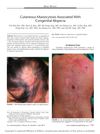 3 citations
,
February 2012 in “The American Journal of Dermatopathology”
3 citations
,
February 2012 in “The American Journal of Dermatopathology” This report documents the first known case of cutaneous mastocytosis associated with congenital alopecia areata in a young Korean girl, confirmed through histopathological examination.
 May 2026 in “Scientific Reports”
 In this study, researchers overexpressed Lrig3 in mouse skin and observed hair loss linked to changes in skin protein profiles and signaling pathways, suggesting a potential role for Lrig3 in maintaining skin homeostasis.
 April 2023 in “Journal of Investigative Dermatology”
 This study found that LSD1 is crucial for embryonic skin barrier formation in mice, revealing its significant role in epidermal development and suggesting its potential as a target in skin diseases with barrier defects.
June 2019 in “International journal of dermatology and venereology” This review discusses the hedgehog signaling pathway's role in cutaneous tumors and hematological disorders, highlighting its potential as a therapeutic target, but reports no new clinical findings.
 December 2017 in “British Journal of Dermatology”
 Targeted therapy for skin cancer is complex due to the role of the hedgehog pathway in both cancer and hair growth.
22 citations
,
April 2017 in “Journal of Investigative Dermatology” This review highlights recent advances in understanding how non-coding RNAs, particularly miRNAs and lncRNAs, regulate skin development and homeostasis, but reports no new clinical results.
11 citations
,
March 2021 in “Molecular Carcinogenesis” This study found that deleting the transcription factor Twist1 in keratinocytes significantly reduced UVB-induced skin carcinogenesis in mice, suggesting a potential target for preventing cutaneous squamous cell carcinoma.
30 citations
,
March 2007 in “Expert opinion on drug safety” This review discusses recommendations for managing cetuximab-induced rash in metastatic colorectal cancer treatment and highlights the lack of standardized treatment plans based on clinical evidence.
 4 citations
,
February 2021 in “Nano select”
4 citations
,
February 2021 in “Nano select” This review discusses the role and therapeutic potential of mesenchymal cell-derived exosomes in organ development and disease treatment, highlighting their application in cell-free therapeutic strategies and current challenges faced in their use.
 April 2016 in “Journal of Investigative Dermatology”
 This study found that increasing En1 expression in mouse epidermis can convert cutaneous appendages to eccrine sweat glands, suggesting a role for En1 in eccrine gland development.
 11 citations
,
August 2014 in “PLoS ONE”
11 citations
,
August 2014 in “PLoS ONE” This study found that GFRα2 influences cell size but not survival or target innervation of Ret-positive low-threshold mechanoreceptors in mouse dorsal root ganglia, differing from its role in nonpeptidergic nociceptors.
 39 citations
,
January 2019 in “Journal of Dermatological Treatment”
39 citations
,
January 2019 in “Journal of Dermatological Treatment” This review found topical ketoconazole to be highly effective against Malassezia-related skin conditions, though other treatments may outperform it for Tinea and Candida infections.
 24 citations
,
January 2019 in “Theranostics”
24 citations
,
January 2019 in “Theranostics” This study found that loss of the Pten gene in Lgr5+ hair follicle stem cells promoted squamous cell carcinoma formation through the Akt/β-catenin signaling pathway.
44 citations
,
March 2012 in “Molecular Carcinogenesis” This study found that keratin 15 expressing cells from the hair follicle contribute to the development and long-term persistence of cutaneous papillomas in transgenic mice, with a subset showing the Ha-ras mutation.
 42 citations
,
May 2016 in “Annual Review of Cell and Developmental Biology”
42 citations
,
May 2016 in “Annual Review of Cell and Developmental Biology” This review explores the novel roles of white adipose tissue in tissue homeostasis and regeneration, emphasizing its impact on epithelial, muscle, and immune tissues, and reports no new clinical results.
1 citations
,
January 1963 in “The Anatomical Record” In this study, the glyceride content in whole mouse skin was nearly twice as high during anagen compared to telogen, suggesting potential energy utilization for hair proliferation or unrelated accumulation.
 January 2023 in “Indian dermatology online journal”
 This case report describes a novel NECTIN4 gene mutation linked to ED-syndactyly syndrome 1 in a young girl, contributing to the understanding of this rare ectodermal dysplasia.
January 2005 in “Enlighten: Publications (The University of Glasgow)” In this transgenic mouse study, preliminary findings suggest that overt melanocyte hyperplasia may require prior keratinocyte hyperplasia, indicating a potential role for keratinocyte mutation in early melanoma development.
 60 citations
,
May 2015 in “Archives of dermatological research”
60 citations
,
May 2015 in “Archives of dermatological research” This review discusses the role of peroxisome proliferator-activated receptors and their agonists in dermatology but reports no new clinical results.
 39 citations
,
January 2013 in “Journal of Investigative Dermatology”
39 citations
,
January 2013 in “Journal of Investigative Dermatology” This review explains how recent understanding of Wnt signaling regulation in hair follicles could potentially be used to enhance hair growth, but it reports no new empirical results.
 18 citations
,
October 2014 in “Experimental Dermatology”
18 citations
,
October 2014 in “Experimental Dermatology” Local skin glucocorticoid production is crucial for healthy skin, and its disruption can lead to skin diseases.
 10 citations
,
November 2010 in “Pigment Cell & Melanoma Research”
10 citations
,
November 2010 in “Pigment Cell & Melanoma Research” This study found that epidermal melanocytes can regenerate hair follicles, whereas non-cutaneous or dermal melanocytes cannot, suggesting two distinct melanocyte lineages with potential implications for melanocyte-related diseases.
 March 2025 in “International Journal of Molecular Sciences”
 This study established a Krt24-CreERT2 mouse line targeting outer bulge hair follicle stem cells, finding these cells crucial for hair follicle development and repair, particularly following ionizing radiation exposure.
 2 citations
,
January 2006 in “Technical report”
2 citations
,
January 2006 in “Technical report” This chapter reviews the development of skin-specific outcome instruments for autoimmune diseases like cutaneous lupus erythematosus and dermatomyositis, highlighting a need for a broader community-involved process across other diseases but reports no new results.
July 2026 in “Frontiers in Bioengineering and Biotechnology” This review highlights the development and assessment of human-relevant models for cutaneous wound healing, emphasizing that a combination of systems, such as organoid platforms and skin-on-a-chip systems, is necessary to overcome limitations of traditional methodologies and address chronic wound challenges.
 October 2023 in “Research Review”
 This source describes the development, structure, and types of skin appendage tumors, noting both benign and malignant forms, potential associations with syndromes, and categories based on follicular differentiation.
 10 citations
,
August 1991 in “PubMed”
10 citations
,
August 1991 in “PubMed” This study supports the idea that inflammation may play a role in the development of androgenetic alopecia, as indicated by certain immune deposits and porphyrins found more frequently in bald scalp biopsies compared to controls.