124 citations
,
December 1988 in “Differentiation” This study found that T cytokeratins appear more gradually and with complex coexpression patterns in developing nail structures compared to the more abrupt transition in hair follicles.
28 citations
,
February 2007 in “Cancer Research” This study found that inhibiting C/EBP transcription factors in mouse skin reduced papilloma formation and caused systemic hair loss, suggesting C/EBP may be a potential therapeutic target.
6 citations
,
July 1994 in “Journal of Dermatological Science” This study found that introducing the recombinant rat OTC gene into SPF-ASH mice restored normal hair growth and metabolic function, improving symptoms associated with OTC deficiency.
 2 citations
,
February 2019 in “Anais brasileiros de dermatologia/Anais Brasileiros de Dermatologia”
2 citations
,
February 2019 in “Anais brasileiros de dermatologia/Anais Brasileiros de Dermatologia” Tufted folliculitis is common in patients with folliculitis decalvans.
 January 2026 in “Indian Journal of Dermatopathology and Diagnostic Dermatology”
 This report highlights a case where dermoscopic observation of corkscrew hairs in a young woman led to the diagnosis of trichotillomania, emphasizing its role in distinguishing this psychiatric disorder from other forms of non-scarring alopecia and highlighting the importance of timely intervention.
June 2026 in “Khyber Journal Of Medical Sciences” This study found that among adults with severe alopecia areata, alopecia totalis, or alopecia universalis, oral tofacitinib was more effective than methotrexate in reducing hair loss over a 12-week period, though long-term safety and efficacy remain unestablished.
1 citations
,
June 2018 in “Dermatologic Surgery” This overview details the Dermatologic Surgery journal's extensive coverage of dermatologic surgery topics, including cosmetic and reconstructive procedures, but it reports no new research findings.
 1 citations
,
September 2024 in “Indian Journal of Postgraduate Dermatology”
1 citations
,
September 2024 in “Indian Journal of Postgraduate Dermatology” In this report, trichoscopy was highlighted as a valuable tool for diagnosing temporal triangular alopecia in children due to its ability to reveal distinctive patterns that differentiate it from similar conditions like alopecia areata, eliminating the need for invasive biopsy.
 January 2025 in “Journal of Crohn s and Colitis”
 In this study, tofacitinib showed promising efficacy and safety for biologic-naïve elderly patients with moderate-to-severe ulcerative colitis, achieving steroid-free remission and clinical response over 52 weeks.
1 citations
,
April 2025 in “Animals” In this study, nucleotide sequence variation in the KRTAP13-3 gene was associated with changes in heterotypic hair fibre diameter variation in Chinese Tan sheep.
24 citations
,
October 2019 in “Genes” In this study, the identification of a novel KAP gene in sheep, named KRTAP36-1, was associated with increased prickle factor in wool, suggesting its potential as a genetic marker for breeding purposes.
 22 citations
,
January 1968 in “THE JOURNAL OF VITAMINOLOGY”
22 citations
,
January 1968 in “THE JOURNAL OF VITAMINOLOGY” This study found that α-tocopheryl acetate is well absorbed through healthy skin, with absorption occurring through specific pathways and showing high affinity for small blood vessels.
 April 2023 in “The journal of investigative dermatology/Journal of investigative dermatology”
 This study suggests that tissue transglutaminase (TG2) may play a role in sebum production by regulating autophagy in sebaceous glands, offering potential targets for dermatological interventions.
 6 citations
,
December 1997 in “Journal of The American Academy of Dermatology”
6 citations
,
December 1997 in “Journal of The American Academy of Dermatology” CTE can distort results in hair growth trials, so exclude it carefully.
30 citations
,
June 2000 in “Journal of dermatological science” In this study, researchers found that keratinocytes are unlikely to be target cells for androgen, as shown by limited androgen receptor transcriptional activity in keratinocyte cells.
 January 2025 in “Cell Communication and Signaling”
 This study reviews the role of the zinc finger protein CXXC5 in cellular signaling and its implications for cancer, discussing how its dysregulation is linked to various physiological and pathological processes, as well as potential therapies targeting CXXC5.
December 2024 in “Veterinary Dermatology” This case report identified cutaneous epitheliotropic T-cell lymphoma in a 3-year-old male sugar glider after skin biopsies, highlighting the need for thorough diagnostic evaluations in exotic pets.
 August 2019 in “Journal of Invertebrate Pathology”
 This study observed that different alkaline buffers had a significant impact on the volume of liquid consumed by fall armyworm larvae, emphasizing the importance of measuring imbibed volumes to reduce dose errors in bioassays.
 9 citations
,
February 2011 in “Biologics: Targets & Therapy”
9 citations
,
February 2011 in “Biologics: Targets & Therapy” This review discusses topical calcineurin inhibitors for cutaneous lupus erythematosus and reports no new clinical findings; the authors emphasize the need for more comparative studies with corticosteroids.
 34 citations
,
December 1995 in “Pediatric Dermatology”
34 citations
,
December 1995 in “Pediatric Dermatology” In this study, researchers reported a 0.11% occurrence of congenital triangular alopecia, recommending surgical treatment for women but not for men due to later potential development of androgenic alopecia.
15 citations
,
April 2011 in “Biological Chemistry” This study found that Cathepsin E plays a crucial role in keratinocyte terminal differentiation, affecting epidermis formation and homeostasis in mice.
December 2024 in “Dermatology” 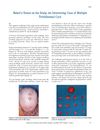 5 citations
,
January 2014 in “Journal of Cutaneous and Aesthetic Surgery”
5 citations
,
January 2014 in “Journal of Cutaneous and Aesthetic Surgery” A woman had 13 non-cancerous cysts on her scalp successfully removed in one surgery.

The document cannot be summarized as it is not provided or is unclear.
 September 2024 in “Journal of the American Academy of Dermatology”
 In this retrospective analysis, baricitinib 4 mg was found to improve hair regrowth and was deemed effective and safe for treating severe alopecia areata in a real-world setting.
 1 citations
,
August 2021 in “Journal of The American Academy of Dermatology”
1 citations
,
August 2021 in “Journal of The American Academy of Dermatology” This study evaluates the effectiveness and safety of 2-mg and 4-mg doses of baricitinib in patients with alopecia areata who have lost at least 50% of their scalp hair, comparing outcomes between those with early and late onset of the disease.
January 2025 in “Dermatologic Therapy” This study found that baricitinib significantly reduced alopecia severity in JAK inhibitor-naïve patients compared to those previously treated with tofacitinib, indicating that switching JAK inhibitors can be safe and may be beneficial for selected patients with partial prior responses.
 April 2026 in “Communications Biology”
 In this study of Danioninae species, researchers reported that the presence of breeding tubercles on the pectoral fins is conserved in certain species and linked to local androgen conversion, with steroid 5-α-reductase playing a crucial role in their development.
 56 citations
,
March 2010 in “Journal of Dermatology”
56 citations
,
March 2010 in “Journal of Dermatology” This review provides a synopsis of 53 cases of temporal triangular alopecia, noting its frequent detection in early childhood and potential association with congenital diseases, but it reports no new clinical findings.
 April 2019 in “The journal of investigative dermatology/Journal of investigative dermatology”
 In this study, the researchers observed significant metabolic dysregulation in central centrifugal cicatricial alopecia, particularly involving lipid metabolism and the downregulation of AMPK-related genes.