 1 citations
,
July 2023 in “Journal of visualized experiments”
1 citations
,
July 2023 in “Journal of visualized experiments” This study presents an improved protocol for isolating and culturing whole neonatal cochlear explants, enabling detailed analysis of hair cells and spiral ganglion neuron cells while simplifying culture steps without sacrificing explant quality, and was successfully tested on mice and rat cochleas.
 1 citations
,
February 2023 in “International Journal of Molecular Sciences”
1 citations
,
February 2023 in “International Journal of Molecular Sciences” This review discusses various therapeutic roles of melatonin, particularly its antioxidant and sleep-regulating properties, for skin and scalp conditions, and reports no new clinical results.
 1 citations
,
October 2022 in “Current Dermatology Reports”
1 citations
,
October 2022 in “Current Dermatology Reports” This review discusses various skin reactions after SARS-CoV-2 infection and COVID-19 vaccination, noting a higher incidence with mRNA vaccines than adenovirus vector vaccines, and reports no new clinical results.
1 citations
,
April 2022 in “Frontiers in Bioengineering and Biotechnology” This study found that mouse astrocytes formed cell spheres on agarose surfaces, acquired stem cell-like features, and their derived stem cells effectively differentiated into neurons that helped regenerate damaged nerves.
1 citations
,
August 2025 in “Medicina” This review discusses the evolution and potential of non-invasive imaging techniques for diagnosing scalp diseases, highlighting their advantages and limitations compared to trichoscopy and scalp biopsy, the current diagnostic standards.
1 citations
,
August 2025 in “Molecules” This review synthesizes research on hederagenin's anticancer and anti-inflammatory potential, emphasizing chemical modifications to enhance its bioactivity, but reports no new experimental findings.
1 citations
,
July 2024 in “International Journal of Molecular Sciences” In this review, researchers introduced clinically tunable siRNA delivery systems for hair loss treatment, discussing design principles and analyzing relevant clinical trials to propose a framework for optimizing siRNA delivery in a clinical context.
 1 citations
,
July 2023 in “Journal of Clinical Medicine”
1 citations
,
July 2023 in “Journal of Clinical Medicine” This review provides a detailed overview of the causes, prevalence, pathophysiology, clinical presentation, and treatment of beard alopecia, highlighting conditions such as alopecia areata, pseudofolliculitis barbae, and tinea barbae, and aims to serve as a resource for clinicians handling such cases.
 1 citations
,
July 2023 in “Foods”
1 citations
,
July 2023 in “Foods” This review explores the diverse biotechnological uses of mushrooms, emphasizing their potential to enhance food, energy, and water security, and their alignment with the UN's sustainable development goals.
 June 2026 in “IP Indian Journal of Clinical and Experimental Dermatology”
 This bibliometric analysis of the IP Indian Journal of Clinical and Experimental Dermatology reveals a steady annual publication growth rate of 5.49% from 2019 to 2025, moderate citation impact, and limited international collaboration.
June 2026 in “Value in Health” The measures for eyebrow and eyelash hair loss in severe Alopecia Areata are reliable and useful for clinical trials.
 April 2026 in “Metabolites”
 This narrative review explores the strong association between various chronic inflammatory skin diseases and metabolic syndrome, emphasizing shared inflammatory pathways and chemokine involvement, though the precise molecular connections remain partially understood.
This study found that late embryonic skin injuries can regenerate multiple tissue types, but this ability is hindered postnatally due to fibroblast-driven hyperinnervation, which can be mitigated to enable regeneration.
January 2026 in “PubMed Central” This article reviews self-assembled nanoparticles, highlighting their promising role in drug delivery systems but noting the need for further research on stability and large-scale industrial application; it reports no new clinical findings.
January 2026 in “Medicina” This review found that oral JAK inhibitors, used off-label in various inflammatory skin disorders, often resulted in rapid and sustained clinical improvements with acceptable safety over several months, although the evidence is drawn from case-based reports.
November 2025 in “Advanced Healthcare Materials” This review explores advancements in bioprinting technologies for developing in vitro skin models that replicate immune-mediated skin diseases, highlighting their potential to reduce animal testing and enhance research and product testing capabilities in dermatology.

This study found that arginine deficiency in androgenetic alopecia patients is linked to increased oxidative stress and impaired hair follicle regeneration, with targeted arginine supplementation showing promise as a therapeutic strategy.
July 2025 in “Materials Today Bio” This study suggests that curcumin-loaded nanoparticles, which activate autophagy and reduce oxidative stress, showed promise in promoting hair growth in an androgenetic alopecia mouse model.
 January 2025 in “International Journal of Molecular Sciences”
 This narrative review explored the complex interconnections between psoriasis and other dermatological conditions like vitiligo, alopecia areata, and atopic dermatitis, highlighting shared immune dysfunctions that complicate diagnosis and treatment, with implications for research and holistic patient care.
In this study, researchers developed a method for high-resolution live imaging of leg regeneration in the crustacean Parhyale hawaiensis, which effectively captures the entire process at cellular resolution over 10 days while minimizing photodamage.
 August 2024 in “Frontiers in Pharmacology”
 This report observed that discontinuation of cyclosporine led to complete hair regrowth in a child with alopecia, suggesting a potential link between cyclosporine and hair loss.
 August 2024 in “Indian Journal of Skin Allergy”
 This review outlines the current state of stem cell therapy in dermatology, highlighting its potential for treating a variety of skin disorders and conditions, while emphasizing the need for further controlled studies to standardize treatment and fully understand its efficacy and limitations.
June 2024 in “The Journal of Nutritional Biochemistry” This study found that 1,25-dihydroxyvitamin D3 promotes hair growth and regeneration in mice by prolonging the anagen phase and counteracting DHT's inhibitory effects, suggesting its potential therapeutic role for androgenetic alopecia.
February 2024 in “Cancers” This review highlights recent progress in developing androgen receptor degraders, such as PROTACs, for treating castration-resistant prostate cancer, and notes that several have entered phase I or II clinical trials, showcasing potential to address drug resistance challenges.
 December 2023 in “The journal of cell biology/The Journal of cell biology”
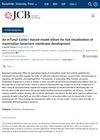
 This study developed the mTurquoise2-Col4a1 mouse model and used fluorescent tagging of collagen IV to offer new insights into basement membrane dynamics during hair follicle budding, revealing that basement membranes are flexible and stable structures in developing skin tissue.
 August 2026 in “Lasers in Medical Science”
 This review suggests that hyperspectral and terahertz imaging show promise in non-invasively assessing scalp changes associated with hair loss, but further validation is needed for clinical application.
 March 2026 in “International Journal of Innovative Technologies in Social Science”
 This review summarizes current clinical evidence on platelet-rich plasma, highlighting its effectiveness in treating androgenetic alopecia and as an adjunctive therapy for acne scars, while noting challenges in standardizing preparation techniques.
March 2026 in “Journal of Investigative Dermatology” January 2026 in “Archives of Dermatological Research” October 2025 in “Skin Health and Disease” This review found preliminary evidence suggesting that photothermal conditioning enhances the bioactivity of platelet-rich plasma, potentially improving hair regeneration outcomes, but highlights the need for standardized protocols and further studies to confirm its efficacy and safety.