 9 citations
,
April 2020 in “Journal of dermatology”
9 citations
,
April 2020 in “Journal of dermatology” This case report describes a Thai male with TRPS1 who exhibited unique and unreported features such as hypoplastic mandibular condyles, double mental foramina, and distinctive hair abnormalities.
 15 citations
,
August 2015 in “Scanning”
15 citations
,
August 2015 in “Scanning” This study suggests that corkscrew hairs in tinea capitis result from internal hair damage by Trichophyton violaceum and external resistance from scalp scales.
April 2021 in “The journal of investigative dermatology/Journal of investigative dermatology” This study found that CTCF is crucial for proper skin and hair follicle development in mice, affecting keratinocyte differentiation and gene expression in keratin loci.
 4 citations
,
February 2019 in “PubMed”
4 citations
,
February 2019 in “PubMed” This study found that cortexolone 17α-propionate (clascoterone) effectively inhibited androgen receptor-regulated transcription and IL-6 synthesis in scalp cells, potentially making it a promising candidate for topical treatment of androgenetic alopecia.
32 citations
,
July 2018 in “FEBS letters” In this study, researchers identified the CBL1-CIPK26 Ca 2+ sensor-kinase complexes as key modulators of the NADPH oxidase RBOHC crucial for root hair differentiation in plants.
 February 2023 in “Laboratory Animal Research”
 This study found that Cudrania tricuspidata and Sargassum fusiforme extracts significantly increased hair growth and related gene activity in C57BL/6 mice, suggesting potential use in alopecia treatment.
2 citations
,
January 2023 in “Brazilian Journal of Development” This report describes a Sapajus nigritus investigated for multiparasitism after rescue from illegal home possession, highlighting public health and biodiversity conservation concerns related to human-primate proximity.
31 citations
,
March 1963 in “American journal of diseases of children” This report details a case of acrodermatitis enteropathica in a 4-month-old infant, noting the disorder's rarity and familial transmission, and includes a literature review with no new clinical results.
6 citations
,
June 2012 in “PloS one” This study identified a novel SCF mRNA splice variant in white merino sheep skin, which may play a role in hair follicle melanogenesis.
13 citations
,
July 1973 in “Archives of dermatology” This letter to the editor raises concerns about the possibility of cornrowing leading to dermatologic problems such as traction alopecia, paralleling issues seen with other cosmetic fads.
September 2007 in “The American Journal of Gastroenterology” This case report describes a 37-year-old Filipino man with Cronkhite-Canada syndrome who improved after receiving nutritional support and medical treatment, despite the typically poor prognosis of the condition.
1 citations
,
November 2023 in “Pathogens” This study detected sarcoptic mange in five free-ranging raccoon dogs in Schleswig-Holstein, Germany, with four showing severe skin lesions and potential secondary bacterial infections, suggesting they may act as vectors in disease spread.
 August 2025 in “Fabad Journal of Pharmaceutical Sciences”
 This review highlights the potential medicinal benefits of Cuscuta reflexa, a parasitic plant known for its bioactive compounds, while emphasizing the need for further research to fully understand its therapeutic mechanisms and integrate its use into mainstream medicine.
2 citations
,
July 2024 in “International Journal of Molecular Sciences” In this study, researchers found that knocking down the transcription factor Csdc2 inhibited the proliferation of dermal papilla cells in cashmere goats, and identified its regulatory relationship with the gene Robo2, providing insights into the genetic mechanisms influencing cashmere fiber growth.
August 2024 in “Indian Dermatology Online Journal” In this retrospective study, researchers described the dermoscopic features of dermatitis cruris pustulosa et atrophicans in 30 patients, finding that follicular-based pustules and other specific features were predominant, with male patients being more affected and primarily involving the lower extremities.
 July 2022 in “The journal of investigative dermatology/Journal of investigative dermatology”
 In this study, the researchers reported that Krox20 plays a crucial role in epidermal homeostasis and hair development, influencing stem cell maintenance and cell survival through the modulation of cellular pathways.
2 citations
,
January 2014 in “Case Reports in Clinical Medicine” This case study presents an 81-year-old woman diagnosed with Cronkhite-Canada syndrome and discusses the importance of recognizing its clinical and histopathological features for timely and accurate diagnosis.
 46 citations
,
July 2008 in “Dermatologic Therapy”
46 citations
,
July 2008 in “Dermatologic Therapy” This study developed and evaluated a photographic scale to assess CCCA pattern and severity in African American women, finding it reproducible when used by investigators and participants.
17 citations
,
November 1967 in “American Journal of Anatomy” This study observed that the catagen phase in hairless mice displayed a slower shortening of the mutant epithelial column, resulting in longer total follicle length and abnormalities in the connective tissue sheath and glassy membrane.
137 citations
,
January 2006 in “Frontiers in bioscience” This review discusses the role of corticotropin-releasing hormone in human skin, focusing on its regulation, receptors, and functions, and highlights parallels with the hypothalamo-pituitary-adrenal axis; it reports no new research findings.
 4 citations
,
December 2017 in “International journal of research in ayurveda and pharmacy”
4 citations
,
December 2017 in “International journal of research in ayurveda and pharmacy” This review discusses the traditional and pharmacological uses of Cuscuta reflexa, but it reports no new clinical results, calling attention to its potential antihypertensive, antidiabetic, and antioxidant properties.
 3 citations
,
August 2019 in “Journal of The American Academy of Dermatology”
3 citations
,
August 2019 in “Journal of The American Academy of Dermatology” Clascoterone safely promotes hair growth similar to minoxidil.
4 citations
,
January 2021 in “Current Research in Physiology” This study found that high levels of μ-crystallin in skeletal muscle are associated with greater fat metabolism and a shift in gene expression towards slower muscle function.
 4 citations
,
August 2023 in “Nature Communications”
4 citations
,
August 2023 in “Nature Communications” In this study, researchers observed that the combination of hair progenitors and their micro-niche changes every three days in mouse zigzag hair, and disruptions in specific genes affected this rhythm, highlighting the importance of this periodic change for normal hair morphology.
11 citations
,
May 1985 in “Archives of Dermatology” This study found that calcitriol-resistant rickets is associated with alopecia in children and should be considered in the differential diagnosis of hair loss.
28 citations
,
February 2010 in “Experimental Dermatology” This study concluded that the frizzy mutation in mice is linked to a T to A transversion in Prss8 and is orthologous to the 'hairless' mutation in rats.
1 citations
,
December 2014 in “Journal of the Society of Cosmetic Scientists of Korea” This study found that corticotropin-releasing factor influences cytokine expression related to hair growth in human dermal papilla cells and suggests CRF receptor antagonists could be potential treatments for stress-induced hair loss.
22 citations
,
July 1998 in “Journal of Investigative Dermatology” This study identified and characterized a gene called 4C32, which is expressed in the periderm of embryonic mouse skin and has a structure similar to keratin-associated proteins.
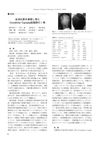 January 2014 in “Progress of Digestive Endoscopy”
 This case report describes a 60-year-old woman with Cronkhite-Canada syndrome whose symptoms and polyposis improved following prednisolone therapy, but emphasizes the need for periodic digestive tract screening due to associated cancer risks.
April 2021 in “Cermin Dunia Kedokteran” This study reports improvement in tinea capitis symptoms in two siblings after two months of treatment with ketoconazole lotion and shampoo, following initial findings of M. canis and Rhodotorulla infections.