 May 2022 in “International Journal of Clinical Trials”
 This study concluded that platelet rich fibrin (PRF) may enhance healing and functional recovery compared to platelet rich plasma (PRP) during immediate post-extractive dental implant procedures.

This research developed a zinc-doped nanocomposite using biodegradable materials, observing effective bone targeting and regeneration capabilities in vivo, with no observed cytotoxicity in the MG63 cell line, potentially due to blocking Farnesyl Diphosphate Synthetase to inhibit osteoclastic activity and promote osteogenesis.
 July 2016 in “American Journal of Dermatopathology”
 The meeting showcased rare skin disease cases, highlighting the need for accurate diagnosis and treatment.
 403 citations
,
November 2005 in “Journal of Endocrinology”
403 citations
,
November 2005 in “Journal of Endocrinology” This review discusses the role of DHEA in intracrinology, highlighting its impact on breast and prostate cancer treatment and potential as a menopause therapy, but reports no new research findings.
 58 citations
,
December 2018 in “Nature Communications”
58 citations
,
December 2018 in “Nature Communications” This study found that male pattern baldness in European males is strongly heritable and associated with genetic markers linked to earlier puberty, bone density, and pancreatic function.
 January 2015 in “Endocrine updates”
 This chapter reviews the perioperative management and evaluation processes for bariatric surgery, emphasizing candidate selection, surgical risk reduction, and optimizing outcomes, and reports no new clinical results.
 14 citations
,
January 2008 in “Gene therapy”
14 citations
,
January 2008 in “Gene therapy” Gene therapy shows promise for enhancing physical traits but faces ethical, safety, and regulatory challenges.
 May 2022 in “Acta scientific dental sciences”
 This article discusses the use of platelet concentrates in regenerative surgeries for periodontal and bone defects but presents no new clinical results, emphasizing their potential benefits over traditional methods.
16 citations
,
January 2023 in “Regenerative Biomaterials” This study examined 3D-printed scaffolds coated with polydopamine and observed that they significantly enhanced osteogenesis and angiogenesis in vitro and in a rat cranium defect model, suggesting their potential for repairing large bone defects.
 18 citations
,
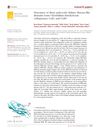
February 2015 in “Acta Crystallographica Section D: Structural Biology”
18 citations
,
February 2015 in “Acta Crystallographica Section D: Structural Biology” This study reports that Ca 2+ binding alters the dynamics and surface properties of PKD-like domains in Clostridium histolyticum collagenases, enhancing their stability and potentially aiding in collagen-targeting vehicle development.
 140 citations
,
August 2011 in “Biomaterials”
140 citations
,
August 2011 in “Biomaterials” This study observed that keratose, derived from human hair, integrated well in mouse tissue and remodeled with collagen, suggesting potential as a non-toxic biomaterial for regenerative applications.
 15 citations
,
January 2014 in “Medicinal chemistry”
15 citations
,
January 2014 in “Medicinal chemistry” This study conducted molecular docking and ADME property analysis on 144 newly designed isatin analogs, suggesting they exhibit lead-like properties for targeting EGFR enzymes.
 April 2024 in “Research Square (Research Square)”
 This study found that extracts of mesenchymal stem cells (MSC-extract) and their protein components (MSC-protein) enhanced the proliferation and migration of periodontal ligament cells and induced significant periodontal tissue regeneration, showing potential as a new cell-free treatment for periodontal disease.
5 citations
,
April 2025 in “Journal of Functional Biomaterials” In this study, the addition of A-PRF+ to surgical protocols significantly improved bone healing and implant stability when combined with biomaterials, suggesting it as a viable option for patients concerned about using human- and animal-derived biomaterials.
6 citations
,
June 2024 in “Gels” In this study, researchers used 3D printing combined with cryogenic crosslinking to develop gelatin/oxidized alginate scaffolds and found that adding 5% hydroxyapatite improved mechanical properties and osteogenic effects, enhancing bone tissue regeneration, though 10% hydroxyapatite offered no additional osteogenic benefits and reduced shape fidelity.
 December 2024 in “Advanced Composites and Hybrid Materials”
 This study provides a comprehensive review of the use of electrospinning technology to create 3D porous structures for bone implants, emphasizing the synergy between biomedicine and materials science necessary for developing orthopedic materials.
5 citations
,
October 2021 in “American Journal of Medical Genetics Part A” This case report identifies a novel maternally inherited MBTPS2 variant associated with an expanded phenotypic spectrum of BRESHECK syndrome, including cytopenias, bone marrow fibrosis, and chronic diarrhea.
29 citations
,
May 2025 in “Polymers” This study systematically examines how smart biomaterials used with DLP technology can enhance bioprinting in tissue engineering and regenerative medicine, while also identifying current challenges and future research needs.
 1 citations
,
September 2023 in “Stem cell research & therapy”
1 citations
,
September 2023 in “Stem cell research & therapy” This review discusses how mesenchymal stromal cell-based therapy holds promise for treating age-related diseases, given its potential to target aging's pathological features, although significant challenges remain for its clinical application.
August 2026 in “Journal of Functional Biomaterials” In this study, researchers developed a collagen and bacterial cellulose-based dressing loaded with bacitracin, which exhibited enhanced antibacterial activity, improved wound healing, and reduced inflammation in a murine infected-wound model, suggesting its potential for clinical use in treating infected wounds.
 7 citations
,
June 2016 in “Bone Research”
7 citations
,
June 2016 in “Bone Research” In this study, a Chinese Han family with hereditary vitamin D-resistant rickets was found to have a homozygous missense mutation in the VDR gene, and the affected individual uniquely responded well to treatment with oral calcium and low-dose calcitriol.
 441 citations
,
May 2008 in “British Journal of Pharmacology”
441 citations
,
May 2008 in “British Journal of Pharmacology” This article reviews the potential clinical use of anabolic steroids in treating muscle loss from chronic diseases and aging and highlights both the benefits and risks of these substances in sports.
 103 citations
,
March 2015 in “Nature Communications”
103 citations
,
March 2015 in “Nature Communications” This study identified a genetic locus associated with idiopathic scoliosis in females, which might influence spinal gene expression and was previously linked to protection from early-onset alopecia.
 59 citations
,
January 2010 in “Pharmacognosy Reviews/Bioinformatics Trends/Pharmacognosy review”
59 citations
,
January 2010 in “Pharmacognosy Reviews/Bioinformatics Trends/Pharmacognosy review” This article reviews the medicinal properties of Semecarpus anacardium and its biologically active compounds, but it reports no new clinical results.
 41 citations
,
October 2024 in “Nature Communications”
41 citations
,
October 2024 in “Nature Communications” In this study, researchers developed a wearable red and blue LED patch and a sprayable fibrin gel to treat infected wounds at home, demonstrating effective infection control and enhanced wound healing in diabetic mice and minipigs.
 23 citations
,
January 2015 in “Stem cells international”
23 citations
,
January 2015 in “Stem cells international” This study found that keratin coatings from human hair may improve the colony-forming efficiency of human mesenchymal stem cells by moderating donor variability, suggesting a potential use in clinical applications.
 10 citations
,
January 2016 in “Elsevier eBooks”
10 citations
,
January 2016 in “Elsevier eBooks” This chapter reviews the role of nanoparticles in wound healing, exploring current therapies, developments, and future directions, but reports no new clinical results.
 6 citations
,
November 2017 in “Scientific reports”
6 citations
,
November 2017 in “Scientific reports” This study found that a novel R343H mutation in the vitamin D receptor gene impairs its transcription activity, contributing to hereditary vitamin D-resistant rickets and alopecia in the affected family.
 4 citations
,
April 2025 in “Scientific Reports”
4 citations
,
April 2025 in “Scientific Reports” This study found that platelet-rich plasma can transiently inhibit bacterial growth in vitro against multidrug-resistant strains from diabetic foot infections, although its efficacy diminished over time and did not affect biofilm formation.
 February 2026 in “Human Cell”
 This study found that factors released by mesenchymal stromal cells can enhance the proliferation and migration of keratinocytes in vitro, which may contribute to improved understanding of their role in wound healing and potential applications in dermal regeneration therapies.