 1 citations
,
April 2018 in “Journal of Investigative Dermatology”
1 citations
,
April 2018 in “Journal of Investigative Dermatology” This study found that Polycomb repressive complex 1 is crucial for skin development and stem cell specification, influencing gene activity beyond its known repressor functions.
7 citations
,
March 2022 in “The FASEB journal” This study observed that mice with a whole-body deficiency of Cystathionine-β-synthase developed severe hyperhomocysteinemia and related mild symptoms without increased mortality, indicating HHCy may not directly cause end organ damage.
7 citations
,
August 2017 in “European journal of endocrinology” This study suggests that mutations in exon 10 of the POC1A gene may be linked to a distinct clinical condition characterized by extreme insulin resistance and short stature, differing from SOFT syndrome.
 October 2024 in “Journal of the Endocrine Society”
 This study examined uncharacterized CYP21A2 gene variants related to non-classic congenital adrenal hyperplasia and found that several mutations reduce enzyme activity, which may help improve diagnostic and treatment strategies.
7 citations
,
May 2021 in “Animal Genetics” This study found that the Siberian sunshine tabby coat modification is associated with a specific CORIN gene variant, suggesting a genetic basis for this golden phenotype in cats.
This study found that GPC1 is a significant regulator of angiogenesis in human dermal microvascular endothelial cells, suggesting its potential as a target for alopecia research.
 106 citations
,
April 2010 in “ACS Nano”
106 citations
,
April 2010 in “ACS Nano” This study found that about 80% of known fullerene-binding proteins rank in the top 10% of scorers for C60 docking sites, confirming the accuracy of the predictive model used.
January 2014 in “Journal of Guangdong Pharmaceutical University” This study found that an acne complex animal model using rabbits showed more pronounced clinical symptoms and measured changes compared to the traditional Kligman model.
This study found that GPC1 is a key regulator of angiogenesis in hair follicles and may be an interesting target for addressing alopecia in dermatology research.
September 2019 in “The journal of investigative dermatology/Journal of investigative dermatology” In this study, Mononuclear Cells provided site-specific protection against chemotherapy-induced alopecia in rats treated with Ara-C, but not with CTX or VP-16, while PRP showed no protective effect.
May 2022 in “Gastroenterology” This study suggests that supplemental testosterone therapy in men with hepatitis C virus may be associated with a modest reduction in hepatocellular carcinoma risk, challenging concerns about its potential to increase cancer risk.
 December 2022 in “Gastroenterology”
 This report describes a case of Cronkhite-Canada syndrome diagnosed in a 54-year-old man with symptoms including gastrointestinal polyps, alopecia, skin hyperpigmentation, and severe diarrhea, who experienced significant symptom improvement with azathioprine.
 April 2017 in “Journal of Investigative Dermatology”
 This study found that 10% carbamide peroxide significantly reduced acne lesions compared to a vehicle solution, suggesting it as an effective and safe alternative to benzoyl peroxide for treating mild to moderate acne.
3 citations
,
January 2010 in “PubMed” This case study reports that a police dog's pododemodicosis lesions resolved completely six months after a treatment regimen of ivermectin, antibacterial drugs, and beta-glucan.
 22 citations
,
August 2011 in “Journal of Supercritical Fluids”
22 citations
,
August 2011 in “Journal of Supercritical Fluids” In this study, fraction No. 3 of Oryza sativa bran extract demonstrated high unsaturated fatty acid content and significant 5α-reductase inhibition, suggesting potential for developing anti-androgenic alopecia products.
 April 2026 in “Zenodo (CERN European Organization for Nuclear Research)”
 This research presents the Dodatek A model, elaborating on androgen function through new mathematical indices and methodological improvements, shifting focus from serum hormone concentrations to system interactions to better describe androgen activity comprehensively.
 September 2009 in “European Urology Supplements”
 Cone beam computed tomography can allow for smaller safety margins around the target area in prostate cancer radiation treatment if used for ongoing treatment checks.
505 citations
,
October 2011 in “Journal of clinical oncology” This phase I study found that MK-2206 was well tolerated and demonstrated evidence of AKT signaling blockade in patients with advanced solid tumors, with the maximum-tolerated dose established at 60 mg.
5 citations
,
March 2017 in “Gene” This study found that the transcription factor CAP1 negatively regulates KRT83 expression in Tan sheep, possibly influencing their curly hair phenotype.
 April 2024 in “JMR. Journal of molecular recognition/Journal of molecular recognition”
 This study found that hydrophilic carbon dots (Lys-CA-CDs) induced bovine serum albumin to form more wormlike fibrils, while inhibiting hen egg white lysozyme from forming hair-like fibrils.
57 citations
,
April 2009 in “The Journal of Steroid Biochemistry and Molecular Biology” This study found that despite the presence of steroidogenesis inhibitors, CRPC tumor cells adapt to continue synthesizing androgens, suggesting a need for more effective androgen axis targeting.
January 2010 in “Journal of Animal Science” This study demonstrated that transcutaneous vaccination via cyanoacrylate skin surface stripping effectively induced both CD4 and CD8 T cell responses in humans, offering a promising alternative to intramuscular injection.
25 citations
,
April 1985 in “Journal of Investigative Dermatology” 107 citations
,
April 2014 in “The Plant cell” In this study, researchers showed that the CAP1 gene regulates root hair growth in plants by modulating cytoplasmic ammonium levels and maintaining calcium gradients, highlighting its role in ammonium homeostasis.
49 citations
,
July 2000 in “Journal of Histochemistry & Cytochemistry” This study found cell-specific variations in POMC mRNA and peptide expression in murine skin, suggesting that PC1 and PC2 convertases contribute to differential POMC processing.
 June 2024 in “Pharmacon Jurnal Farmasi Indonesia”
 In this study, researchers evaluated different formulations of a nanoemulsion combining candlenut oil and virgin coconut oil on male rats and found that a 1:3 ratio yielded significant hair growth results, with an average hair length of 17.14 mm and a weight of 699.37 mg.
29 citations
,
April 2000 in “Journal of histochemistry and cytochemistry/The journal of histochemistry and cytochemistry” This study found that ICAM-1 expression in murine skin is developmentally regulated and crucial for skin and hair follicle remodeling beyond its recognized role in immune responses.
7 citations
,
August 2006 in “Maturitas” This study found that black cohosh extract BNO 1055 reduced testosterone-induced prostate and seminal vesicle growth in rats, suggesting it may contain potent 5α-reductase inhibitors useful for prostate cancer prevention.
 18 citations
,
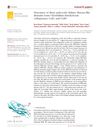
February 2015 in “Acta Crystallographica Section D: Structural Biology”
18 citations
,
February 2015 in “Acta Crystallographica Section D: Structural Biology” This study reports that Ca 2+ binding alters the dynamics and surface properties of PKD-like domains in Clostridium histolyticum collagenases, enhancing their stability and potentially aiding in collagen-targeting vehicle development.
 October 2023 in “Journal of the American Academy of Dermatology”
 This source reports that clascoterone cream has been approved in the U.S. for treating acne vulgaris in patients aged 12 and older, suggesting it works by competing with dihydrotestosterone at androgen receptors to mitigate acne's effects.