 August 2021 in “Revista Colombiana de Reumatología/Revista Colombiana de Reumatologia”
 This case study reported that a 24-year-old patient with severe, treatment-resistant alopecia areata experienced excellent clinical improvement after one month of treatment with tofacitinib, a JAK inhibitor.
 May 2021 in “Pakistan Journal of Medical and Health Sciences”
 This review discusses how trichoscopy is becoming a preferred non-invasive diagnostic tool over trichograms for evaluating hair disorders, although it reports no clinical results.

This article reviews alopecia areata as a chronic autoimmune disease affecting hair follicles and discusses its association with other autoimmune conditions, but provides no new clinical findings.
 February 2021 in “Journal of pharmaceutical and biological sciences”
 This article reviews multiple treatments for alopecia areata, highlighting their variable efficacy and safety without any being curative; it reports no new clinical findings.

This report presents a case of IFAP syndrome with the typical symptoms of alopecia universalis, severe photophobia, and follicular ichthyosis, but provides no additional clinical findings or conclusions.
 July 2020 in “International Journal of Dermatology Venereology and Leprosy Sciences”
 In this study, dermatological changes were highly prevalent among postmenopausal women, with xerosis, pigmentary changes, and hair thinning being the most common findings, suggesting such changes are often overlooked in clinical practice.
 March 2020 in “Faculty Opinions – Post-Publication Peer Review of the Biomedical Literature”
 In this study, eight Chinese patients with alopecia areata showed hair regrowth following combination therapy with a nonablative laser and topical minoxidil, with most patients not experiencing relapse after one year, suggesting a promising alternative treatment without significant side effects.
 February 2020 in “International Journal of Research in Dermatology”
 This study emphasizes that erosive pustular dermatosis of the scalp is an underrecognized condition, and increased awareness and diagnosis can improve patient outcomes by preventing further scalp damage.
 February 2020 in “Our Dermatology Online”
 A synthetic drug and a South American herb may help treat alopecia areata in Chinese men.
 September 2019 in “Journal of Investigative Dermatology”
 This study found that a history of smoking significantly predicted a more refractory course of palmoplantar pustulosis, with associated comorbidities often including hypertension, type 2 diabetes mellitus, and thyroid diseases.
August 2019 in “Journal of the American Academy of Dermatology” Tofacitinib may help hair regrowth in alopecia areata, but more research is needed.
This study found that neutrophils are crucial for initiating chronic itch in atopic dermatitis and suggest that targeting neutrophils may help alleviate symptoms in this condition.
 July 2019 in “International journal of dermatology, venereology and leprosy sciences”
 This study found that oral cyclosporine was more effective than betamethasone minipulse therapy for treating Alopecia Areata, with more patients in the cyclosporine group showing excellent and good responses compared to the betamethasone group.
 January 2019 in “Journal of Case Reports and Scientific Images”
 This case report describes the treatment of a 12-year-old female with Alopecia Areata using oral azathioprine.
September 2018 in “Journal of Society of Cosmetic Chemists of Japan” This study found that applying a solution containing oil-soluble vitamin C to damaged hair improved hair cuticle condition and water repellency, suggesting a new cosmetic function beyond its known skin whitening effects.
 July 2017 in “International journal of Ayurvedic and herbal medicine”
 This study revealed that Madayantika siddha taila, containing sesame oil, showed effectiveness in treating Darunaka (seborrhea capitis) by addressing aggravated Vata and Kapha doshas.
 February 2017 in “Medicina cutánea ibero-latino-americana”
 This case report documents an 8-year-old boy with alopecia areata presenting as symmetric alopecic patches with a triangular and targetoid pattern on the scalp, successfully treated with clobetasol propionate foam.
 December 2016 in “The European health psychologist”
 This study found that women with polycystic ovary syndrome often experience isolation, helplessness, resilience, and grief, suggesting a need for better support during diagnosis and treatment to improve wellbeing.
 September 2016 in “Springer eBooks”
 This review discusses how physical appearance, including skin, facial features, and physique, is linked to aging and health risks, but reports no new experimental results.
 May 2016 in “Endocrine Abstracts”
 The removal of the adrenal tumor improved the patient's symptoms and reduced androgen levels, indicating successful surgery.
This study found that hair loss increased after chemical hair dyeing, while sea cucumber extract shampoo and toner may help reduce hair loss and improve scalp condition.

This review discusses the potential association between vaccination and alopecia areata, highlighted in case reports, notably with the hepatitis B virus vaccine, but provides no new results.
 November 2014 in “Prescriber”
 This article presents a case history of hair loss in a 16-year-old girl and provides no new research findings.
 October 2014 in “Journal of the Portuguese Society of Dermatology and Venereology”
 This paper presents a therapeutic approach with excellent results in a case of lichen planopilaris overlapping with dermatomyositis and scleroderma, although broader applicability is not discussed.
 April 2012 in “Informa Healthcare eBooks”
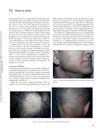
 Alopecia areata is a common autoimmune condition causing varying hair loss, diagnosed by specific patterns of inflammation around hair follicles, with several treatment options available.
This study found that applying hair conditioner during a permanent wave process in the middle rather than early or late improves tensile strength, hydration, and maintains healthier hair cuticle structure.
January 2012 in “Jounal of The Korean Society of cosmetology” Applying conditioner mid-treatment reduces hair damage during perms.
January 2012 in “한국미용학회지” In this study, applying hair conditioner during the middle of a permanent wave operation resulted in better tensile strength, hydration, and cuticle health compared to other application times.
 November 2011 in “Pediatric dermatology”
 This case report and literature review discusses Marie-Unna hereditary hypotrichosis and presents no new clinical results.
This study observed that consuming soybeans for three months was associated with improved hair health in individuals with varying types of hair loss.